The US and the UK now have lagging world currencies with real interest rates below inflation – and have money that has lost more value against gold than any other BRICS nation.
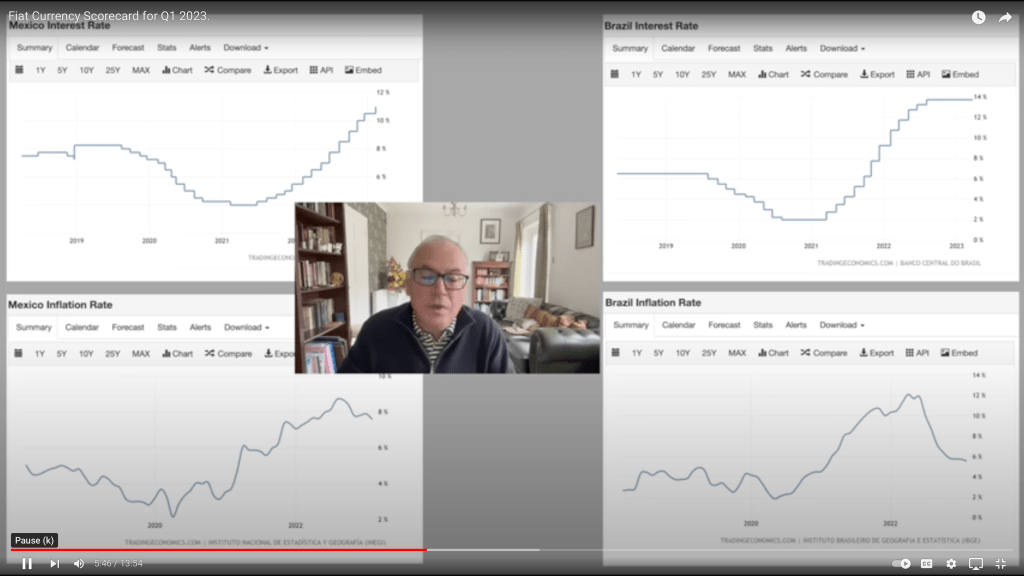
all rights belong to their respective owners maneco60 on his YouTube channel, and graphs displayed by fxtop
Mirror, mirror, on the wall, who [has] the fairest [currency] of them all?
c1937 Disney Pictures, from Grimm Faierie tales, Snow White and the Seven Dwarfs
Perhaps the Seven Dwarfs are the G-7 nations of the west? In the above YouTube video by Marios–comes the stunning revelation that Mexico and Brazil did the right thing by raising interest rates in mid-2021 when inflation started moving up–and that now both Mexican nationals and Brazilians–have savings rates well above today’s inflation rates because they don’t face the steep wall of rising interest rates.
Rates like those in the US, coming due on commercial real estate resets and the 1031 dance real estate holders can use to reduce their taxes on depreciation by simply buying another building to offset capital gains. Unlike the liquid LA market, Florida has fewer big time players to smooth out real estate market cap rates, and those residents are really being shocked by inflation’s effects on real estate. Recent bank failures are also a result of the mismatch of Mark-to-Market bond yields of 2021 versus the percent of short term debt bonds now at much higher rates.
Stand by for the reverse repo debt swap facility to blow up above the current overnight volume of 2.5 tn. Yes, you heard correctly, Two-point-Five-Trillion USD.
Sakude su sombrilla de aqua afuera! Please shake the water off your umbrella before entering the coach! A friend and coworker who experienced his first major rainfall wondered if I had any tips to keep the windscreen and mirrors clear. Baby heat in the coach climate control, and baby heat for the cab climate, are key to creating the correct temperature on the glass from hazing.
The key to preventing fogging is to not let the water in the coach in the first place. Simple, right? But not easy. Asking boarders to shake off the water is challenging because it can quickly start an argument and disrupt concentration in watching for traffic. This begs the question of why anyone would carry an umbrella in San Francisco in the first place.
Umbrellas, are, for all intents and purpose, useless. Rare is the San Franciscan who can maintain umbrella integrity during a storm and not have the ribs invert in the wind. This is accomplished by not having it open in the first place! Either that or using both hands to hold the umbrella from levitating and taking off. This makes for showing fare or reaching into a pocket for change also impossible. So what do people do? They bring their water logged sombrilla up the steps and into the bus! Did you ever hear of hooded rain jackets or gortex waterproof rain gear? Of course not. This is California and we live in a desert with drought conditions!
Umbrellas can become projectiles to fly into someone else on the street. We see crushed umbrellas on the streets and in the crosswalks. Palm fronds detach to create obstacle courses, and tree limbs drop on parked cars. If not airborne, they also are a hazard simply by walking with them open on any busy sidewalk even if the wind is calm. The tips tap oncoming users, and the different elevations of the holder come into play. One has to pay attention to who is passing on the sidewalk, else the Brock can be launched from your grip.
A business man questioned me on my first umbrella of the day with heavy rain. Are you going to ask everyone boarding to shake their umbrella? Yes, I am. And so on with day, stopping everyone at the steps to shake it. There are the pitiful attempts at holding the umbrella like a dead duck and slowly moving it up and down to no effect. There are those who shake it on the steps, creating a larger water slick than if I had not asked. Finally, there is the dip and twirl, followed by a shake that can win the passenger of the day!
At some point I have to concede the battle and lose the war. My emotional sobriety behind the wheel takes precedent over the foggy windows and slippery steps. When I pop the brake to dry off the interior windscreen and go outside to wipe the mirrors, this can serve as a guided discovery to the bozos, um, passengers, why bringing water into the bus is not a good idea.
I wait for the clue from the passengers when it is time to give it a rest. It is just a matter of time. A Chinese American woman does not understand English and my request for her to shake her umbrella outside. Hand signs are no avail with the dull cow eyes staring back. After the fifth request with sign language, I let it go. Sure enough, a woman in back, late for work, scolds me to get going and stop harassing the woman. OK, I’m done. No more umbrella shake requests today. OK, the rain begins to mellow to an intermittent patter.
As fate would have it, the Bird-man gets on at Sixth. He starts crowing like a large pterodactyl. It is very disruptive and annoying. The woman going to work, fearing I’ll take the coach out of service begins to warn the man to stop his chirping. A big grin takes over my face as I see my reflection in the rearview mirror.
Hey Bird-man, do you like the rain? I do, he beams back. Do you ever carry and umbrella? I ask. No way. Never! he replies. The whole bus erupts in laughter. The woman going to work gets off at Third with a big smile. Yes! Another victory on the bus! I got to put out one final request to shake the water, and have it end without a negative consequence! Tip of the monsoon: don’t bring the umbrella!
Some groups of non-SFMTA employees get to ride for free. Police, patrol special police, auxiliary police reserve, peace officers, and firefighters may ride for free if in full uniform after showing proper identification. The key phrase being, showing proper identification. I guess bus drivers, bartenders or bouncers are best versed in excuses offered as to why proper ID is so hard to produce.
Happy is the day when a uniform or costume precludes an ID. The lively students boarding by USF are easy to spot on the 21, 31, and 33, even if they don’t show their student ID. University of San Francisco and the Academy of Art are two schools that have their Muni pass built-in to their student ID. Like the Sisters of Charity, they stand out, especially at the beginning of the semester when they are riding transit for the first time.
The Sisters of Perpetual Indulgence are also clear to see from a block away during a special event such as the Folsom Street Fair, or the Castro Street Fair. White-masked and dutifully festooned with a unique collage of makeup, jewelry, and costume, I enjoy according these Sisters a free ride as allowed by the nuns of the Most Holy Roman Catholic Church!
It gets interesting when a fire fighter, highway patrolman, or police officer enters at the front and I have difficulty in knowing if they are actually an on-duty civil servant, or in costume for a party or contest! We have such a density of artists in this city and costumes are no exception to the attention to detail that separates reality from fantasy!
Volunteers for crowd control and security during a parade or street fair are also welcomed to pass by the fare box as we migrate the masses to and from downtown or Golden Gate Park. The cast of characters from Bay to Breakers, Santa Sunday, or other such costume event parties make for never a dull day behind the wheel of a bus in San Francisco. When the Wheel of Fortune and the Wheel of a Bus become one in the same in conscious energy, I have achieved my Zen in driving Muni!
Just as important are also those in the city for the first time, seeking assistance with direction to get the help they need in being able to survive here. After a while, it can become intuitive to know where people need to go based upon repetition of request and the hand held note with an address of the building they need to get to.
Humility and the aspect of remembering what it was like when I was new to San Francisco helps keep me on the right side of Charity as a Transit Operator in the City by the Bay.
Today the Super Bowl is not being hosted here. Our team is not going to be on the field in competition. Traffic is light. Everyone is from in town. Today is a day when we can feel as though we are home and go about our routine as a native sons or daughters. The Sisters of Charity, the outreach workers and drug and substance abuse counselors are the heroes on the bus.
The happy road of destiny can be found inside a bus carrying service workers to their place of duty in finding solutions for those who are lost and in need. God bless a sanctuary city such as here in San Francisco.
The sins of the father will fall upon the children
In Oceania–of the many Samoan, Hawaiian, and New Zealand cultures–guilt caused by error–makes one sick. Harmony and health–to both the body and the land–can be healed by confessing the error, especially of sexual misconduct, in the tribal circle. Ho’o is to put to rights, to make right, such as in preparing to catch a wave. Indeed, my Pono, or uprightness needs be reviewed and adjusted to tidy up or make neat, my life. I am unable to catch a wave at Waikiki Beach, and this was not always the case when I was young. I caught every single wave I could hear arising behind me. Something happened. Something isn’t right. Prayer and Meditation points me in the right direction today.
In the fellowship of Alcoholics Anonymous, so too is this Spiritual Principle made to heal the alcoholic from drinking, only by confessing and releasing anger and resentments against other persons, places, or things–to amend, or make good–a future path of a healthy life.
On many YouTube videos, there are many one-to-three hour podcasts with experts and best selling authors. They promote their practices to help one become abundant, wealthy, and productive.
I would like to distill the many ancestral and religious practices into a short list of areas in one’s life that need an honest light to sweep upon our shortcomings like a lighthouse over dark rocky shoals.
A lei made from the fruit of the pandanus tree was bequeathed after the completion of ho’oponopono in the tradition of kahuna Makaweliweli of Moloka’i.*
* Etymology defined by the Hawaiian Dictionary and second section of wikipedia.org
In a fourth step inventory of one’s self, there is a list of columns with which an alcoholic or an addict is to divide to find first–the person, place or thing one is angry about. Column two is to be the cause, column three is the aspect of what part of our natural God-given instincts have gone awry, and then, four, what could we do differently, in living an amended life.
I’ll concentrate on the third column, as many sponsors and sponsorees become slow to admit to find the area of life that is–or has been–damaged such that escape through drugs and alcohol is a recurring trap from which their appears to be no escape save for jails, institutions, or death. Here are the items for column three:
Personal security How often do we feel threatened by gossip or bullying by another, and how does this erode the fabric of our life with others. Especially time spent in getting even.
Social instinct We all observe herds, coveys, schools, and packs among the animals, as so too do we humans cluster themselves in groups and organizations. Note how we tend to sit in the same seat in a classroom or movie house. How we tend to be like birds of a feather and attract like-to-like.
Pocketbook Indeed, finance, or lack of money, is a big part of resentment of who got what, or how do I get mine? Keeping up appearances and looking good all create a false facade that can come crashing down when we don’t get honest with another about our true motives.
Self-esteem High Unrealistic expectations, entitlement, or having a huge ego with no respect for self, hence no respect for other people, places, or institutions. Look at Peter Quill’s dad in Guardians of the Galaxy 2.
Self-esteem Low This can manifest in hidden sex relations and codependency and in being what is called an enabler. Family mascots abound with titles of caretaker, black sheep, golden boy, and troublemaker.
Pride and ambition Pride leads the procession as we always live in regrets of the past or the worry of the future–never in the gift of the present. Plans for the future is another good way to phrase this aspect.
Personal relations To assess that other’s were wrong were as far as most of us got. We never realized that the victor only seemed to win, and that the only one losing was us, whenever we tried revenge.
Emotional security Think about it. If we were emotional secure, wouldn’t we be attractive to others? Isn’t that what we admire in someone we like? And yet, we fail to take the advice we freely give to others.
Financial security If you sit in a barber shop long enough, you’ll get a haircut. Hang out with millionaires, and your chances of becoming one improve dramatically. Most poverty consciousness comes from being taught like this from our family of origin–hence why upwardly mobile families strive to move to better neighborhoods, just like Trevor Noah’s story and his off the record tour!
Sex desire Gameboy-playing and porn-watching does not a successful sex addict make. I’ll never forget the lost soul kicked out by his boyfriend holding a black plastic trash bag full of his porn. He chose porn over a live human being. What a shocker before going through the gate to an SAA meeting!
Material security Frothy emotional appeal seldom suffices in trying to convince an addict or alcoholic to work the steps by Trusting God, Cleaning House, and Helping Others. It is so simple. Honesty. Open-mindedness. Willingness. With these we are well on our way to material security!
Ask yourself when you become upset what is the fear associated with the reactive behavior. For me it usually boiled down to: There isn’t enough. There isn’t enough time to find a parking space. There isn’t enough time to wait for the light to cross the street or checkout at the convenience store–or to write a letter or email. There isn’t enough time. There isn’t enough love: I better run away now before I get dumped or get my feelings hurt. These are all fears of scarcity. Indeed my worries and my anxiety depressive tendencies were numbed by alcohol, then marijuana, then cocaine, and then meth.
Ta Da! I’m an alcoholic. Once an alcoholic, always an alcoholic, ’cause a pickle can never be turned back into a cucumber. Knowing this, I don’t have to pick up–no matter what.
If I am depressed and feeling like something isn’t just right, I can do a gratitude list. I can make a list of things for which I am grateful. If I feel heavy and hard against making such a list, I know I need to do one. I did one for finding my perfect apartment. My place hits these bullseyes:
It has to be rent controlled.
A coffee shop has to be right there.
A grocery store has to right around the corner.
There must be at least two closets, three is better.
On a bus line and with more than one line and cross street.
Safe passage to my lobby door after dark.
Has recessed ceiling lighting.
Has two bedrooms separate from a living room or one huge studio space.
Shared space with a roommate brings cost lower than a studio for one.
Has onsite manager and laundry.
Good mailboxes.
Classic lobby look.
Orientation of windows is correct for sun or winds.
Has an elevator if over three flights.
Window array is good for quiet or view.
Has office space for voice recording for audiobooks.
Built-ins in closets, bathroom, kitchen or dining.
Beamed ceilings.
Windows facing street for Christmas lights or a tree.
Could play my instrument without disturbing neighbors, or have loud soundtrack movies on tee vee.
I feel better already. I don’t hate looking for an apartment now.
Other more common gratitude lists are for the things I have gained by staying sober:
my iMac
my Samsung phone
A’s share at H.H. for writing a list of 100 things to be grateful about!
Edgar Cayce’s A.R.E. flyer
My vacation trip fixed after a double booking.
Two commitments of service to others in place of not working.
Vitamin C and Ester C
The Beach
My Fins and Snorkeling gear and bag
R’s visits
JB’s story of being found at my bus door while working on the 22 Fillmore
Boomers in the US have workplace stories to tell about newly hired Millennials losing interest at their job after just a few months. Many ad hoc committee groups or emergency overtime requests at work go unheeded by younger employees as if there is no expectation or requirement to do anything extra at work. To my surprise, this attitude is found in China–where social mobility is already an entrenched problem since the early 2000’s. The burden of three mountains, an uprising on May 4, and “a smaller slice of cake,” are all thought symbols of a beautiful calligraphy that is used in Chinese writing–but point to the difficulty of achieving in education, healthcare, and housing–in the world’s second largest economy. A sort of fatalism has been building in China, just as in the US–of a shoulder shrug of–“If it Doesn’t Work Out–Then it Won’t Matter.” Bai Lan is a term for being a slacker, such that a first response to do extra work is to immediately say, “Let someone else do it,” or “Ask me tomorrow.”
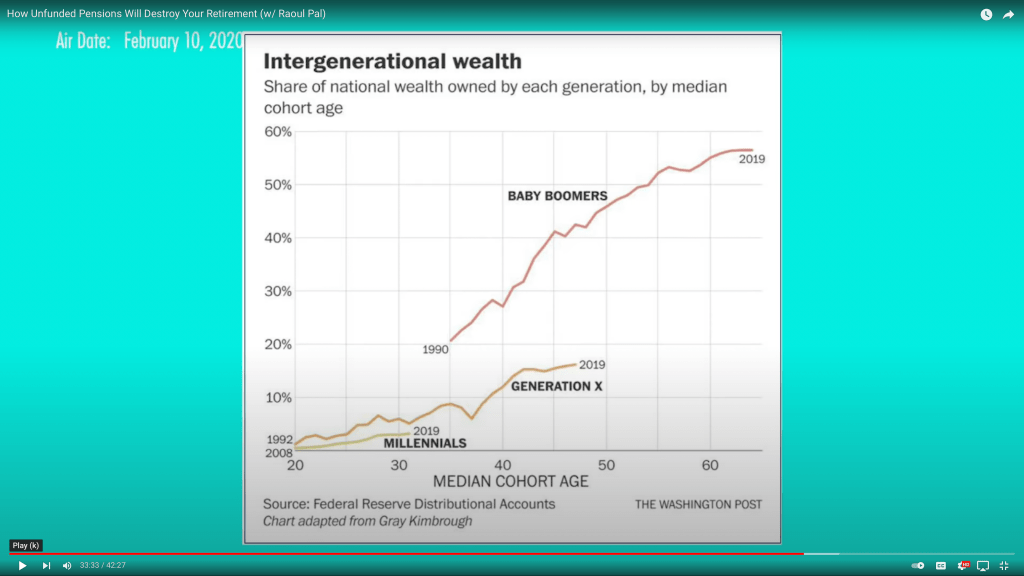
To be sure, this following chart says a lot about the carrot being removed as a treat to get to some goalpost. A drop in the working age demographics is found both in the US and China, and is described in Raoul Pal’s February 10, 2020 YouTube share on Real Vision with link in the caption box below:
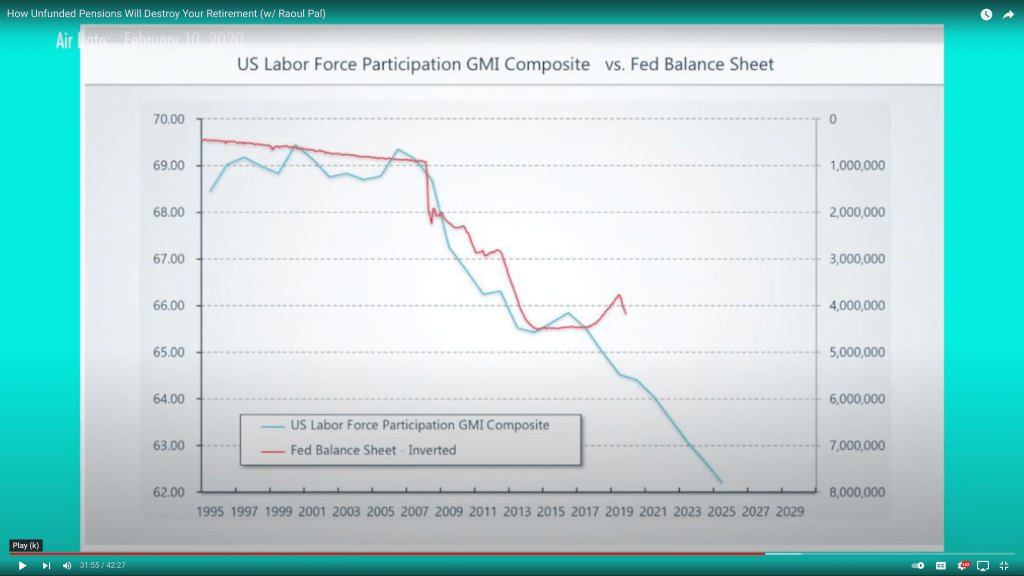
In his timely and acclaimed centerpiece for Real Vision, Raoul quantifies why Bai Lan may be an entropy coming into the massive work machine within China, and as the US service trade industry becomes an outlier of job growth. In the US–as manufacturing has left the country–any trade other than finance–is creating a debt leverage of refinance instead of actual production of goods and trade like infrastructure maintenance, construction, trucking and wholesale. Here’s another interesting graph below:
Here we see a dwindling workforce participation keeping unemployment figures low, and a huge Fed balance sheet mirroring labor participation with free easy money keeping zombie companies alive and well for decades. A rise in interest rates with a shrinking balance sheet should get rid of all the alt-coin BS and companies unable to turn a profit by burning through cheap cash.
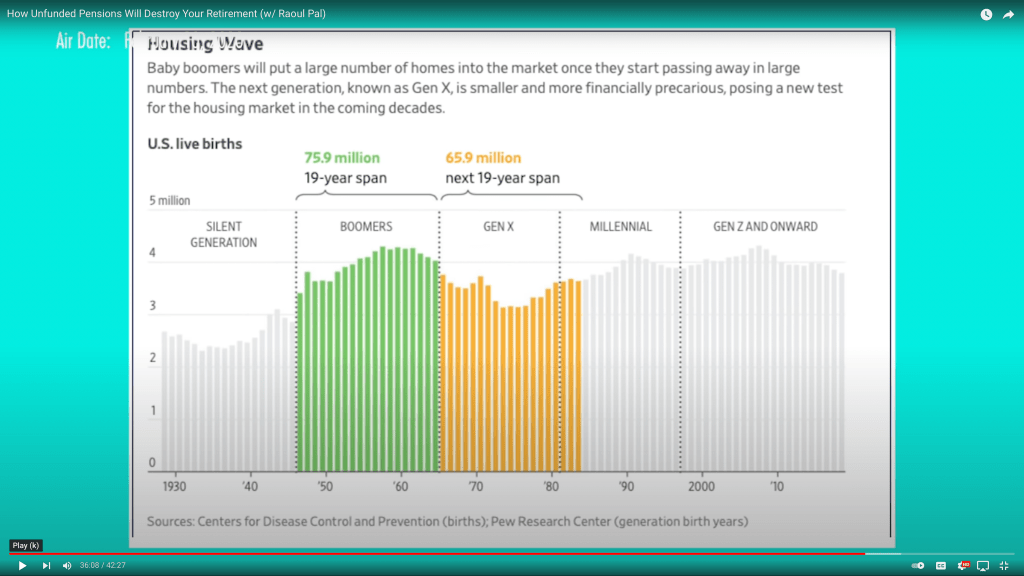
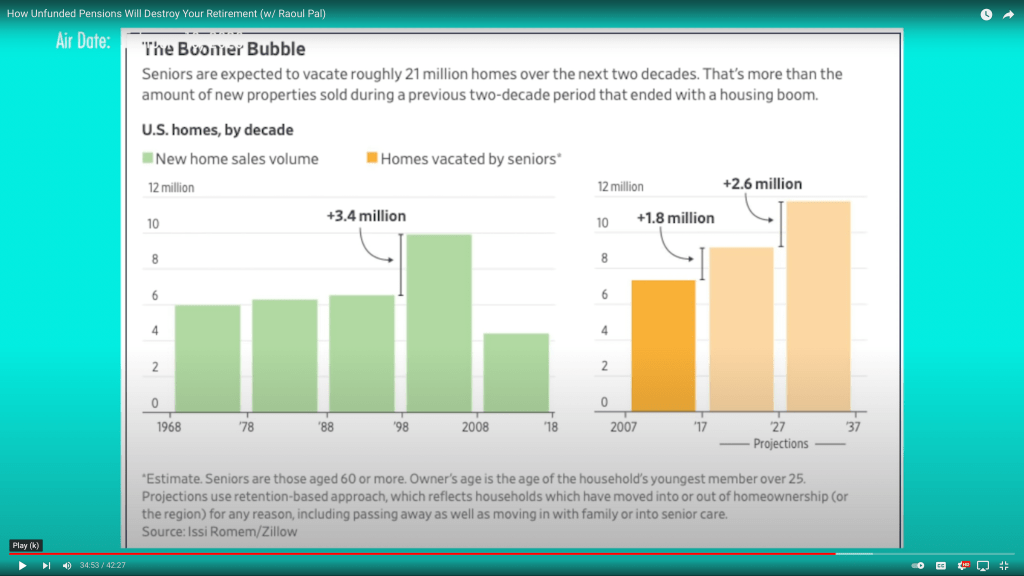
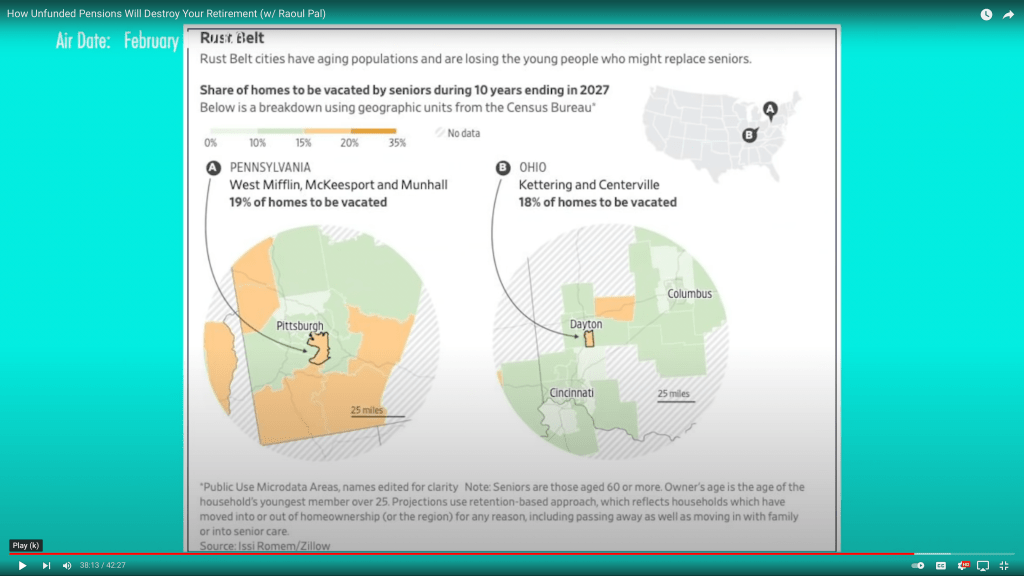
Finally, here are three more graphs about boomer retirement in the US and housing with a final destination!
To be sure, the best (and only) place to still buy a house for under $200,000 is in–drumroll please–Dayton, OH! The area surrounding Pittsburg, Akron, Canton, Buffalo, NY and NY cities along the Erie Canal–read Rochester–are the last rust belt towns where housing payments resemble anything close to a boomer’s generational memory.
Word Press generates great starters for writers, and the one up today is, “What do I complain about most?” and I’d have to say it’s the rent. I’m sure I’m on solid ground with this one after looking at the national charts of rent and housing in major US metro areas. But here’s my rub. Especially after watching Hello from Hawaii’s, “Everything Wrong With Hawaii/ My Response (Viewer Email)–on YouTube:
This video is hilarious in that a Californian cuts into the meat about what’s wrong with the state of Hawaii as compared to California, especially about housing. In it, a viewer states that Hawaii is in a grade B class of California’s policy, that it is just a half-assed replication with little help to those trying to live here by allowing dilapidated run-down building choices with outrageous rents. It’s unbelievably true. I’ve lived in San Francisco for 29 years in five different rent-controlled apartments, and retired early at 62 to move to Honolulu in 2020. What I’ve come to believe is astonishing. While each tenant situation is unique, I am seeing patterns in behavior of realtors representing owners leasing apartments in Waikiki, and I see no difference in owner behavior in a non-rent-controlled cash cow district like Waikiki, from the heyday goldmine of San Francisco’s rent-controlled status as a desired tech city from 2009 to 2019.
As the young man in Hello from Hawaii demonstrates–in the above link–a shortage of housing exists on Oahu. The Democratic Party politicians repeat this mantra in California–everyone needs affordable housing. A new video below, in “Hello from Hawaii,” demonstrates a good solution–building spartan complexes near the new rail line HART to link the westside to the Ala Moana Mall.
This is similar to the idea of building around BART stations in the Bay Area.
I thought I’d use the work-from-home Covid pandemic diaspora from SF to my advantage: I’ll give up my 22 year rent-controlled lease in San Francisco to move into an older 1960’s or 1970’s Waikiki building and take advantage of any cost savings advantage I may get by moving into a less-desired old building on Oahu. To be sure, the brick and mortar reinforced buildings I lived in at San Francisco were way older than those buildings in Honolulu, but the construction and upkeep quality of San Francisco’s proud beauties in the Tenderloin and Lower Pacific Heights shine just as bright as any new tower in Kaka’ako by the Ala Moana Mall. It worked. I’m paying less for rent than in San Francisco, and should I move back, like many do–time is on my side–as rents are still dropping in SF–and the upgrades to rent-controlled buildings are fabulous.
Interestingly, SFrent-controlled buildings are now priced higher than brand new buildings, perhaps because the owners feel they need to make up for the loss in fair-market-value when average rents in new tenant move-ins were up to nine hundred dollars higher than the long term residents still occupying their units. Also management equities groups in SF are very savvy and know what to do to keep value in their buildings. I guess a caveat to the rule of rent control is that when a city or area becomes highly desirable, rent control helps renters in the long run, and actually smooths out sharp upturns when the owner’s golden rule of being blessed with a good tenant falls away into,“What can I do to get fair market value?” This is when rent control works. Landlords have the tendency to turn tenants into mathematical statistics, not human beings and, being unprepared for an increase of three hundred dollars or more–creates a rent crises. To me, rent control prevents this from happening. The shock hearing of south Floridian’s dilemma in rent increases shows how progressive rent control can be when an area becomes hot. My takeaway: the competition between rent-controlled building and newer properties creates a healthy competitive balance.Waikiki doesn’t have this.
I do have compassion for landlords and realty companies. I was shocked at how property rights were placed in forbearance, such that tenants did not have to pay rent. Now, Joe in the White House, wants to spend more cash to make up for this original cause of a shortfall. So does Gavin Newsom in California. This is not the duty of government. Even Milton Friedman in his prologue and first chapter in “Capitalism and Freedom” who discourages rent control, does not believe that it is governments’ duty to subsidize housing. He does, however, start to change his tune in the eighties, such that after 2000 he begins to embrace socialism and shockingly changes his idealogy to “. . .political freedom, desirable though it may be, is not a necessary condition for economic and civil freedom.”
In the first chapter of this book, he acknowledges that although the men who have a concentration of power “initially be of goodwill” they will “attract and form men of a different stamp.” This is a polite way of saying power corrupts. My owner and landlord of my rent controlled building of 22 years, was genuine in upgrading and improving his building as “The Peoples” choice in the 1990’s before the dot com bomb. But when Facebook was going public in the spring of 2014, and the venture capital cash was being pumped into San Francisco like a stimmy check for stay-at-home in 2020, he became like any other impersonal REIT investor group and looked only at the numbers.
I have a new realty company which took over my building here by the Ala Wai canal, and they got burned by the outgoing realtor who had represented an owner who had passed away. Like anything else long term, the desire to make new or improve, fades, as was the maintenance of the building I moved into. The long term residents in this building seemed to be not unlike those in San Francisco who were on rent control. The landlord didn’t really seem to be doing anything to improve the building, and no one had any steep rent increases. The guys who lived here before me went for five years without any rent increase. When they got hit with a two hundred and fifty dollar rent increase they moved–into a similar sized apartment across the street for over nine hundred a month more. Their rent increase was still two hundred less than what I was to pay. In a way, they got fed-up with the rundown building I chose to move into, and used their savings over the years to move into a nice place. I used my twenty-two year savings from my rent-controlled building in SF, and I got a good deal paying $1950 a month for a two-bedroom of 800 square feet, better than anything I could get in San Francisco, and I got down on my hands and knees and scrubbed the place clean. It was so nasty.
I also put in black-out drapes to lower the heat from the sun, and got a new efficient air conditioner. The lack of curtains on the sliding glass doors to a lanai, and the tacky old air conditioners in these funky old buildings in Waikiki never ceases to shock me. The owners don’t do shit to keep the places nice. Photos on Zillow are years old, and Realtors end the tour by saying, “I’m just following the owner’s wishes.” Realtor’s here on Oahu don’t seem to be willing to look after renter’s interests at all. There’s no love lost here on their plight with the effect higher interest rates have for mortgages. There is one real estate agent for every 80 citizens on Oahu. Like the Gold-to-Silver ratio, let’s bring the per capita ratio down to earth! There’s legislation now being considered for home buyers–that now only the seller’s agent will be necessary–to represent them for a buy!
Friends I’m in touch with in San Francisco repeat a similar story. Many of SF residents living in rent-controlled units long term, moved into the nice new buildings built due to the increased tech influx of the previous decade. This then, also caused vacant units in rent-controlled buildings to be completely redone: new kitchens, bathroom fixtures and cabinets, and polished wooden floors or new floors altogether! I laugh when I see an unmodified unit in San Francisco, and the owner is still in denial about price and value, and is still charging 2017 rent prices for that same damn shower curtain holder and gaudy colored bathroom tile. Wake up and smell the Kona coffee! I pause like an Asian Tiger mom, refreshing my Zillow page in San Francisco to see the rents come down. Also very telling is to see how long a previous tenant stayed by looking at history. If someone only lived there for one or two years–don’t do it! They’re going to use psychological tricks to get you to move, like I had to do after my first year here in Hawaii in an Outrigger condo. Owners in flats in Waikiki don’t ever live here and it’s doubtful that they’ll ever see the place they own, much less move back here. They live in the Philippines, Indonesia, or Japan and are like a thirsty Millennial on a new Shopify store, salivating on ROI only as the new God King.
All-in-all San Francisco is being remade into a newer city ready for the next boom. Hopefully, so will Honolulu be–with the new rail line. But I’m not holding my breath!
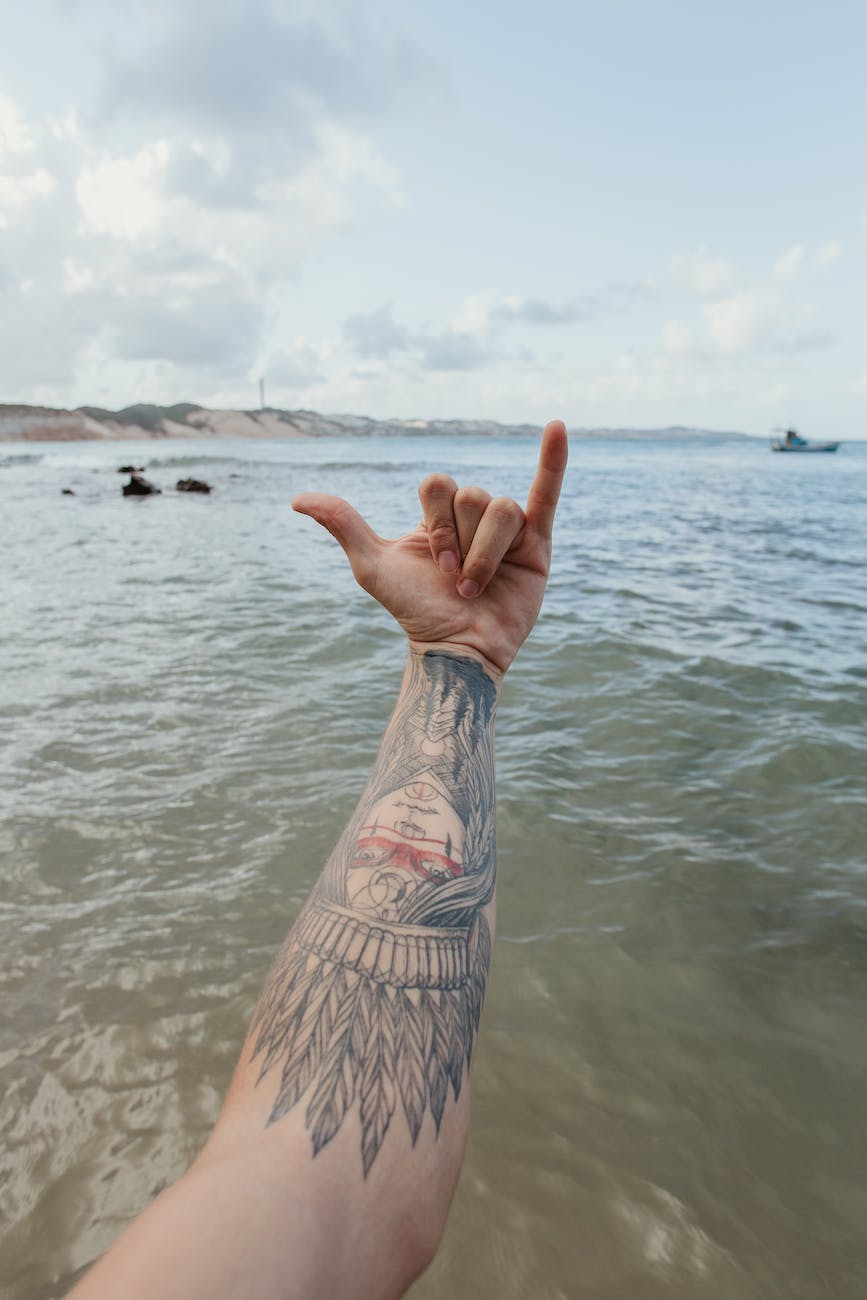
THE SHAKKA OR HANG LOOSE HANDS UP SOLVES MOST CULTURE SHOCK—Photo by Soulful Pizza on Pexels.com
My favorite blogger is the Hello from Hawaii channel on YouTube. He talks in a general way that is liked by most people who watch his show. I’ve learned a lot listening to him. I didn’t catch his name, even when I crossed paths in real life. Here are some of the facts I learned from Hello from Hawaii.
Intro. Hawaii is meant for vacation. Three quarters of Hawaiians live in Honolulu. One and half million go to work everyday on Oahu, and it’s just another day of work. 347 thousand work in the in the city of over 800 thousand people, and it’s size and population is equal to San Francisco. Oahu is the third largest island by land mass of well over one hundred islands. It is the farthest south and western state in the US. I would add that it is 2393 miles from San Francisco, and SF is the closest city and airport from the islands because the bulge and curve of California coast, which “dents-in” around the LA basin area.
The second set of facts mentioned about Oahu are as follows:
Intro. Aloha is a state of mind from the mix of Polynesian, Japanese, and Anglo people who live here and they are just as relaxed as the warm water waves. Perfect weather about 270 days of 365. My comment is to point out that San Diego wins the perfect weather award for the US because it has over 300 days of sun per year. As I write this blog at the end of January, we’re having rain all day. The point is, our rain doesn’t destroy our beaches and our houses, and it doesn’t try to kill us. Our rain only gives us rainbows.
I don’t know how to quantify a cost-of-living estimate for weather desirability, but there are reasons why it “costs” more to live here. The weather has micro changes every day, just like San Francisco and the Bay Area, but it is warmer.
As for culture shock, it’s hands down the easiest “shock” I’ve ever met. Japanese manners of pleasing guests, and the simple idea of taking off shoes before entering don’t have a downside. Hawaiian potluck barbecue in the park doesn’t seem to be a culture I would do without. I do know I should bring a dish, and I found a way to make a trip to the ABC deli and microwave teriyaki chicken and Dole pineapples and mix them together to get kudos from those at the picnic. What I did learn, is that you better bring something, and if you don’t, it is not polite to take all the leftovers home!
The hang loose symbol is the best ice breaker for any culture shock situation. This includes lane changes or allowing a car to pull away from street parking. I use this when I cross busy streets, and I believe it actually helps me live longer!
Reasons cited for not moving to Honolulu on the island of Oahu: The Traffic
On every YouTube blog about things wrong with living on Oahu, and why one should be prepared for moving to Hawaii, is the congestion on the H-1 interstate, how long the trip from the North Shore to the southern side in the city of Honolulu can take before and after weekends, and the horrible commute from Aiea and Pearl City to the Waikiki area. My suggestion is to follow my example: don’t have a car.
It’s important to understand my demographic and view, which is that of being a single person– not needing a full-sized home–or deducting a mortgage and listing independents–of which most family households submit during their filing taxes. Indeed, a high tax rate for the state is also listed on the many reasons of why not to move to Hawaii. Coming from California, however, I did see a slightly larger take home pay by moving here from California because state taxes here are about two to three percent lower than California. I am already coming from one high cost area to another.
Since Florida has no state taxes, many Californians prefer to move east, rather than west, to save on income. A common theme I repeat is that there are always reasons for why things cost what they do. Hawaii suffers less hurricane damage than Florida, and has enjoyable soft rains replete with rainbows. Hawaii also has year-round trade winds, which make for a much cooler summer than Arizona, Texas, or Florida. Many regulars here do without air-conditioning all together. In my opinion, this can cancel out the expense of state taxes alone.
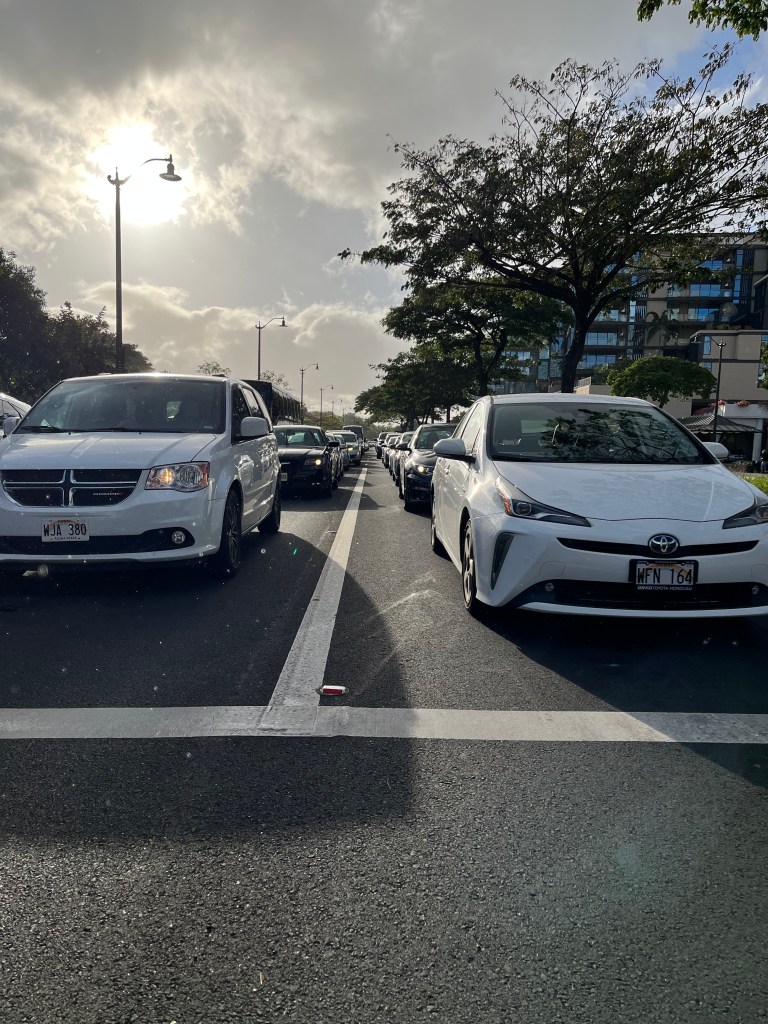
The Nimitz, Ala Moana Blvd., gets slow and sticky in the afternoon. The number 20 and 42 move through the traffic smoothly without having to do the driving!
Back to traffic. Boomers are the primary cause of traffic. We grew up with cars, and we love the freedom they bring. I submit that the freedoms a car provides, have become greatly reduced due to the cost of fuel, parking, and maintenance or repair. I don’t have to worry about a big ticket item parked out-of-sight of my view, or unexpected or immediate costs to replace a safety item of a vehicle. I just use a bus pass. I can listen to music, catch up on emails or social media, and text someone without being a safety issue.
It only costs me three dollars to go to the airport, and return. If I go shopping downtown or at the largest outdoor mall in the west, I can go to and fro for only three dollars. I have an HD backpack that’s comfortable to wear with large loads, and I have two sturdy reusable shopping bags to carry soda or paper towels outside of my backpack, if I’m stocking up large. Scooters also have storage to carry.
Scooters are also a great way to get around with easy parking!
One of the main reasons I am converting my YouTube channel to Walks on Waikiki is to continue my message of service to live an emissions free life, and get around without a car. This is easy for someone young or on a limited income, but I find freedoms created in other areas of my life if I don’t have to spend on owning a car. Fortunately, people are real friendly here. I had three different guys help me move by using their pickup trucks. People seem very willing to give me a ride home from gatherings, and expect nothing in return. So I do indirectly benefit from living in a place where many of my friends drive. In San Francisco, there are far fewer acquaintances who have autos. I had to rent a car just to go to a party in the Bay Area. Not so here on Oahu.
The HART Honolulu Area Rapid Transit Right-of-way is inching closer to the Ala Moana Mall!
One good tip about where to buy a home if you have a commute to either Waikiki or downtown. The smoothest inbound commute is from the Eastside: Hawaii Kai. The least favorable area would be Pearl City or Aiea. These two suburbs are west of downtown and have congestion, mainly because the department of cones is unable to create reversible lanes to add an extra lane for commute traffic.
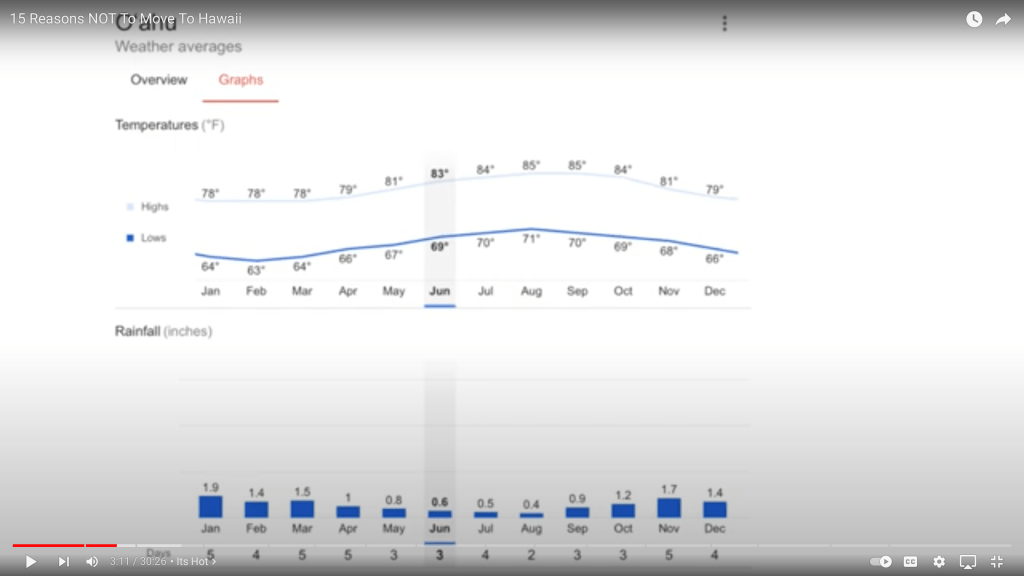
If you like the changing of the seasons, you probably won’t want to live in Hawaii. Not everyone likes a tropical climate. If that be the case, stop reading, go into the garage, and enjoy inspecting your snow shovel blade and handle, or snow blower’s moving parts and lube schedule. Clearing the driveway makes for good exercise, as does pushing stuck vehicles. Why bloggers and YouTubers put weather down as a negative topic in considering a move to Hawaii baffles me. They show the annual weather temperatures graph, and I start laughing: the model shows a gentle wave of a pattern of daytime highs ranging from a chilly 78 degrees fahrenheit in January to a high of 84 in July. The lower nighttime range tracks an almost perfect congruent wave pattern ten degrees lower, without any spikes or gaps in the year.
First off, if you are in tune with Mother Nature, nothing like the knowing of the tides and surf conditions makes for a good waterman, and this understanding of nature is engrained in many who live here. The water temperature cools after several weeks of heavy Christmas or New Year’s rains, and there are those who know the best times to travel and visit Hawaii. Indeed, knowing when to wear a jacket in the morning does feel like a season change for those of us who call Hawaii home. I looked at my friend’s phone next to me at the dinner picnic table: Minneapolis 22 degrees–Honolulu 72 degrees. Do the math.
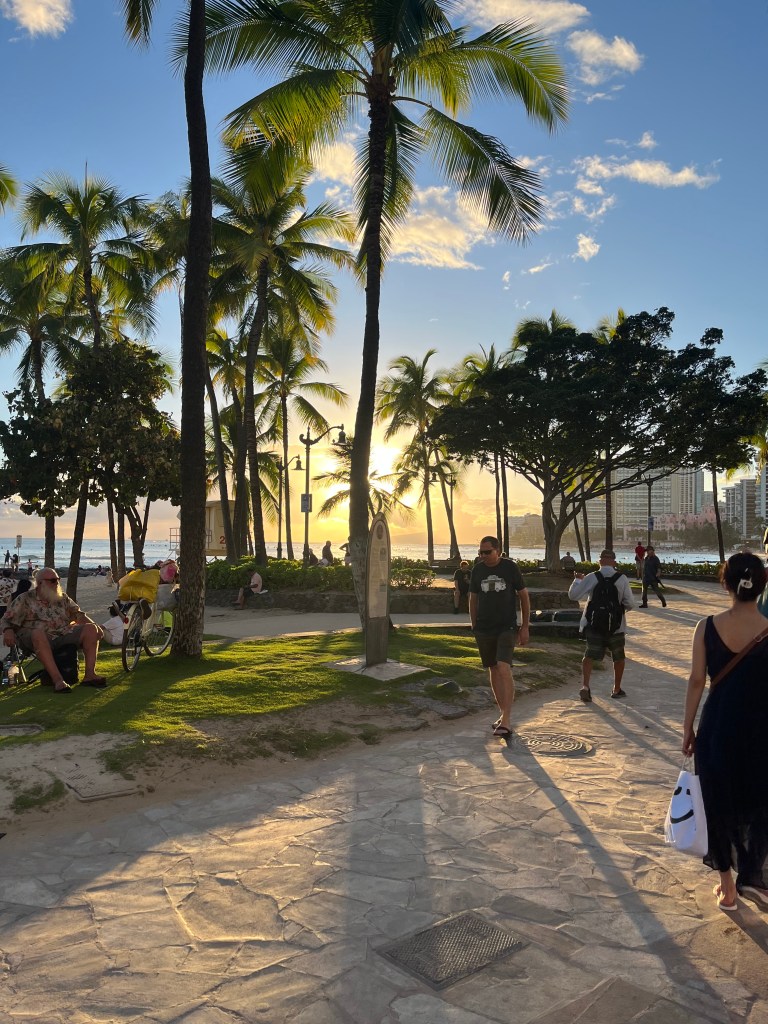
My world traveling friend–and there are a lot of them here in Honolulu–assures me over breakfast coffee, that nowhere in the world can a better climate be found. If you know of a place, respond. He smiles and assures me that a place with better weather doesn’t exist on the planet. Even though San Diego ranks higher than Honolulu because it has over 300 cloudless days of sun per year, Hawaii’s one hundred and seventy days of sun are caused by rainbow producing showers. What this means is great news for fair skinned folks who know that about half of the days at the beach contain some cloud cover overcast to keep down the burn. Add to that, the great green grassy areas dotted with palms, and there are many spots to lay in the shade really close to the water.
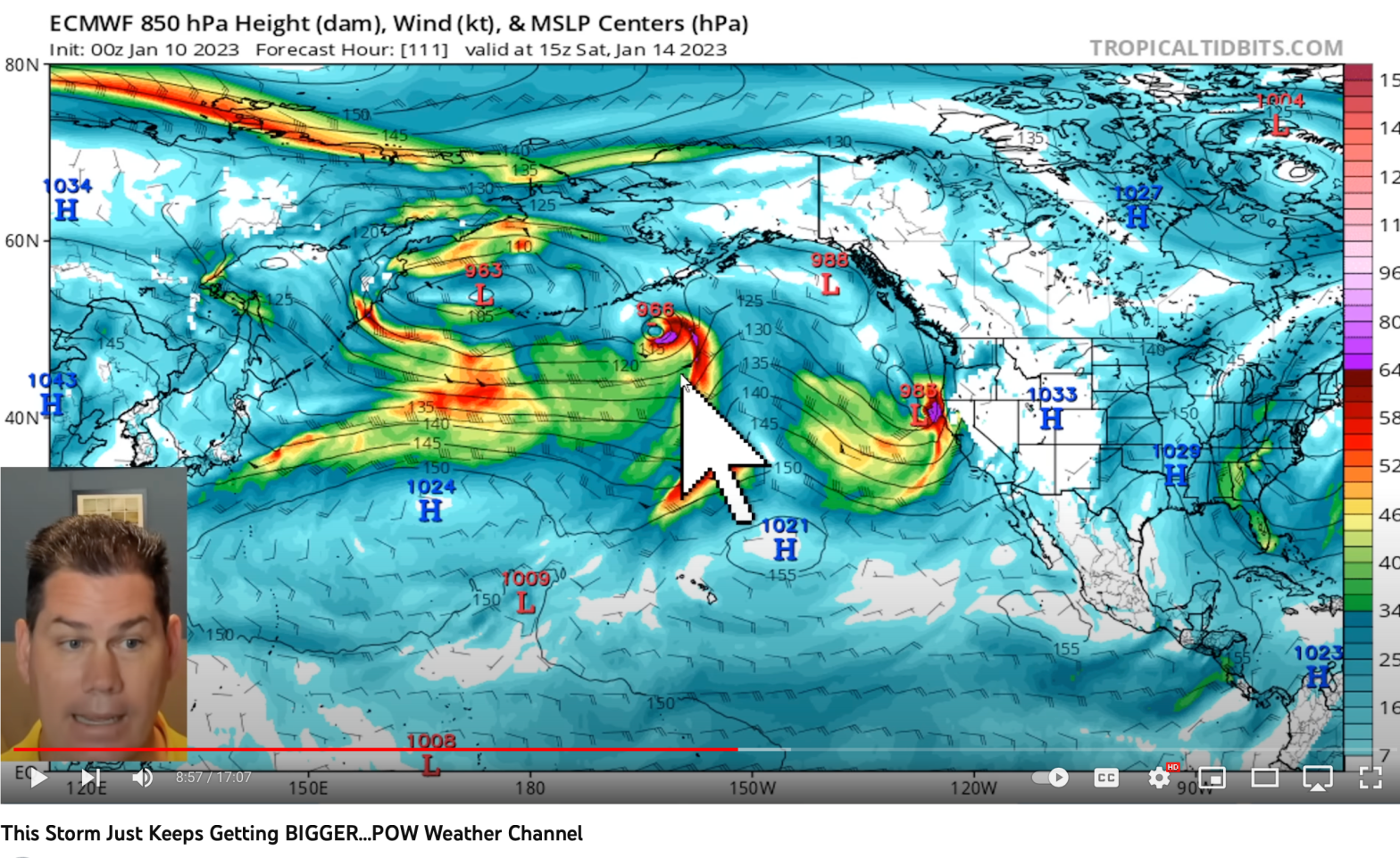
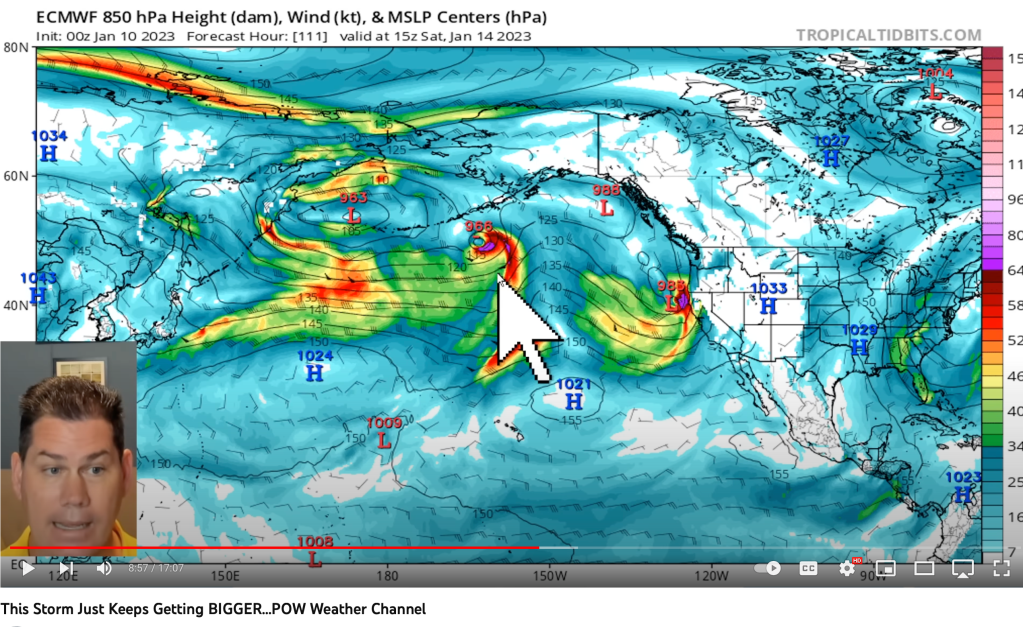
You can see in the above weather map, most of the winter bomb cyclones or atmospheric rivers track north of the Hawaiian islands before they hit the west coast of the mainland. Here you can see that Hawaii is actually even with Acapulco in Mexico, or just south of the Gulf of Baja. You can also see the wind direction flags changing direction around the Sandwich Islands of Hawaii, which is just SSW of the big H labeled 1021. We are unaffected by the big Lows which hit the Northwest, or now that Uranus can trine Jupiter or Neptune, which are very close in degree near the North Node and the Pisces Aires cusp, we have the 103 year super cycle for lots of rain.
In any event, there aren’t too many consecutive days without any breezes. This was a relief during my first summer here when I was worried about the heat. People just leave their windows open and walk around naked. My friend Andrew questions me about all my decisions, and leaving San Francisco for Honolulu was one of his “ongoing interrogations.” He said he thought it was going to be too boring for me to live here. I reassured him it wasn’t. There is plenty of ongoing natural beauty every day (or night).








 The Dao of Doug: A Bus Driver's Perspective