Past Half Way

Passengers using the rear door button to board in the rear must remember all coaches are not equal. Some buses require that you hold the button until the doors are opened at least half way. On other buses, the doors will slam shut and the chance to board may end right there.

The three-tap rule, or the three-second rule, generally means that the door will stay open long enough for you to climb the steps and tag in.

If you are standing alone in a Tenderloin bus shelter, come to the front door, especially if we stop and open it where you are standing. Wearing ear buds, or not seeing double-parked cars or construction barriers, may mean you will be passed up if you do not board at the front door. 

Yes, back door boarding is allowed, but you have to understand we don’t want tailgaters with soiled clothing and bad body odor, talking to themselves, to enter behind you. You may find the green light is not on to push and board rear. This is a security issue! Please be aware of who is in the immediate area! 

https://fineartamerica.com/featured/2230-mack-drink-pepsi-douglas-griggs.html

Why Be A Driver?

If you want to hire a business major, you can get one for $50,000 a year easy because there are thousands of them. If you want a skilled truck driver or city bus driver, you better start asking at $150,000 per annum. Why? Because no one wants to do it!

Many ask this question, and we driver’s know who you are. Someone who has never driven for a living before. There are many negatives to being a driver, but not usually what you may think if all you’ve ever known is an office. In almost all respects, an office job is a superior job, unless you are like most drivers, and don’t work well with office politics. Indeed, the life of a driver does involve politics to some degree, but only in a larger sense like city government’s rules and regulations such as parking tickets or moving violations. If you work for the government, as a civil service employee, then the politics of parking and fee violation threat are somewhat reduced, as you are driving city property on city streets, and the police are your coworkers.

No, the life of a driver is one more like that of a writer: interest in the people who cross your path. Tour bus driver guide, shuttle driver, taxi driver, and even in delivery services, we get in get out, and have command of our own ship, so to speak.

We learn the art of understanding dispatchers and how to get a signature. We know what paths not to take during certain times, and secrets about how to cut delays. We have a many times thankless job, but we still have our own independence and ability to keep to ourselves when all is quiet.

There is no age limit on being a driver. Very few companies discriminate against us because they need us more than we need them. There are so many avenues of approach for a job, that our warm body behind the seat is very valuable. I see this every time I learn a new short cut from an experienced driver who can get me to a destination five minutes faster and three dollars cheaper by the road less traveled. That’s what makes San Francisco so intriguing. There are so many ways to get from A to B.

I could not understand why many experienced bus drivers were getting the cold shoulder or disinterest in seeking other jobs with the city. It’s because Human Resources knows we are of most value to the city by keeping our job. A job title or job class number may seem higher or like a promotion, but the fact of the matter is, our experience is our gold. Not being fazed by the crazies, or knowing how or when to write a report becomes a key that can’t be entered into an hourly rate. We drivers are a class unto ourselves. Only those who have driven a bus before us understand the how and why of our thinking, and have compassion for our split second decision-making that can appear incorrect from the black and white on a desk.

As long as our vision is clear and our hearing is good, we are good to go. With blood sugar and blood pressure in a normal range, we can continue in service as long as we shall live, so help us God.  We can stay behind the wheel for as long as we shall live. And, of course, stay within the health guidelines setup to make sure we don’t lose attention by low blood sugar, lack of rest, or have cholesterol levels in an unhealthy range. Stress on our bodies over the years, then, is our final enemy. 

And when I (finally) see I am this enemy of my worst self, lest I think I have a new trick to try to keep and love as my own, the trolleybus of happy (or crappy) destiny awaits us at any corner and on any track!

One Armed Bandit

I picked up my papers for my second part and the superintendent, who was by the second desk, commented on my holding a cup of coffee in my right hand and, paddle in the left. He suggested that I not bring personal items into the dispatcher’s office while doing business.

I smiled, as I remembered what I was told that morning by a crewman in the tower. An operator got into trouble by holding a cup of coffee in one hand while using his other hand on the wheel, turning a corner. I have seen enough training videos to know that whenever I am turning or coming to an area of conflict, I must keep both hands on the steering wheel at the ten o’clock and two o’clock positions. 

A few days earlier, acting as if I was being watched, I put my coffee cup down right before a left turn, because I knew the rideshare shuttle might pull-away right as I was turning past him. Sure enough, the vehicle pulled out right in front of me and would have run into me if I had not anticipated his inability to see me from his left mirror. Wow, This is not a safe situation, I thought.

An accident occurred soon after by someone else; the superintendent was in counsel mode with me in the dispatch office, because he knew I was in violation, even though I didn’t get into an accident, and put my cup down before potential conflict. My intuition sensed they were watching me when this near miss occurred. This knowing happens often, and I wonder if I should put in a miscellaneous form for our safety meeting; if I can have any affect on our safety record.

If the drive camera is activated by contact or an abrupt stop, actions before and and after an event are recorded. I must keep returning to good posture and hand placement on the wheel so as to demonstrate awareness in the event a ‘what if’ situation becomes a reality. It is this demand of continually scanning left-right-left, anticipating conflict, that seems not understood by  planners or schedule makers.  We operators need a mental break every hour, but some lines on some schedules don’t allow us this time if we are to remain on schedule.

Headway was extended to twelve minutes on the 22 line four years ago, and I some how managed to stay out of trouble by only registering one minor passenger complaint about moving too soon before allowing a senior to sit. 

Twelve minutes was double the headway between buses and my leader and leader’s leader wasn’t having it. They, the drivers of the two buses in front of me,  would go out of service on a regular basis such that my effective headway time was tripled to thirty-six minutes. This went on for over eight months. At no time did I do the “one armed bandit.” 

One blessing occurred in the middle of this sign-up. A sweet grandma, somewhat confused, decided to stand up between two stops, and fell. She could not decide if she wanted medical attention. After calling the inspector and waiting for her decision to call for an ambulance to be taken to the hospital, I got the break I needed. My follower pulled around me and I was relieved from having to make thirty-six minute headway on a school trip to the marina. 

The cameras showed I was driving in a safe manner and was not making any sudden or abrupt turns. I was safe from discipline. Both of my hands were on the wheel, and I made a safe turn into the terminal. These kinds of “almost accidents” can plague our thought process and fears about our driving record or disciplinary action.

During my next classroom-verified transit training, I smiled when I heard an instructor make a remark I will always treasure whenever I am unsure about what penalty may come my way from an injured or angry motorist or passenger. 

He said, “The real truth about our skill level and experience comes not from what is recorded as an accident, but from all the accidents we avoid and prevent.  We, as operators, do far more in saving the company from damages and expense than in what we cause.” This was the most incredible compliment I could ever receive from the training department, and put me at such ease. Here was someone who knew what we go through.

Keeping both hands on the wheel and keeping an alert posture is the best defense against a fall on board. The jackpot from a one-armed bandit shall not come in the form of a lawsuit payout to a passenger. It comes invisibly as in keeping my job to retirement!

https://fineartamerica.com/featured/2010-muni-fast-passes-douglas-griggs.html?product=tote-bag

WOW Lenora Street in Belltown District

The Romanized version of Tao can be spelled Dao. I did this to be alliterative to my name as Driver Doug. Below is a link to my artist writer YouTube channel now updated from the Dao of Doug and rail transit blog to Walks on Waikiki –videos about walking, transit, and bikes.

Seattle looking good. I was reminded of San Francisco in the mid-2000’s: tech employees wearing name badges carrying around trays of lunch from food trucks.

Check out my latest walk in Belltown Seattle.

Back to the future from SF to SEA

Twenty Questions

This is a fun game to play, as is Charades, in a large group at a party. But if that party is a waiting queue on Market Street on Fourth or Fifth, the game becomes no fun real fast as the lights go red again, and the buses back up behind the red lane in the middle of the street. I am currently in a dilemma about how to come to the end of the game fast enough to get the party moving!

The quickest solution, as any experienced improvisation comedian will attest, is to agree with anything! The secret to improv is to agree with your antagonist in the audience or on stage, to keep the train moving, usually with hilarious inventive add ons. The same could be said with giving directions in a crowd of visitors. 

“Do you go to the Piers?” Yes. 

“Do you go the Wharf?” Yes. 

“Do you go to the Bay?” Yes.

 “Do you go to Market?” Yes. 

Should not that be the end of it? Unfortunately, no. More questions to follow. So here is where I have to get the flock moving. Hmm. We know from Animal Planet and the Discovery Channel that huge numbers of birds take flight when a threat is perceived. 

That’s it! I need to give them a threat to get them moving! But I need to stay calm and friendly.

https://www.amazon.com/stores/Mr.-Douglas-Meriwether-Griggs-III/author/B07HQW9RYL?ref=ap_rdr&store_ref=ap_rdr&isDramIntegrated=true&shoppingPortalEnabled=true#formatSelectorHeader
Transmitter Ball

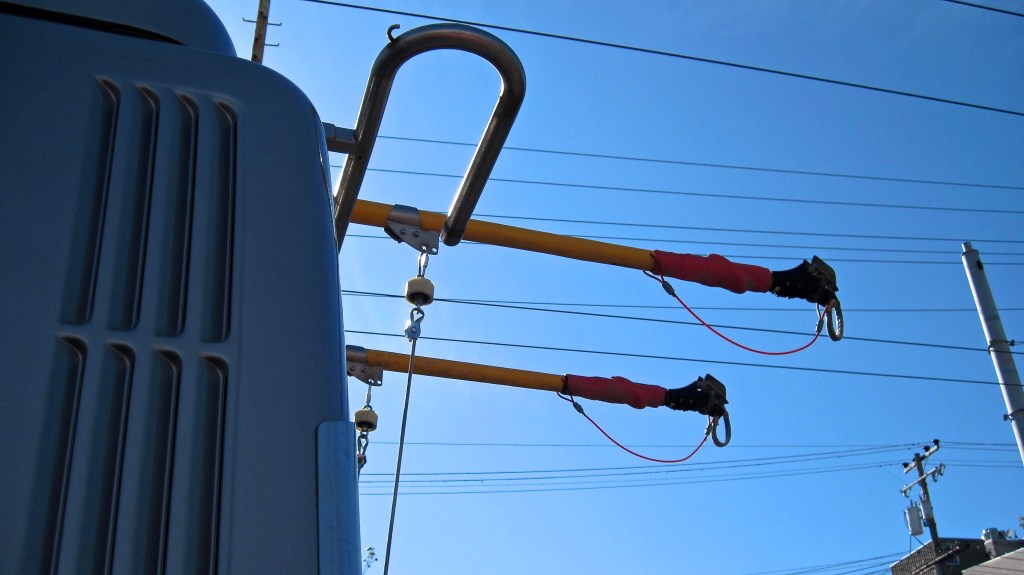
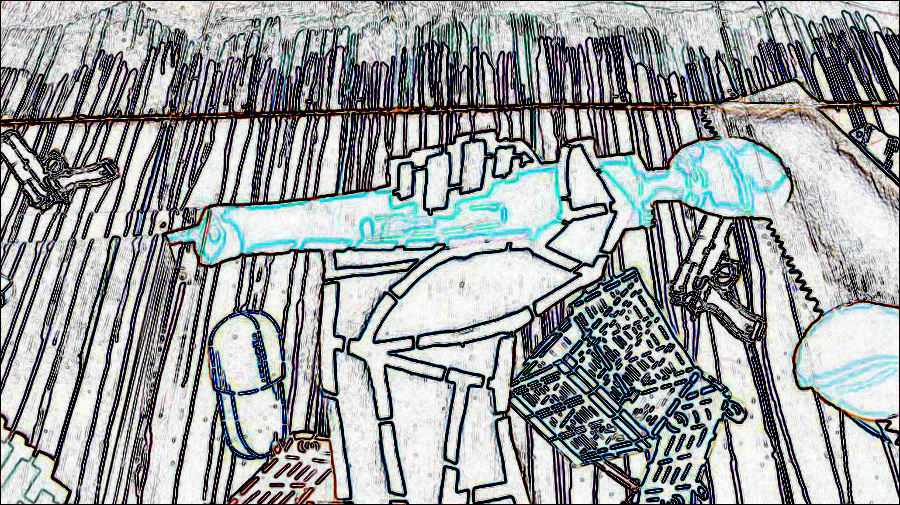
If you look up at the poles on the ETI Skoda coaches, you’ll see a black duct taped ball near the collector on the left pole. This is where the turn signal transmits to the doughnut on the wires before a switch to toggle the poles to a left, right, or center direction upon a diverge, usually before an intersection.

In a syncopative dance that defies predictability, certain coaches at certain switch locations fail to send a signal to the toggles to move the poles to another track. This can be confounding when using a switch not normally used, such as during a re-route when stalled traffic prevents safe space to get out and move the poles over to another track. 

Currently, I am on the 41 Union as I write this chapter, and we have a re-route on Market because Beale Street is closed due to construction around our new Trans-Bay Terminal. This creates a backup because autos must divert and detour around the closure which creates more molasses on parallel streets to the Bay Bridge. All coaches heading for the East Bay connection at the Trans-Bay Terminal must also use Spear Street where this dastardly intermittent right turn switch is located mid-block for us 41 Union buses to go around the block on Mission to Main Street.

Some days, when the switch does not fire, I can come to a stop and wait to hear the click. For some reason, standing under the doughnut using turn signal and lever, does not a click to a right turn, make. Other times the click smoothly sounds off in the final middle third of the oval. Each switch has its sweet spot where the click can be heard. They aren’t all the same. Some switches activate right before you go under them, others in the middle where you would expect, and then some will wait until the last minute after passing the oval. These are the angry birds!

Angry birds are located on Post between Kearny and Grant, Sacramento by Presidio, Van Ness at Chestnut, and now this one on Spear before Mission. These inductive lever switches can be activated by turn signal or a dial lever on our dash. Needless to say, using a turn signal, and turning our inductive dial, are both employed at these dastardly duds. The question is, is it the coaches’ fault or the overhead? Some coaches make it and others do not.

Another surprise is on Union at Columbus outbound by Washington Square Park. The poles will click left, even though we want to go straight, out to the Presidio. A good guess is that a 30R Stockton passed by earlier to click left, and the switch never reset. These sticky toggles usually need ‘special sauce’ by the overhead crew to keep them smooth.

Sometimes it is the operator’s fault. Especially if we forget to reset the lever when we pass by the next inductive switch! I have learned I must keep my hand on the lever dial until I hear the click so I can then reset the lever to normal immediately! Otherwise, I dewire at the next switch because I did not reset the dial to normal. Distractions at a turn cause me to forget. Only upon the rude awakening of ca-chunk and shaking of wires and poles do I look down to see the L – N – R position of the inductive dial, which I forgot to return to ’N.’  ’N’ is the neutral position where we use our foot on the turn signal button to trigger a switch. This is when having a weak transmitter on a bus can make for a bad day. Continuous use of the lever and not the turn signal builds to a guessing game and erosion of confidence. This can get reflected in how I treat my passengers.

Unlike most vehicles, our turn signals are activated on buttons like the hi-beam button on the floor of a car. This makes for hands-free turn signaling so we can keep our hands on the wheel.  Same is true for our announcement PA mic. We have four floor buttons, left turn, right turn, PA, and hi-beams. 

Losing the Zen becomes apparent when I de-wire at a switch only to find I have not reset my inductive lever from the previous sticky tricky inductive switch! Sometimes even if our lever is set correctly, a switch which doesn’t fall into angry bird category, acts up.

Once on a ten hour straight through on the 14 Mission, my poles switched right on the silent switch, and I moved through a fresh green light outbound to the Mission from downtown. This switch was not considered an angry bird. After a flash of light, I feared a pole ripped off my roof, and got caught on the overhead special work. I got no warning light on my dash, and looked out to the back from my driver side mirrors, and saw no problem. My poles were not flailing aimlessly. I let momentum carry me past the middle of this very wide intersection, and came to rest in the safety of the bus zone at 12th and Otis.

My instinct was to bring the coach to rest at the first safe place out of traffic and harm’s way, crossing the intersection with this rule in an emergency protocol. I hopped out of the cockpit and was relieved to see my poles intact on the coach with no damage. Whew. I did the right thing, and wouldn’t need to go out of service and call the shop.

Much to my horror and dismay, I saw wires hanging in the middle of South Van Ness, and immediately realized my poles had switched, and the collector, probably from the right pole, got caught on the turn and grabbed the right turn track wires and ripped them from the anchoring cross-wire. Live wires were sparking in the middle of the street, and cars coming from the far side heading from Mission to Van Ness could not see the wires from their stop line a good distance from the damaged live wire. 

I remember asking the passengers to wait for the next bus on the sidewalk, and to disembark as my coach was out of service. I called Central to cut the power, and secured my coach. 

As I later found out, wearing my safety vest saved me from bigger consequences. I never saw the tape, but at Muni, when you don’t have to view the tape in a disciplinary hearing, it means you did good. I never heard or received the power off warning on my console, so I had no indication my poles were off track. I confirmed my inductive lever was set correctly. 

It took the overhead crew 4 hours to repair the damage. Ouch. Power was cut to Van Ness for this time, and people trying to get home were inconvenienced. Interestingly, the operator I assumed who went through the switch before me, seemed unfazed by his delay on the line of over four hours, and made the point to tell me that it was probably a good thing he waited for hours after his shift was over. Curious I was, but made no comment. I guess he needed the overtime.

Even though my evacuation procedures were followed, I did major damage, I never got the opportunity to explain why asking passengers to alight in the middle of the intersection was not safe. The verdict I did not stop immediately was the rule violation I was to be charged with for dereliction of duty. 

Another manager who passed by the scene apparently said I left the scene of the accident. I was trying to warn the oncoming 49 line not to pass through, but didn’t make it. He de-wired also, not knowing what happened. I put a cone in the street below the wires, far enough away not to get zapped. 

I was not happy to learn our new collectors are one solid piece of metal, and without a breakaway feature. The shop did come to my rescue, by stating the shoes were incompatible with the new collector. This kept my Superintendent at bay.

The crew that came out to check my shoes thought is was funny I tore down the wires, but I wasn’t laughing. Why were they so joyful at my misery? It’s almost as if they knew it was a planned setup. I had gone through the switch twice before, and had the premonition to get out and check the poles. Sure enough, my intuition was correct, and I needed to move the poles over to prevent a de-wirement. Of all the times I would go through the switch, would I really have to get out every time to make sure I was on the straight track?  That also seemed like too much work over a long period of time.  I just had to have Faith. I kept calling in that the semaphore was not illuminating to show how the switch was set.

My conspiracy theories activated, and all I could think of was, who went through the switch before me? Did they activate the right turn, get out and drop their poles before going through the switch, move on battery power, and then put their poles back up on the wires? This would explain why the switch was set to the right for the next coach passing. That coach was mine. A booby trap was set, probably from a 49 pull out turning right on Van Ness. But I could not fathom any payback anger from the operator in question. The simplest answer is usually the most probably. 

There was no reasonable explanation I could come up except for a bad switch and bad luck. I decided to wait and see; no use in ‘angry birds’ energy for something I could not prove. I also remembered, I too, went through the switch once without resetting it properly. I may have set this train of circumstances in motion by my own fault, even though now, I was paying the price. This helped my attitude immensely.

The crew that came out laughed sarcastically at my misfortune, and the thought they knew the operator who just pulled out with a fresh coach and was the last one to pass had me on the defensive, but I have learned that surrender is usually the best way to deal with any situation. I felt that investigating the matter to protect my name is a long and painful timeframe with wasted angry energy that could be avoided if I keep a play-as-you-go unfoldment to see what happens next. I kept the cause as myself, and not on the other operator. Time will tell.

I didn’t get in trouble, but lost expert operator pay and line trainer status. A new convenient efficiency rule allows for management to need no time frame to make an accident determination or serve a grade on an occurrence. I never got the paperwork, just a latent removal of extra pay months later. 

I found out a new operator still on probation, had the same problem I had at the same switch, and got extended probation because of his hand placement on the wheel. When damage over a certain amount occurs, the operator’s feedback seems immaterial and the penalty applies without recourse. Blame the operator seems to be the default conclusion. After feedback much later from one of my line training students, it was a tough call and a no-win situation. Case closed. 

As time went on, I moved to the 49 line and had the operator in question in front of me. He too, had a no-win situation. He was now a line trainer and had a student with him who was slowing the line and falling back on my time. I took it in stride and was able to manage my time without any consequence. Good, I thought, I am experiencing no backwash from a late leader. I didn’t harbor any blame or anger towards his delays at the terminal, and I saw him talking to an inspector who apparently was warning him about falling back with his student. 

He was on the defensive about being written up for dragging the line. The inspector was monitoring our arriving and leaving times from North Point, and he may have had some paperwork or trouble in being with new hires as a line trainer. Wow. I never considered this to be a problem, as I was certainly not calling in on him for being late. At least my accident was a one shot deal. He was having to sit in it and deal with his schedule for his entire shift.

I’ll never really know if this was payback, or simply luck of the draw, but I have since learned to keep my mouth shut and not try to prove a losing point, but go with the flow. My lawyer-like intentions can rest. I certainly have seen other operators try this, and there is usually an underlying good reason why they are being railroaded. The faster I can see my part in causing my pain, the faster I get out and stay out of trouble.

I have since moved back to the Presidio Barn and haven’t had any angry bird switches to deal with. I am on a motor coach as the power in the wires has been turned off due to construction. Taking a breather from the trolleybus seems like a needed vacation! 

https://www.amazon.com/stores/Mr.-Douglas-Meriwether-Griggs-III/author/B07HQW9RYL?ref=ap_rdr&store_ref=ap_rdr&isDramIntegrated=true&shoppingPortalEnabled=true#formatSelectorHeader
Pudding Pants

Having left the raucous Receiver’s office at Potrero Division for the quieter Presidio Division, I thought material for my next book would suffer a drought not unlike the one Northern California had been experiencing for the last several years. As I write this chapter, snowpack is 160 per cent of normal, and the folks up at the Truckee Pass are dug in deep in drifts as high as their roof! The Oroville Dam spillway has had so much water pouring over it that it has needed to be refilled and repaired lest those downriver be inundated with, well, quite frankly, shit. We all know it rolls downhill!  And it certainly isn’t pleasant when it hits the fan. However, no tome about Muni would be complete without such scatological reference.

Merriam Webster has a nice simple definition:  1: interest in or treatment of obscene matters especially in literature  2 : the biologically oriented study of excrement (as for taxonomic purposes or for the determination of diet).  Wikipedia offers this definition: In literature, “scatological” is a term to denote the literary trope of the grotesque body. It is used to describe works that make particular reference to excretion or excrement, as well as to toilet humor. In our case, we are affirming this book as a piece of literature, while also probing a taxonomic discovery of foods ingested to create such a mess. Indeed, a trope is a name given to classical rhetoric and deconstruction, the grotesque body, associated with Mardi Gras consumption of mass food ingestion.  

So too, like the Oroville Dam spillway, must our operator’s seat be replaced, especially if our pants overflow with self-made pudding. This pudding is hopefully of a texture firmer than brie or muenster cheese, a ‘better butterfinger’ if like sharp cheddar or lentil soup (left on the burner for a few days.) Thus firmer then, say, cottage cheese, left in the back of the refrigerator for God only knows how long, or day old pot of refried beans. Let’s just say, the phrase, “Who cut the cheese?” begins to bring meaning to what I am trying to say in vivid detail.

To be sure, passing the gas is a problem in the seat, especially if a hottie or cutie happens to move close in to the fare box at just the right (or wrong) moment when one prays which way the wind blows, in a favorable light direction. But for whom the bell tolls, when the anus fails to hold back the flood, is that it tolls for thee. 

So too, with stories now emanating from the Gilley Room at Presidio. As I was passing by to pick up my paddle, and suggest this new title as a chapter in my book, a group of operators were in deep conversation about the various personal necessity emergencies we find in having to stop the coach and use the restroom. Our code for personal necessity is 702. The story line at our break room was about a difficult situation (saturation) in which a personal necessity was being called at a busy intersection downtown at Montgomery and Market. Personal necessity calls are expected to occur at our terminal break, not in the middle of the line. So it was definitely an item for cause when a bus goes out of service at this location. An inspector rushed to the scene to find out why this operator was holding the bus and blocking a traffic lane. 

“I need to change my uniform.” stated the operator. “Did coffee spill on your shirt?” asked the inspector. “No, I need a new pair of pants. Would you like me to show you?” Immediately, the look of disdain disappeared on the inspector’s face. He got a whiff.

“Oh.” 

The operator got orders to pull the coach in. No disciplinary action taken. There is a rule whereby we have two hours to get a new uniform if it becomes soiled.

The reason we put newspaper down on our cockpit seat is because if we don’t, we sometimes feel as though invisible worms are eating the way up our ass as we twitch and squirm in our seat. Our new buses have a seat belt safety feature which sends out a loud noise on our horn which honks not unlike a car alarm. If our ass leaves the seat, even for a second, the bus will scream out loud, and on some models, if moving, the bus brakes to an immediate stop. 

So dear pedestrian, if you hear a bus honking loudly in the middle of the street, please take heart. It could simply be that we are trying to remove our caked uniform stuck to our butt from hours of steamy driving, or it could be call for a 702. In any case, the idiot who installed this safety feature did not have experience in driving a bus over a twelve hour range in a city like San Francisco.

I can just hear the manufacturing representative talking to a purchaser at Muni. Would like to add the new seat feature we are offering on our latest model? It sends out an intermittent horn blast while stopping the coach if the seat is unoccupied. No extra cost. Gee, sounds good. 

Fortunately, new seats are being installed throughout our ETI Skoda coaches which are now over twelve years old. To whoever approved the work order or capital improvement item to add new chairs, THANK YOU! Having years’ worth of pudding pants episodes cleared by a new chair is very welcome now that I also have a new uniform, to boot (without new boots.)

The Road to Happy Destiny can be found with a new cockpit seat, complete with a head rest and butt rest safety feature!

https://www.amazon.com/stores/Mr.-Douglas-Meriwether-Griggs-III/author/B07HQW9RYL?ref=ap_rdr&store_ref=ap_rdr&isDramIntegrated=true&shoppingPortalEnabled=true#formatSelectorHeader

Safe than Sorry

I hear this phrase a-lot in training or safety meetings. Passengers also use it from time to time when asking for a transfer if clipper tag-in warnings go off when entering the bus. The start of 2017 has the second Friday showing a full round moon and is dated Friday the thirteenth. I write this missive on Saturday the fourteenth, relieved I made the workday without any paperwork.  But I came close. Too close for comfort.

I teased passengers short on change at the fare-box,  that to risk not receiving a transfer on the First Friday of the New Year, on the First Full Moon, was a dangerous lifestyle choice. I asked people to refrain from wearing hockey masks, and that anyone named Freddie should please wait for the next bus. You’ll very rarely not know your on Driver Doug’s bus, especially on a Friday the Thirteenth!

We experience the lunar and solar eclipse this winter early on and it gets me to thinking about how we create our own bow-shock of experience by whether we maintain an awareness of ‘safe than sorry’ as we go about our day on the road, in the office, or on the bus. 

Am I keeping a safe mental distance and a safe physical distance between potential eclipses of ride share vehicles and crossing pedestrians? Is the Muniverse giving me hints that my Grace is about to expire?

Perhaps the quickest way to go from sorry to safe is to take time off! Humu’humu’nku’a’pu’a the state fish of our 50th state calls to me to visit him on the reef at Waikiki! I need to see the Hono, the sea turtle, to surface for some air by the surf in Hawaii! Alas, I have found the true definition of island fever. I thought it was someone newly moved to the islands that had a craving to get off back to the mainland. This is not true for me now. It is someone missing the call of the surf on the reef at the shore of a beach. It is of a mainlander (me) that needs a GPS update and reboot to clear my brain, my hard drive, so I won’t be so hard on you, my dear reader, my dear passenger!

Indeed, there are clues everywhere and this gets me excited about my job and keeps me back on my toes. Or should I say, back on my heels?  Being back in my body about how I am sitting and gripping the wheel; the tone in my voice. Am I tired and disinterested or engaged and helpful? As soon as my attention wanders, the complaint cue is ready and waiting! Being safe than sorry is another way of being mindful instead of a devil may care attitude.

Losing Zen can be the hardest battle to overcome as a Transit Operator in the tech mecca of San Francisco!

https://daoofdoug.com

Night Park

When we bring our coach to rest in the yard, we are to log off on our radio and secure our coach.  It’s interesting how sloppy we can get in doing this after a long day.  I pulled-in last night with rain in the forecast and did not see the tale tell parking lights on in the two buses in front of me. When we turn our Master Control to Night Park, we should see the parking lights remain on as a signal to the Yard starter and Shop crew that the coach is charging overnight.  If a bus is turned off, it makes for a bad morning for the next operator. The new recruits are trained on motor coaches and obviously were not reminded to put the trolley in night park. The coaches were dark and had no lights on whatsoever. 

I went in to the bus ahead, and turned it to Night Park. The blowers came to life, and the wipers started up. Accessories were left on. I turned off the blowers and wipers. This makes for a dead coach in the morning and a battery charge necessary. The coach in front of this one also had no lights on. When I went up to check Master, it too was off. I turned it to Night Park, and the blowers came on. This would have made for a bad morning and late pullout.

Another important duty in overnight securement is closing the windows. We have just left a long period of drought here in California, so we have not had to worry about rain for a long time. Not true today. The windows on the windward side need be shut else the seats are soaked in the morning. The same goes for the roof hatches. 

We have blowing wind and rain from 7,000 uninterrupted ocean blue miles, and when the low pressure cyclone hits the California coast, it makes for a good drenching.  Its money in the bank for roofers, as the water travels horizontally into every nook and cranny on the roof and around skylights and windows. So too, in the buses, every hatch and window must be shut. 

Fortunately, at the Presidio Division, our buses have been re-caulked and resealed to keep the rain out. Not true at Potrereo or Woods, where the water can come gushing in behind the operator’s chair or down the front windscreen! Seeing a pool of water along the floor baseboards is a sign that the water has traveled down the side of the bus until it reaches the floor. As a roofer for five years, I have become a leak specialist, and practiced at the art of stopping leaks. Not so for our mechanics, who may have not had any roofer training on leaks! 

Being told the Complaint Department is closed at the Potrero Division, I transferred to the Presidio. I was told that at Potrero, resealing the roof was an unnecessary expense. The buses there would not be sent down to San Carlos to be waterproofed. Okay, fine. I’ll go to a Division where I don’t have to worry about water flooding in my compartment or on the seats!  After all it’s only 600 volts of direct current above on the wires! 

During dry times, fine, no one is the wiser. But as we are now in a three year wet cycle, thanks but no thanks. God bless the brand new hybrid motor coaches from the Flyer Corp. in Winnipeg, Manitoba!  These beauties are a pleasure to operate and don’t leak! 

Stopping the crickets is also a favorite of mine. The buses chirp like crickets after a minute of being left out of direct power mode, and it is necessary to reset the alarm to hush them. Although this sound may lull some of the neighbors to sleep, I like to believe that silence is golden when it comes to being next to a bus barn!

Turning a coach off and shutting the windows and hatches is a great way not to lose the Zen in the morning before coffee!

https://fineartamerica.com/featured/morning-mocha-douglas-griggs.html

Leading Green

The Hampton Roads area by the Chesapeake Bay has a nice sign under its signals. The sign below an overhead signal is marked Leading Green, or Delayed Green. This signals to motorists who gets to turn first or last at a major intersection of four lanes or more, and with a four or six way cycle including left and right turn arrows. Adding the leading green sign can keep a simple two way cycle and preclude installation of a left or right turn arrow. The city of San Francisco has not upgraded its traffic signal flows or timetables with safety observers for years, maybe decades. 

Note to traffic engineers and planners. The time worn tool for data is to station counters at intersections to monitor turn signals, lane changes and traffic storage over various hourly day-parts on weekdays, weekends, and holidays. This helps in detailing when changes in the signals should occur and gets the ball rolling to see when more cars are waiting at the end of a cycle for a green, than those in cross traffic on a stale green.

When seconds tick by with no cross traffic passing by a stale green, and a queue of cars sit standing waiting on a red, the timing of the green becomes noticeable. By counting signal changes myself while waiting at the red, I find that light cycles come in 10 second packs: 15 second greens, 25 second greens, 35 second greens, and 45 seconds. The first and last, the shortest and longest, are the rarest. Haight and Fillmore is a 15 second  cycle, Van Ness and Market, the longest, at 45 seconds. In putting in a request for a cycle change, I understand that keeping these cycles is important due to the other signals at intersections near the affected change as timing may get thrown off by the flow.

Cyclists are the first to become aware that cars travel in packs. Transit operators and veteran truck drivers come to ‘know the lights’ and distinguish themselves from motorists by the way they drive. Even on the freeways, notice how pods of cars form on the road. It makes little sense from a safety point of view to try to speed or push through a knot of cars in the pack, or speed up to be at the rear of a pack. Being in a relatively empty stretch of cars is great! Less stress, and better odds of avoiding conflict. 

Very few arterials in San Francisco have such timed lights such as Oak and Fell, Golden Gate and Turk. Now, ‘Green Wave’ streets such as Valencia are timed for bikes and not cars. Many a cabbie and out of towner are not too thrilled when auto lanes are removed for bikes, but these changes are mandated by Vision Zero, a plan to reduce pedestrian fatalities.

Indeed, making leading green changes at an intersection is not as simple as it may first appear. It isn’t just car or bus flow that need be considered. Pedestrians need to cross safely during a sequence, and when they cross is important. Giving the walk signal at the end of a stale green on a one way arterial may be extremely dangerous if motorists try to speed up and make the light before it goes red so they can ‘tailgate’ at the end of a pack of cars making steady greens on a timed light arterial like Gough. 

Gough and Sacramento is one such intersection that requires special attention. Transit inbound needs to make a leading green left turn on Sacramento, but the far-side crosswalk on Gough to Lafayette Park abounds with moms and strollers and dogs on a leash. Dog walkers can be distracted by a mutt that charges like a Klondike dogsled team to get to the park!

Putting in a bus bulb to shorten travel time to cross may be good in theory, but trolley turns don’t seem to be taken into account, such as at Fillmore and McAllister. Our wheels roll over the sidewalk when we make turns at the Webster Street turn back and pull-in loop. A new bus bulb is going in at Cortland and Bayshore right by a liquor store. Outbound 24’s will no longer be able to make a right on red when cars are stacked to make a left turn. We operators will have to fight traffic to move left to make a right turn. This Vision Zero change does not help us stay on time and adds to conflict. Transfer passengers now may run across Cortland from the 9, believing they are now ‘safe’ to cross. A Bus Driver’s perspective need be taken in to account when making these safety changes. A transit planner job beckons like low hanging fruit on the sf gov dot org website!

Leading greens are slowly being input around intersections in San Francisco. Most of our intersections have remained without left turn storage or arrows to make turns, but this is gradually improving. Losing the light and losing the Zen need not be a given with new traffic lights and pedestrian bulbs and medians!