After riding the Cable Car to Fisherman’s Wharf, I decided to look at my watch and see what time it was. My watch was no longer on my wrist. I recalled taking off my jacket when I got on the Hyde Street Cable Car at the Powell turntable. The cuff of the jacket tugged on my wristband and I had shrugged my arm to free the jacket off my body. My watch must have fallen and dropped to the ground or the floor of the car!
I was already walking past Ghirardelli Square and headed up from Aquatic Park when I found the stop for the 47. I hopped on the motor coach back to Market Street with a dim hope of getting back to Powell Station, much less finding a lost and found booth, if it even existed.
When I got back to the turntable, a Cable Car was being rotated on the turntable. After the table was secured, I went up to the grip man and asked if he had seen a Swiss Army watch. He smiled. It was the same operator I rode with–exactly two hours earlier–to the Wharf. He held up my watch.
My dad got me this watch for my birthday on a cruise to St. Maarten’s. No, he didn’t put it up is ass to get past enemy lines, but the miracle of getting it back was just as unique.
Somewhere, somehow, some when, something was looking after me and keeping me on the path to become a Muni Transit Operator. The circumstances of coincidence in getting a double stamped notice-to-report for class one day late–but within the two week time frame of the later date–November 17, 1998 was just but another God shot on my way to my twenty-one year career being of service as a bus driver.
“Last stop people.” Another day closes. I can pull in knowing I passed the test in avoiding collisions with other cars, trucks, pedestrians, skaters, and cyclists. Most important, I didn’t make contact with any rideshare drivers looking down at their phone and being inattentive. The thousands of ride share cars coming in daily from out-of-county was not a development I wanted to see in my last years approaching the retirement ribbon. The wandering homeless and mentally-ill drifters add spice to travel when a salt-and-pepper diet may not be desired. Especially when traveling home after a tiring day at work.
Dealing with the tour buses taking techies to San Mateo and Santa Clara Counties was annoying at first, in the mid-2000’s when the large 45 foot shuttles hogged our bus zones, but we overcame this by adjusting our times and learning how to stop behind them, or to wait for them to clear. The horse of a different color is the rush of small ride share vehicles clogging Market and stopping anywhere and everywhere after abrupt lane changes and U-turns!
The last stop is that of the subsidized Light Rail fantasy being promoted now in San Antonio, Nashville, and Tampa. Voters have more than once signaled they don’t want to pay for underground tunnels or light rail systems, yet the boondoggle continues.
Now that rideshare vehicles are but a phone click away, ridership on all bus systems is down. Detroit, Sacramento, and Memphis have shown a 30 percent drop since 2010. Austin, Cleveland, Louisville, St. Louis, and Virginia Beach-Norfolk are down over 20 percent. Low gas prices could be to blame. Unfortunately, traffic delays are up, costing 300 billion a year in the U.S., and average of $1,400 per driver. Even in sacred transit friendly Portland, OR, only eight percent of the commute population uses transit, down from ten percent in the 1980’s.
The Institute of Transportation Studies at U of Davis, California, documents a six percent reduction in transit and shows half of all ride-hail trips would not be made at all if walking, using a bike, or taking transit. Perhaps this missive written from my point of view as a transit operator will become more of a sentimental historical document, rather than a crowd-breaking move to more transit riders. Indeed, the only thing breaking is transit infrastructure!
The good news is Stockton Street will soon reopen and our first new streetcar has passed certification in our underground tunnel. A new Central Subway tunnel and Rapid Transit Lanes are under construction to keep our fleet moving faster than traffic. This shouldn’t be so hard to do!
I have been blessed to keep end-of-the-line problems to a minimum by waking sleepers as soon as I see them slump, and by knowing where they want to get off. The key is to issue a wake-up call by leaving the seat and gently announcing their stop. Allowing them to fall into deep sleep costs valuable terminal break time when pulling-in.
Having a hospital at our new outbound terminal has been a curse and a blessing. Persuasive powers come into play to follow their distracted thoughts to check in to detox or the emergency room. Encouraging inflections of tone in my voice will probably fall on deaf ears with hospital security, and all to often I face the full blown mental crisis up the hill on my terminal when attempting to leave! Dropping off an alcoholic in his cups to a hospital emergency room is not unlike a bouncer trying to push a problem drinker onto a bus driver.
Thank God Golden Gate Park is next to the hospital, and the dealer’s den on Haight street are also close by as a distraction to alcoholic ranting and raving from a rider in the back seat, lest they decide they need to go downtown, and not detox after all.
The deal is this: Don’t let them stay on before we go around the block to our terminal. Our terminal should be a time of refuge—a time of peace and quiet. This can only be attained by popping the brake and assisting our dear rider off the bus before we go around the block. They can then disappear into the night like rodents that scuttle away when the lights come on. I have friends wishing to study to be a drug and alcohol counselors, and I believe bus drivers could use some classes! Trying to tell an alcoholic what to do is not an option. Being suggestive and prayerful works. Maintaining dignity and respect is the only key that works in the lock.
The road to happy destiny at the end of the line can come with experience and not from more money in the budget for new rail lines.*
*Editor’s Note: Since the writing of this book, and of this chapter, End of the Line, in June of 2018, our nation, our world, experienced a pandemic which radically changed the nature of public transit in large urban areas such as San Francisco. Commercial real estate, with its large downtown buildings upon whom our city dwellers clocked-in from nine to five, created strong demand during peak times. What we call rush hour in San Francisco which is earlier, from five to two or six to three to match New York financial market times, made for a long four hour comings and goings to downtown that came to become ghost town conditions.
I guess, in a way, it was a dream come true for this, now retired, bus driver. I put in for my retirement exit with the city on February 13, 2020, one month before the shit hit the fan with Covid. I had an intuitive sense to retire at age sixty-two and not wait until sixty-seven, for social security. I just made the paperwork deadline before my sixty-second birthday in June of 2020. But this means I had from March, April, May, and June to ride with my mask on and work about two days a week on a reduced schedule.
The miracle was, for the first time in my twenty-two calendar years of work as a transit operator, I could keep to the schedule and have enough recovery time to compose myself and the end of the line on each trip! All the ride share and tour bus shuttle conflict to Silicon Valley was gone. Fights over the front seats were gone. Traffic was light, and the stress of driving the bus was reduced. My point is: this is a great time to get in to the job. I still don’t say career, because I don’t think most of us who work or have worked, for the Department of Transportation, consider bus driver as a career—but it could be considered as such. If you want it.
It definitely is not for most people, but if you know you’re one of us, Come on down! as they say in the Price is Right game show. The security of a civil service job brought me the security of a steady paycheck without interruption. I suspect that the cost of maintaining a car and the price of fuel will turn the tide back to an increasing ridership in the cities such as San Francisco—sooner than we think. Indeed, the future of mass transit is on a road to a Happy Destiny! Peace be With You!
Guys, I did it! I kept the same job for over 21 years and got out clean! I got my retirement paperwork done three months before my 62nd birthday—on February 13th, 2020—one month before Covid hit. I did my last run on June 2nd, 2020.
That morning I woke from a dream of smiling faces and the sound of happy applause, which had the blessings and thanks from all my regular patrons who were with me on the bus—cheering me on.
There were no angels getting wings or any bells ringing as I pulled into the yard for the last time later that day around 5 p.m. An operator was getting out of her car getting ready to start her twilight shift, and I opened the bus front door and waved at her. “This is it! I’m done!” She smiled back after first seeing her standard Muni expression we have on our face before pulling out—an expression of exhaustion and anticipation with a sigh of acceptance of having a good paying job with a familiar routine.
This book is the final destination of my legacy of all that I learned and had to accept as a bus driver in San Francisco for over two decades.
Named by Mayor James Van Ness in 1856, this 12.7 acre park in the middle of Victorian mansions built during the 1870’s to the 1920’s, was noted as a watering hole in between the commandant’s quarters in the Presidio and Mission Delores Basilica, both occupied and controlled by the Spanish, who were the first European inhabitants of San Francisco. A lone alamo, or cottonwood tree, marked the watering hole for both Spanish Army soldiers and later, San Francisco residents. If you look at Hayes Street between Pierce and Scott, and the southern edge of the park’s sidewalk, you can still see water weeping from the ground marking where this lone Cottonwood tree stood, marking the tiny oasis. This natural spring is more evident after a heavy rainfall. The steep grade running through the middle of the park is part of an unlisted fault line running through the city from the Presidio by the Lake District to the Bayview and the Hunter’s Point shipyard area.
Alamo Square has become a tourist must see spot to view the Painted Ladies, San Francisco’s first tract housing: houses built with no owner in mind. Most of the mansions built in the neighborhood followed the pattern of most home building at the turn of the century. Houses were built by the owner to be, and contracted out by a carpenter and builder known to the would be owner. This district is second only to Pacific Heights in density of 10,000 square foot mansions, some still undivided after all these years.
Another architectural fact is to notice which Queen Anne style windows still remain curved, and not replaced with square window frames. There are four basic architectural styles in San Francisco’s residential neighborhoods. Eastlake Stick, Italianate, Queen Anne, and Edwardian. The Painted Ladies, the picture postcard row of houses with the city skyline backdrop, are Italianate with gingerbread type scrollwork around the windows and eves, and ornate woodwork design, such as the dowel found at the roof ridge top.
Eastlake Stick homes, named after the designer, Sir Eastlake, were available from the Sears and Roebuck catalog, and could be assembled from a kit delivered to you by boat or train in the days when weed and dune were fast vanishing to streets and wood frame houses.
On the west side of the park, you can find the Italianate William Westerfield house, complete with widow’s walk and intense lightning rods on the roof and eves. This National Historic Landmark (no. 135) is worth seeing, as are the Seattle Block on Golden Gate and Steiner, and the Tivoli Theatre’s bed-and-breakfast hotel on the corner from the Seattle Block of houses. These latter buildings are more toward Queen Anne than Italianate, as they are marked with cupolas and curved windows. The final style is of Edwardian, usually the simplest in lines and complexity, and marked by huge rectangular windows.
The west side of Alamo Square has Edwardian houses, and you can see this by the huge windows on the front of the houses over the driveways. Proceeding west on Hayes, past Divisadero on the right side, you will find Eastlake Stick Sear’s specials, with only two stories remaining. The bottom floor was taken away after these houses collapsed in the 1906 earthquake!
Divisadero Street is a great street for a bite, a drink, or a dessert. The Bi-Rite store has ice cream rated the best by many. My favorite sandwich shop is the Bean Bag Cafe. A neighbor of mine actually got married here, as loyal customers develop friendships that can lead to vows!
Also along “Divis”, as we nickname the street, are pizza, greek sandwich, and Louisiana fried chicken! If you are cycling through the area, there is Mojo Cafe, designed with you in mind. You can get the best bike ride routes from other patrons here. The Harding Theatre, dormant for years, is ready to open with a fresh marketplace interior.
The Alamo Square, or ‘Lone Cottonwood,’ is accessible on the 21 Hayes line which can take you from Ferry Plaza and the SF Railway Museum, all the way to Golden Gate Park. There you can transfer to the 5R Fulton and traverse the entire 3.5 mile journey along the park to Ocean Beach for a view of Cliff House and Seal Rock.
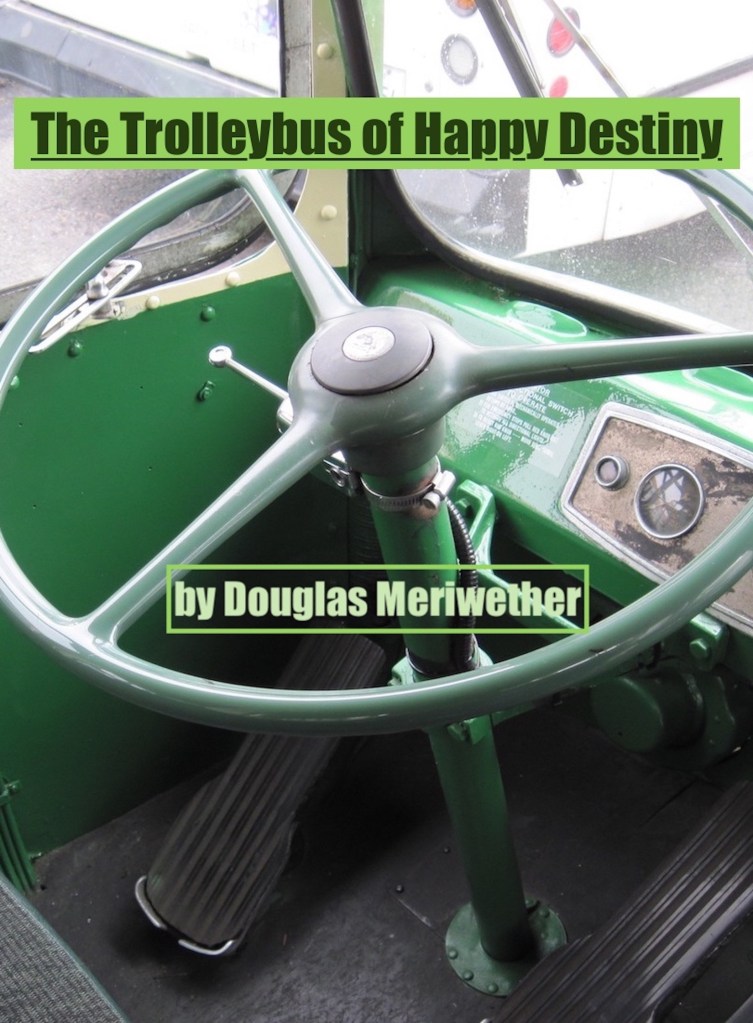
In any event, the 21 Hayes can easily qualify as The Trolleybus to Happy Destiny as it slices through the Heart of San Francisco.
This is a great name for a commitment to reducing pedestrian collisions. Perhaps there will be no way San Francisco will see not a single pedestrian collision in a year, but this does not preclude having a collective conscious vision to move towards absolute a perfect goal in which no one makes contact.
High Injury Network, HIN for short, is the term for listing hot spots where collisions are high. As a person interested in transit planning, I absorbed the Vision Zero data with a passion as though I could make a difference with my experience on the road.
I have noticed several categories of factors leading to collision: Unfamiliarity, off ramp, mental illness, signal walk cycle, senior housing, visibility, and downhill speed.
Unfamiliarity
North Point and Hyde and Francisco and Taylor are two HIN intersections that fall into the pedestrian and motorist unfamiliarity category. Setback triangles from the crosswalk help transit operators stop back from the stop line to give a big picture view of intending sidewalk pedestrians a space cushion to avoid pushing too close to the crosswalk, which limits reaction time to stop for a stroller or senior. LED flashers would be indicated at these locations. These intersections are located close to a high visitor population by Fisherman’s Wharf.
Freeway Off-Ramp
Seventeenth and Vermont could also use pedestrian activated crosswalk flashers for the reason of unfamiliarity, but also because of the category of downhill speed and freeway off-ramp. Motorists, frustrated by the Central Freeway and Bay Bridge backup, exit 101 and book to try to make up for lost time. Indeed, making Bryant an alternate arterial for freeway overload might be a good release valve to help the Essex/ Folsom merge downtown. This Vermont offramp also suffers from downhill speed, as motorists regain clutter free traffic once leaving the freeway. Flashers at the exit offramp by Slovenian Hall might also help when pedestrians attempt to cross this first stop line off of the freeway. The same could be said of Folsom and Ninth by Bed Bath & Beyond in SOMA. Pedestrians crossing right by a freeway off-ramp need to be mindful that cars coming directly off of the freeway may not have adjusted from a suburban mindset to an urban one.
Downhill Speed
17th and Roosevelt, 14th and Noe, Jackson and Spruce, also identified as an HIN, suffer from visibility problems, either from hills or large tree canopy. Motorists can’t see pedestrians, particularly after dark, because of limited sight distance as they gain speed going downhill. Street stencils and pedestrian barriers would help, as would chirpers on a button, mainly as a warning to pedestrians, they are crossing at a High Injury Location. Another idea I have is to use baby signs oriented towards the sidewalk with a red exclamation point in a yellow inverted yield sign, alerting those who cross, that this is a dangerous crossing.
Signal Walk Cycle
Too few intersections have isolated pedestrian cross cycles, the most glaring example at Fourth and Townsend by the Caltrain Station. I understand the necessity to keep heavy traffic moving, and this is exactly why the walk cycle needs to be isolated. Traffic cannot make turns or proceed smoothly due to laggards and distracted walkers consuming the green for traffic to start moving. Dear Engineer, here’s a concept to consider: during peak traffic hours, from 3:30 p.m. to 6:30 p.m., only allow pedestrians their four corner crossings every other or every third green cycle for Fourth Street. Give them those precious extra five or ten seconds to cross diagonally during their cycle: the point is “Darn, why didn’t we get the crosswalk signal? Oh we can cross both walks at once, killing two birds with one stone, a bird in hand, and not in the bush, and not on the evening news or in an operator’s transit safe driving record.”
When the Third Street Bridge was closed, and a single lane was permitted to turn from Townsend, only one or two cars could make it through the green. This bottleneck took an extra thirty minutes to crawl on Channel Street, when an isolated pedestrian signal would give Fourth Street a solid twenty-five seconds to clear cars from the single lane choke point. Seeing DPT controllers standing by useless doesn’t go over big after waiting thirty minutes to pull-out from Woods to start my afternoon run.
Isolated pedestrian cycles at Kearny and Post, Kearney and Bush, would help us make the green without any life histories flashing across the memories of late runners blocking the green for transit and cars trying to clear the crosswalks. Deny pedestrians a cycle for uninterrupted flow of traffic, then give them a four points crossing.
Fourteenth and Folsom also needs a pedestrian flow isolation as seniors and those with groceries from Foods Co. and Rainbow Grocery need time without fear of turning cars. This is an HIN crossing.
Solutions
Chirpers, LED flashers, Syncopated signal crossings using a two or three interval cycle for pedestrians, electronic speed limit signs with MPH red flash for speeders, pedestrian barriers, SFMTA signage and baby signs in line of sight with eyeballs sitting in a car, and stencils are all good changes to reduce high injury network intersections. Granted Pedestrian barriers are often ignored, but it reduces claims when a pedestrian violates the law. Most No Parking signs are ignored simply because they are too high up from line of sight from a driver’s view in the car. Lowering signs to bike sign size is a great visibility change and I get why engineers are hesitant to use them: defacement and graffiti. Plus outright removal, such as the Muni flags on Market.
We need a vigorous sign replacement team to keep the message clear. Destructive urges, by passing angry individuals, needs to be addressed, and those damaging signs and barriers need to realize their actions are not in a consequence free environment. I saw this anger first hand, when an angry youth did not understand why my 21 bus would not open the door while stopped on the island at a red light. Most of the damage to our MUNI Flagpoles occurs during the wee hours after a pass-up. If I can’t get on the bus, then I’ll be damned if anyone can either. The hell with these useless signs!
Kudos to the extra police presence on Market during peak PM hours. This helps save our peace of mind and can maintain a happy destiny to get home from work without any drama.
One defect that does not usually appear on the defect card is that of stop request. Most of the time, we as operators, become so familiar with our routine on our run that we almost don’t need the stop request lights or bell, to know where and when people are getting off the bus. Likewise, we know where we must stop and open the doors, even if it first appears that no one is intending in the zone. Hospital stops are a no brainer for coming to stop and lowering the kneeler automatically. Certain places around corners and with limited sight distance are also a good place to stop even if we hear no ring. Hermann is such a stop on the 22. Also Kansas before turning toward Seventeenth.
Recent changes to our operating rules through voter initiatives, and with technology, have given a strong voice to our riding public and given managers’ tools to enforce the rules and make those of us who operate the buses, more accountable to our actions. It used to be you guys were just as tired and fed up (as we were) when you were on your ride home, that no way were you going to find the Muni number, and dial on your land line to an office that was now closed, about being passed up by a Muni bus. Today, with cell phone in hand, and a simple 3-1-1 on speed dial, a call can be placed immediately and a written record and ID number generated on the spot. When I was being observed, I received a call from central control about someone I had passed up three stops back. Wow! That is a big change from the first ten years I spent behind the wheel with only the land line number 673-M.U.N.I.
The bottom line I learned from all this was that not observing the one block spacing rule can get me in trouble when my leader is close in front, and another bus, such as the 14 is behind me. I have to realize that new riders are not hip on how to signal a coach at a multiple line stop. Not “being ready” is not a valid excuse as a pass-up. The only one needed to be “taught a lesson” was me!
Twelfth and Otis is one of those “around the corner” stops that need be made, even if we don’t see anybody waiting as we turn the corner from the 49, or cross-over 101, on Mission. A coworker recently commented on a PSR he got as a pass-up at this stop. No one was waiting at the stop and he kept on going. I too, have done this many times, but have been written up for accumulating too many of these non stop, bus stop actions. Coaches send digital information from their onboard mother board about how many times we open the doors, and for how long and at what stop. Every action on the bus is recorded including PA announced stops.
With the simplicity in calling a three digit number, 3-1-1, and a digital camera file in cloud storage, not on a seventy-two-hour loop (that erases and re-records,) those of us who have been around for ten plus years, must adapt to this change and realize that pass-ups we make to manage our passenger load or headway, must be made, even if this causes delay. Coming to the curb and opening the door may no longer be enough to satisfy the requirement of making a stop. Moving away from the curb can only be made if there is no billboarding from other large vehicles.
This change is hard to make to override a habit I have developed over a period of time. I have been so obsessed with continuing to make the schedule at all costs, that I have reduced dwell time in the zone at certain stops. I am overcoming this by trying to stay in one place and keep my doors open longer. Even still, there are some late runners who don’t make it in time, and I have to let go of the outcome. I must be clear of fear, as to whether the latecomer will call in on 3-1-1 and complain that I passed them up. There appears to be an invisible ledger of karma that can keep trouble at bay, if I have waited for runners. Same is true for right-of-way with other cars.
There seems to be an increased perception from those that miss my bus, that I am not doing my job when I do not stop. I have accumulated too many pass-up notices within a three month time frame. Once again, our mirrors only capture a small zone alongside our bus, and we may not see someone running from across the street or perpendicular to where our coach is standing. As a passenger, just yesterday, I saw this happen several times while I was sitting in the last seat at the back of the bus: People would run from the BART station steps on the side of the bus, and I could see them running, but the operator could not see them and pulled away. This makes us look bad, but we aren’t intentionally passing them up. This hasn’t been easy. Especially with new riders.
Some seasoned riders still have trouble with transfers and the stop request. They desire to get on a 1 California bus going all the way to Thirty-Third Avenue and Geary outbound and do not believe they should re–board a short line coach to Presidio Avenue, and then re-board the Thirty-Third Avenue coach at Presidio. During peak period, they get the thumb from passing Presidio destination operators, only to be passed-up by the full terminal coach—passing in the second or third place—after a parade of short line coaches.
Getting angry and calling 3-1-1 is a passive-aggressive result not solving the pass-up. This complaint was posted on a general bulletin board in the division, as a method of communicating to all drivers. The solution is as simple as boarding the first coach and riding to Presidio, or moving to a stop where the Thirty-Third Avenue coach invariably stops. The problem is where the intender is trying to board, and not communicating with the driver of the bus they need. I know who and where this occurs, and all she needs to do to change the problem, is talk to the operator of the coach she boards, and then talk to the Thirty-Third Avenue operator when she transfers.
I know this woman, because ten years ago she was having the same problem! I asked her to board my short line coach and then transfer. She refused. She said she would wait for “her bus”. Her failure to change her behavior for a different result has not materialized in a decade! Complaining to the third-party call center never brought about the change she needed. Her scowling face and hostile attitude waiting on the pass-up corner, just reinforced the surety from the passing operators to stay clear of ‘the problem’ intender. Not honoring the one block spacing rule is usually to cause of this problem. This is how management can solve the problem. An inspector at Polk should do the trick.
To be sure, she should not have to board a Presidio coach: the expectation to ride only one coach to the end is reasonable; but this hasn’t happened while I was away at Potrero for 8 years, so I qualify this as insane thinking on the part of the passenger. Doing—or not doing—the same thing over and over—expecting different results—means there is no willingness to change. Extra board daily details, a shortage of operators, vacations and the like—clouds the responsibility and discipline of who, what, or when and where.
What she doesn’t understand is that Thirty-Third Avenue coaches inbound get delayed by the extra work they do inbound. Short line operators outbound have an easy time of it, and, at first blush, stop to pick her up. But when she says over and over, “No, I want Thirty-Third.”—the next time they see her on another day, they give her the thumb. The Thirty-Third Avenue operator sees her angry stand, and stays clear. Dear Rider, you attract more bees with honey, not as a fly in the ointment!
Good luck!
I’ll be on the 1 again this summer, and I am not going to repeat my missive to you as I tried to explain to you ten years ago. Either you’re in or you’re out; just like Danny Ocean to Linus in the movie Ocean’s Eleven!
I hope I am not considered too old a dog, so I can be taught new tricks! But tricks ain’t happening, at least not in the Superintendent’s office and looking at file footage of an incident from a complaint! I have to do what has been suggested: slow down and not worry about a full bus. “Let them wait.” is the affirmation I need in my mind to stay fit. These are the two biggest demons I have had to fight on the job with headway changes. If I can cross the retirement ribbon finish line with my operator status in good standing, I will have crossed victorious! Keeping Zen is all the challenge I will ever need. And it is a basic as this topic and the action in a stop request inside or outside the coach. Editor’s note: Driver Doug did it!
So I have been reborn with awareness about the pass-up and the stop request. The computer registers every time we open the door, and for how long. Dwell time in the zone is captured and recorded. APC coaches, marked on the front windscreen, count how many board and depart at each stop. APC stands for automatic passenger counter. You can see these as a passenger by those red lights reflecting like a laser beam at the top of the stairwells.
When I am assigned such a coach I make sure I capture that extra person running from a transfer coach at a transfer point from another line. I wait for the 1 California, the 2 Clement, and the 5 Fulton. The gratitude I receive when I wait for runners is worth the wait! I know I am having a good day at the ‘office’ when I have room to wait. Increasing the time I have by servicing the zone with an APC coach in keeping the doors open helps keep the Zen of the Trolleybus of Happy Destiny going on the job!
So in talking to a young man on my bus who lives in a far away suburb, about why he doesn’t show a pass to ride, is because he isn’t concerned about the financial health of our railway budget, but only of his income. He transferred from a restaurant in Antioch, a suburb a good 45 minutes away from center city because he got better tips working for the same franchise in the city.
He would hop the gates on BART, and get on Muni for free, in essence, making the bigger tip income, but not showing any gratitude for riding mass transit. He was traveling an hour for free in both directions on two railways, and not paying anything. The reason people aren’t tipping in Antioch is probably because all their income is going to house payments that are more “affordable” than those in the city. Those restaurant patrons are probably so exhausted from their commute to and from the city, they don’t have the time to cook, nor the extra income to eat out with gratitude. All this seems like a vicious circle where out the outset, it seems like a doable idea, but in reality, it just makes the short worse.
Indeed, if our most regular riders want to use the system without paying, there is little hope from those who have and commute in cars to make mass transit better. If our riders don’t support us by regularly paying, and our city officials don’t ride, there really isn’t any political capital to be had in being a bus driver.
I believe this is why many of our new hires leave, and why we cannot retain operators. There isn’t any support from any quarter to keep the system sustainable. This gate hopping attitude could be one reason morale suffers so bad within the ranks. Minutes are cut from recovery time, union representatives offer the reason as running ahead of schedule, in which we are trying to maintain a schedule without overloading our coach.
When that heavy coach has fare jumpers and fare evaders, it becomes disheartening to see those faithful in paying get bumped off a seat by those who do not contribute. The Trolleybus of Happy Destiny can only be found when I leave fare evaders alone, and turn it over to God. Lord knows I cannot control anything outside of me, including Gate Hoppers.
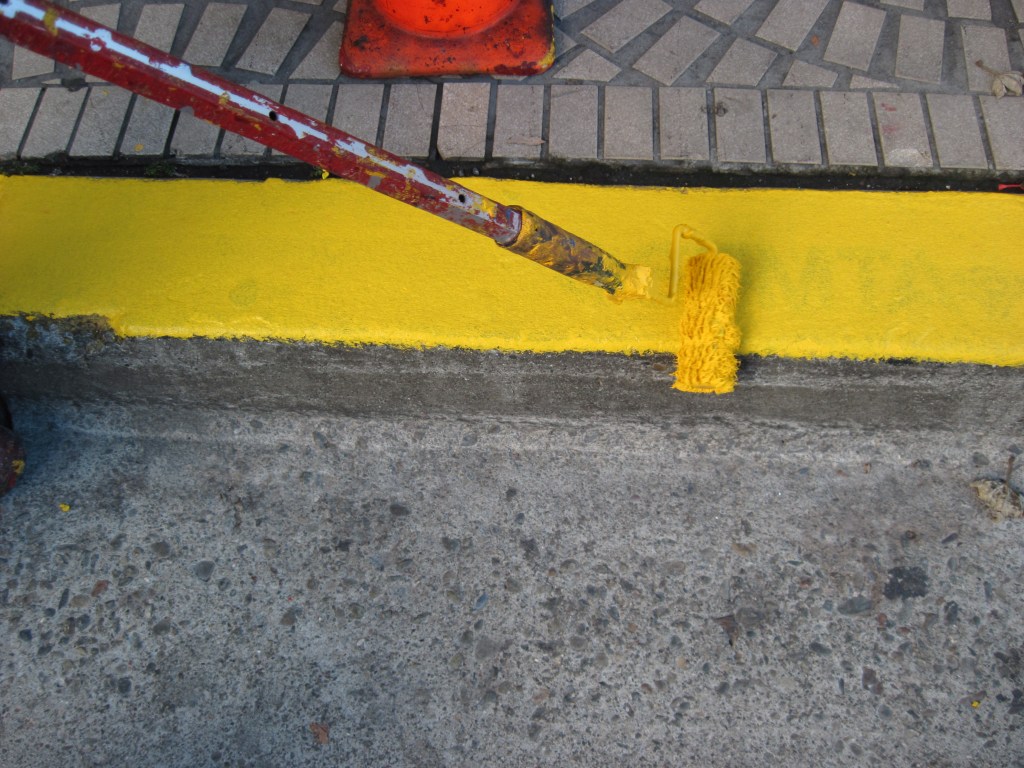
“Please move back. I need you to step back behind the yellow line while the coach is in motion.” I state, when the coach is full: Or, if someone does not have their fare ready and they are looking in their pockets or hand bag for change, I say, “I can’t see my mirrors.” The fare box is in a place such that we cannot see our curbside mirrors when someone is standing by the fare box.
I understand why you guys do this. You’re trying to lock your body in to the yellow hand rails so you can keep stable if the bus takes off from the curb. You are trying to pay and not hold up the bus, so I can go. Unfortunately, it is not a good idea to pull away from the curb without checking to see if there are runners coming up from the back, or if someone is smoking a cigarette or talking on a cell phone too close to the curb, and looking away from the bus. We have several blind spots from our seat, and this is one of them. Our rule is to not move until all fares are paid.
The good news is, some lines have enough time to follow this rule throughout the day. The 2 CIement has time all day, as does the 21 Hayes. The 31 Balboa and 41 Union are usually OK, as is the 45 Union, but some lines such as the 3 Jackson and 24 Divisadero only have the time to wait for someone to move back and sit in the morning.
The 1 California does not, even in the wee hours of the morning, or late at night. This glaring inequity surfaces as running hot. We are told over and over by managers and from the training department, operators are running ahead of schedule on the 1 California. For the first time since I began, I heard this innocent question asked at a safety meeting, “Why are we running hot?” No one answered.
I know why. It is because we don’t have the time to run on schedule and take recovery at the inbound, peak period terminal. If we wait too long to leave at Clay and Drumm on the 1, the standing load we will have in store for us begins at our first stop outbound at Davis and Sacramento.
Because the other terminal inbound at Howard and Main was removed, all persons great and small must walk from Embarcadero BART and Market Street to Embarcadero Building 3 to pickup the 1, so there is no load share to split outbound. The yellow line comes into play as we climb to Nob Hill past Chinatown. The operator of the lead coach with extra headway must skillfully negotiate drop-offs and pass-ups to split the load with his or her follower so the yellow line remains clear.
I lost my conscious contact with experience in projecting my confident vibe while working overtime last Saturday, on the 1 line, and I lost control over keeping the yellow line clear at Grant Street. I was overwhelmed by the number of intending passengers, and did not pass up Kearny as I had no coach directly behind me. I forgot to wait and see if my follower would turn the corner behind me at Davis. Big mistake.
Weekends have fewer coaches in service, and this makes pass-ups difficult. Keeping the front door closed is the only way to keep the front clear. If someone wants to get off, I need to find that out before I cross to the far side. I can kneel the bus and let them out nearside, so I don’t have to open the front door at the bus stop. This is scorned by those who direct us to follow the rules, but they are not facing the yellow line dilemma. They are sitting behind a desk and not a wheel. One can hope for a “caution and re-instruct” letter, and not time off.
I can also wait to make sure everyone is sitting down before I roll. The new buses have a new twist because the stairs are located in the aisle behind the second or third doors, and it takes a few moments for passengers to make their way to the back seats. The timing is such that, as they reach the stairs, I am ready to pull away, and this can throw off their balance, especially because they are putting their wallet away, or taking off a bag to get ready to sit. I love the 21 Hayes because I have the time to wait.
Not all lines afford this luxury. The 1 California does not. We ‘walk the baby’ and slowly start to move as the passenger adjusts to find a seat; or in most cases, when the bus is full, to stand and find a hand hold. It is already obvious to us who the newbies are because they are not ready at the fare box. We are aware of the chronics who never have a clipper card, and always pay cash.
When empty, near the terminal, the other problem is musical chairs” in which a person cannot decide which seat to take. Use of the rear interior mirror is essential in keeping out of the Superintendent’s Office. Our regular riders are smooth and smart on how to pass by the yellow line and sit. On “weekends, when most new operators work—out-of-towners—and others new to riding—make up a higher percentage of riders, and we must be on the lookout for these wild cards, and stack the deck with a good hand, so we don’t loose the trick.
You can’t teach an old dog a new trick, but you can teach a new dog an old trick. I don’t believe Muni wants new operators to learn the old tricks this old dog has, but I have continually found I have lost or forgotten old tricks, and I am amazed at relearning the rules I never took in to account in the years that passed by. Moving back has never been a problem for me on my coach, but moving forward has. Our new interior convex mirrors are great for a complete view of the rear. All hail the new Flyer trolleys!
My views are based upon my years of experience and may go contrary to my union’s view, based upon many operators with much experience. Union members are elected by the group of operators, and my chapter essays are only taking my personal view into account. My star-cast and life reading from the Cayce society point out I must find my own personal leadership style but must consider helping groups of others or find intimate mates to assist in love and service rather than be my own captain of the ship.
A friend asks on Facebook, “What can be done about the homeless encampment that is a bus shelter stop at Leavenworth and Post?” I hesitate to answer this question in the comment box in response to his post about Post. This is where it is a good place to state, “The views contained herein do not necessarily reflect the views or rules of the SFMTA or it’s employees.”
Indeed, these missives bound together in a book are all from self, with my exclusive point of view, usually done without running it through a coworker. I found out the hard way that editing with another pair of eyes, for example, is a necessary standard in helping an author I could not admit.
Rear door boarding is an issue many of my coworkers did not agree with, but I did. Rocking down the Mission, I was able to easily keep to the schedule and reduce dwell time in the zone by clicking open all doors. The largest complaint I get at the fare box is from riders who question what I am to do about checking the fare of those who do not pay by boarding in the rear.
I was a strong advocate for rear door boarding and it seems management acceded to this request, to the behest of the union, and nowhere does this become more apparent than at a shelter stop where the shelter has become a shelter for homeless, street druggies, and drug dealers. To be sure, minimizing open rear door dwell time can prevent drama from those who do not pay. To me, the open door policy minimizes drama and confrontation, and speeds running time down the line. To others, if feels like loss of control and opening pandora’s box. This is a tough one to reconcile.
So when confronting the dilemma of unclean or blocked seats at a bus shelter, I must tread carefully, and seek wise counsel about what to do. Based on calls to TMC (Transit Metro Control) on the radio, when two or more calls come in to the radio operator, action is taken.
So my solution to a dirty shelter encampment would be to have my friend get other neighbors in his building, or those he sees at the bus stop, to call 3-1-1 and put in a service request to clean the shelter. Another point would be to bring up health and safety. These are two golden words that make a difference. All shouting, pouting, and profanity on the phone lines to our call center are not as effective as saying in a detached voice and tone, “For health and safety.”
We are continually reminded from inspectors on the street, and over the radio and in training mode that safety is our highest and first priority. This is the the golden rule I present to the riding public and reader of this tome. Use the golden rule to have and effect and affect change.
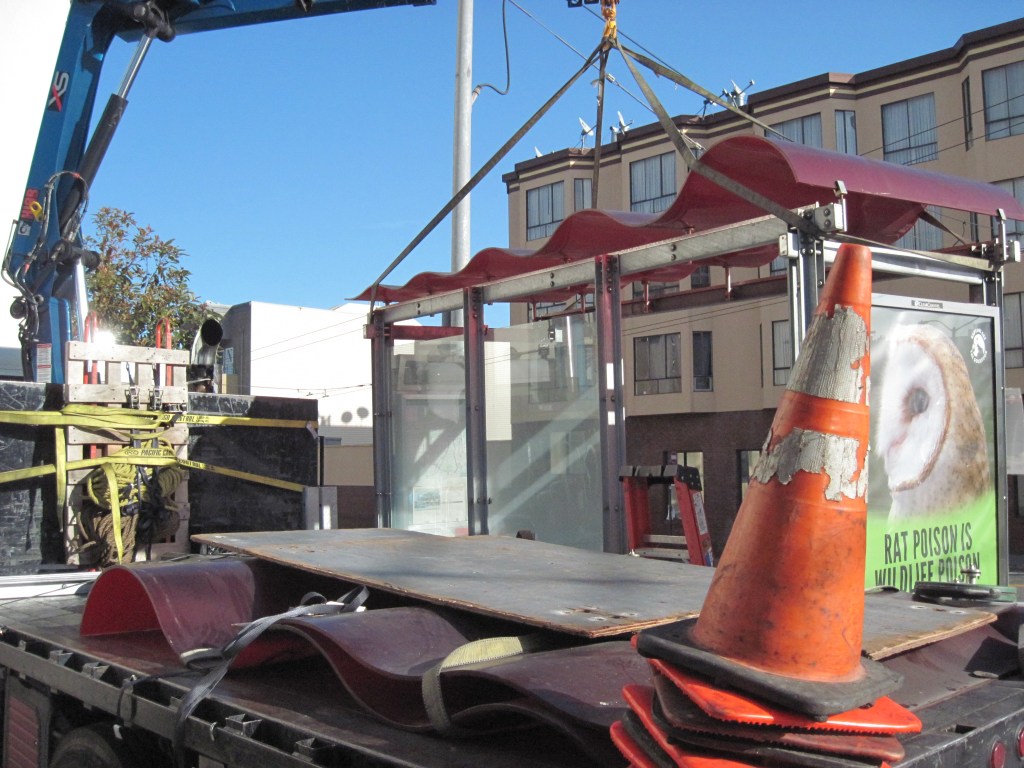
I came up with this chapter topic because I had some cool photos of some shelters being installed by our barn on Presidio Ave. Soon after I took photos of a brand new shelter, youth running from police in presumably a stolen car, took out that shelter. I got a picture of this newly installed shelter and it’s short lived life.
Indeed, the road to happy destiny takes many rough turns. Bus mirrors hit the shelter, wheel chairs get caught between the poles, and crack heads crack all the glass all the time. The shards can be resold as ‘ice’ to unsuspecting ‘forty niners’ new to the city.
Just like panning for gold, the instinctive street wary denizen can sell useless broken glass as a new wonder drug to the latest techie going down from a crystal meth or heroin binge fueled by the bounty of VC: in this era, not the Viet Cong, but venture capital. And so goes the boom and bust cycle of San Francisco. Like the helter skelter in the life of a bus shelter, it goes up and it comes down.
Just like sitting at the dock of the bay watching the tide, the road to happy destiny does have it victories and defeats.
This is a fun game to play, as is Charades, in a large group at a party. But if that party is a waiting queue on Market Street on Fourth or Fifth, the game becomes no fun real fast as the lights go red again, and the buses back up behind the red lane in the middle of the street. I am currently in a dilemma about how to come to the end of the game fast enough to get the party moving!
The quickest solution, as any experienced improvisation comedian will attest, is to agree with anything! The secret to improv is to agree with your antagonist in the audience or on stage, to keep the train moving, usually with hilarious inventive add ons. The same could be said with giving directions in a crowd of visitors.
“Do you go to the Piers?” Yes.
“Do you go the Wharf?” Yes.
“Do you go to the Bay?” Yes.
“Do you go to Market?” Yes.
Should not that be the end of it? Unfortunately, no. More questions to follow. So here is where I have to get the flock moving. Hmm. We know from Animal Planet and the Discovery Channel that huge numbers of birds take flight when a threat is perceived.
That’s it! I need to give them a threat to get them moving! But I need to stay calm and friendly.







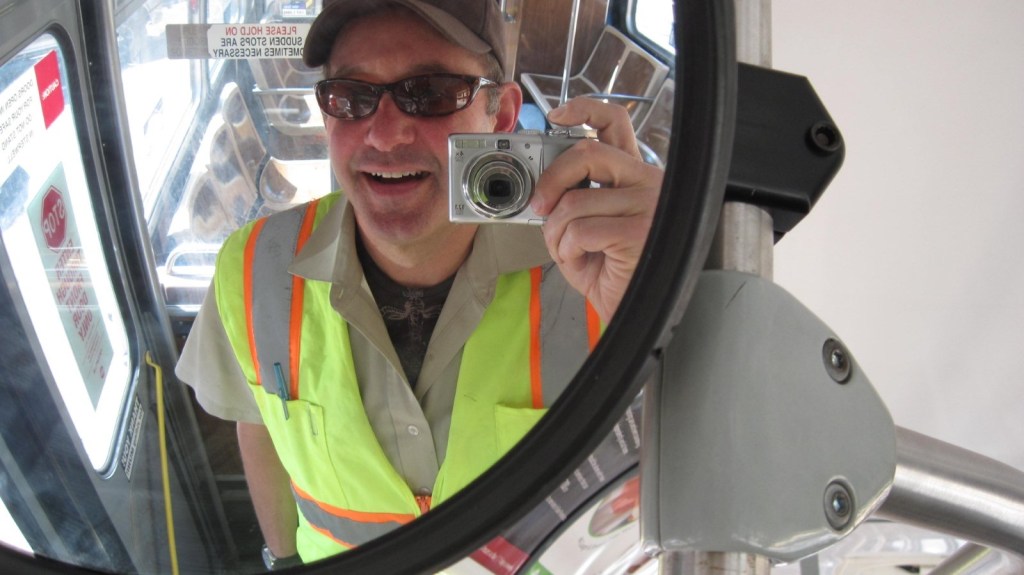

 The Dao of Doug: A Bus Driver's Perspective