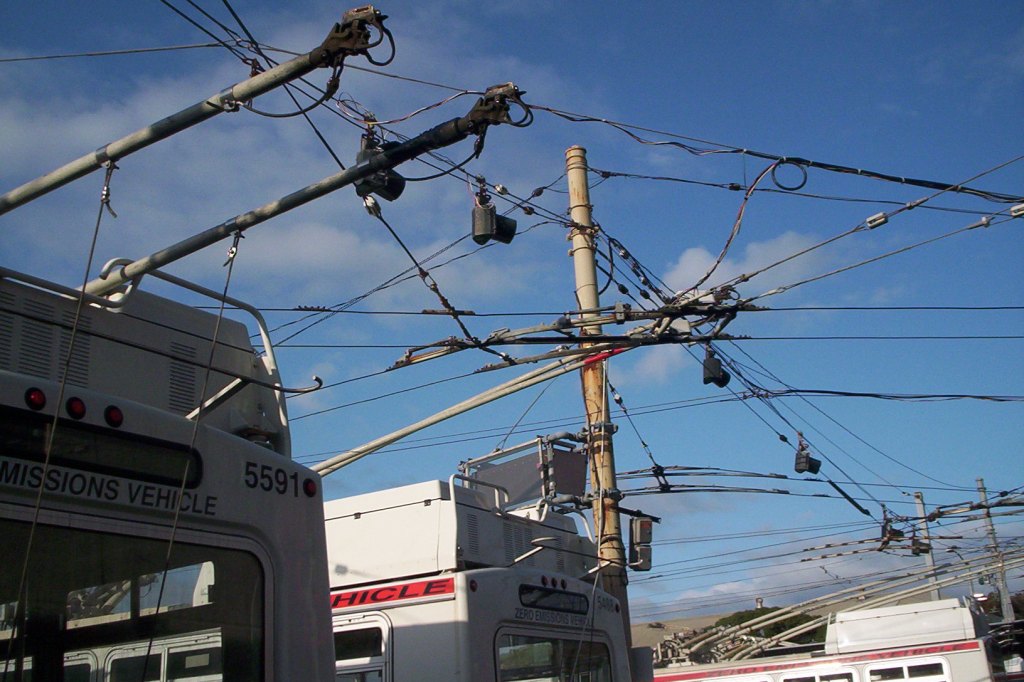
One of the tools always at the disposal of an operator is the 702. This is the three digit 700 code of numbers that describes certain incidents over the radio to Central Control. And the code number 702 means the operator is taking a twenty minute break as a comfort stop to use the rest room, or, to collect oneself after a shaky security incident or some such event or events after a heavy stressful trip. And this is made clear in training, that the schedule is not important, and if you need a break, a 702 is always allowed, primarily because this is a necessity for safety: To keep the driver sane and safe as recovery time at a terminal may not be enough.
And perhaps there are operators out there that know when and how to use a 702 effectively. I do remember one time on the 24 line when I used a 702 and it seemed to send an effective message to the temporary inspector at 30th and Mission that I was not going to run to the end of the line because I had been late all day, and my switch at Cortland and Hilton was refused. I felt elated I had done the right thing and the break was well deserved. But this is the only time in 13 years I can remember taking a 702, and taking it because I was denied a switch.
There were many more times I could have done this, and may be my accident record or disciplinary record would have been cleaner if I had taken this option that is always open to me. But my desire to stay in service usually always wins over, and I seem to doubt that the fine line between staying in service and taking a break is spread evenly throughout the system. Or that operators use this as a necessity instead of a privilege, and whether or not this right is abused. Because we hear of talk in the Gilley room of those that are constantly taking 702’s, and the havoc it can wreak on their follower. How would one define that which is abuse, and how could one stop it or determine any discipline should be meted?
And this intellectual exercise always ends in futility: Because it is the emotional feedback in the present that is the key. What other’s think, and trying to adhere to the schedule is my drawback to blocks of receiving. And being present in the moment about the near misses or angst from passengers, should be the key to take a brake, and take a break. Only when I start getting thank you’s from passengers do I know I am back on the right path.
When I am neutral about my leader taking a break, and not worrying about the outcome, can I clearly see whatever passenger load I may have to take, all will be well, if my attitude is not one of being put upon, but of being of service. I then begin to build compassion for the other operator doing what they need to do to stay safe. If I try to compare their actions with my own needs, I fail. If I take a step back, and focus on doing the next right thing, the pain of taking on a double load goes away, and I find those I pick up are grateful for my handling of a heavy load. So I have realized it is not how hard I am working, or how late I am, but how I am feeling inside, and where my focus is. By not allowing myself in to victim mode, all is well, and a 702 from my leader is inconsequential to how I view my day. Actually, when I am doing well in a busy day, I see the number of people I pick up has little to do with my success.
But the Daly City 702 seems to be the ultimate challenge to letting things go. An operator friend of mine was describing the Daly City horror of his two leaders both going on break at Daly City, the outbound terminal of the 14 Mission, a straight shot from the county line to the heart of downtown with the terminal at the Ferry Plaza. He had a pull-in from Daly City, and was in a small coach. When two 60 foot coaches would go out of service, he had not enough room to take all those who were waiting. And they would become angry when his full coach would pull up to the stop with a short line destination of 30th Street: halfway to downtown, and short of the first major BART station.
And all of the tools we are supposed to take to cover yourself failed. I too had been in this position one the 1 California, and the 30 Stockton. Not enough time or room to take in all who were waiting. And if this was a one time thing, no biggie. Tomorrow is another day. But when his two leaders were going out of service day after day at the end of his busy shift, just as my leader was passing up on a daily basis, staying neutral becomes next to impossible.
Calling Central Control for a switchback to avoid Daly City was denied. Talks with the yard starter for a bigger coach would only yield a larger coach for a day or two. Miscellaneous reports filed after work could backfire as being labelled a snitch. Complaining about the God given right to a break holds no water. The only apparent thing left is to take the matter in to our own hands, and let the cards fall where they may. And this means putting up Garage, or going out of service without authorization. In a way, if no inspector seems interested in doing anything about the problem, then hey, what the hey, I can get away with pulling in out of service. And many operators do go out of service on their pull-ins, and cause a heavier load for the next coach following behind. The hope is that retribution, or what goes around comes around will come full circle, but the time frame of payback seems remote and unfair in the here and now.
I took switches unauthorized at Folsom, to make relief on time, and sarcastically went on the air about it, and it took three years from the day, to finally make amends to the street inspector who heard my sarcastic call about taking switches on my own. What was I thinking? I wasn’t. I was angry. I could not seem to get his attention at Union and Columbus, the midpoint of my last trip. But in hindsight I should have popped the brake and talked to him direct. My thinking had already been off, because I refused to go to end of the line and see how late I actually would be at relief. This is my downfall. I take matters in to my own mind without waiting to see if my relief is really that angry with me being late. As it was I was making relief early. I never really gave going to the end of the line an honest shot. And I was placing too much thought on what my relief thought of me or how “bad” it would look if I was late. I was so concerned about what this senior man thought of me that I sacrificed my duties and responsibilities on my own last trip.
So my friend did what we do. He put up garage and picked up no one. He switched back early at Lowell. He picked up what he could, and then became express, not stopping to pick up the small pockets of folks at the intermediate, smaller stops. And to try to stay out of trouble, mix it up so it is impossible for anyone monitoring to make conclusions about what we are doing wrong. But all this has the exact opposite effect. The attention comes to us, and what we are doing wrong, and not on the operators that are causing the problem. This got me in hot water, and is where discipline falls on the person trying to make the best of a bad situation, and not the true cause. The saving grace that has kept me employed is I must divorce myself of what other’s are doing, and just operate the best I know how. And I have learned the hard way in the beginning, not to make bold statements about others, or boast about what I am doing to others. I never have had a good social skill to discern my enemies from my friends. But when I do get honest, the answer always comes. I never talked to anyone, and I never got the answer. But I do now.
Payback only comes in the form of the next sign-up. And if a sign-up from hell continues, oh well. The length and duration of pain can be meted out in the long run, and I have to look at it this way, or else I am doomed to discipline I think I don’t deserve.
So I always talk directly to my follower and leader, and never let it go beyond that. When I find out why they do what they do, I take it in stride and feel confident I have done all I can do. And this has led me to the Zen of driving an electric bus.

 The Dao of Doug: A Bus Driver's Perspective