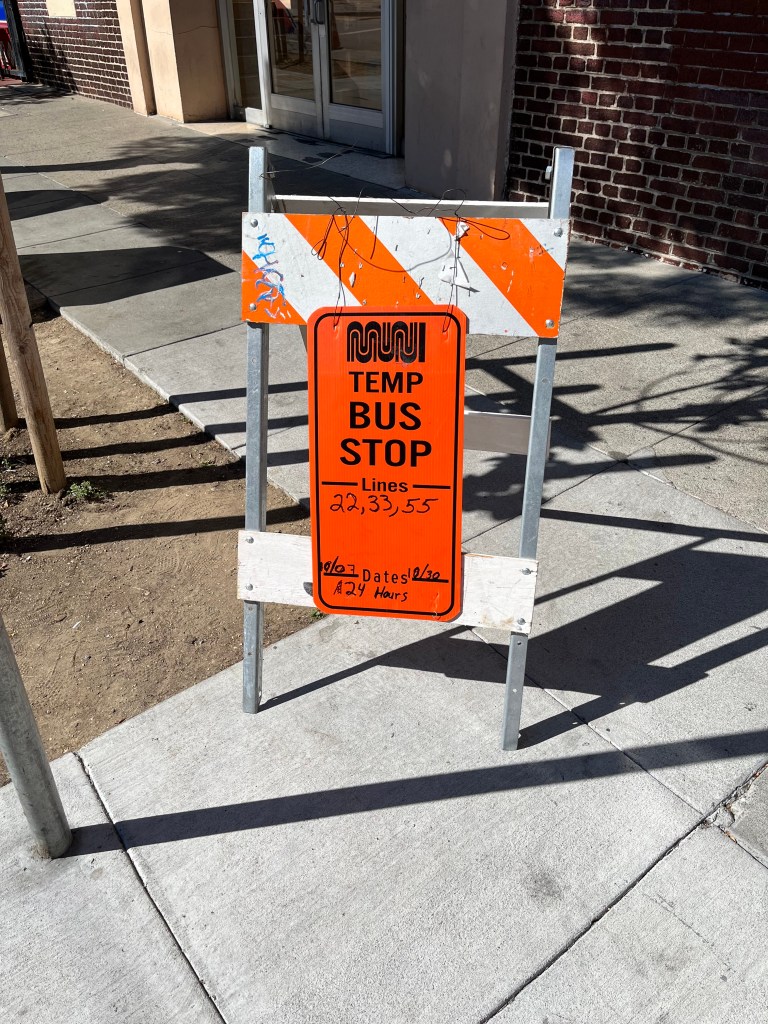
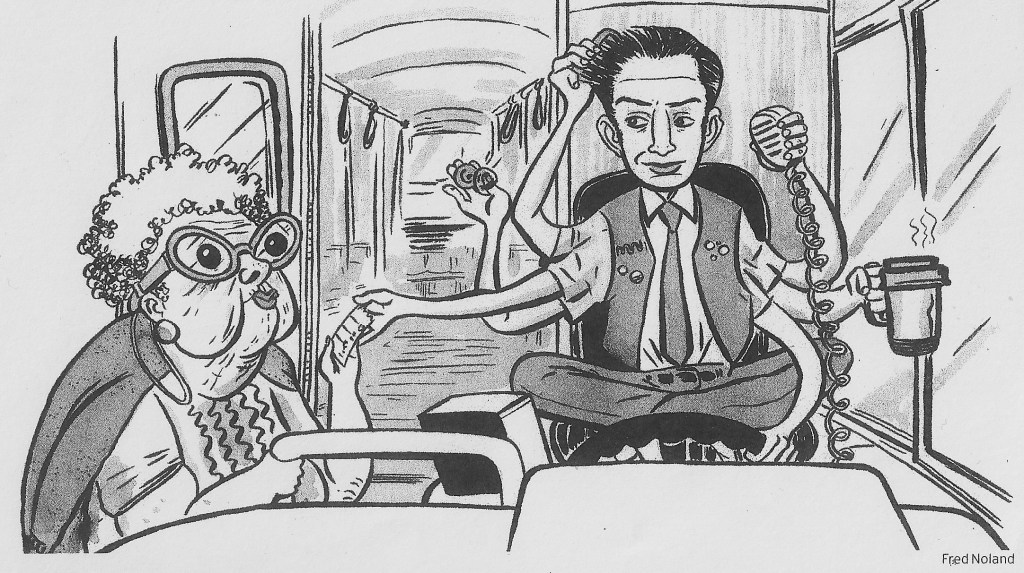
Nothing can get a passenger angrier than passing up a stop. I can tell a lot about their day by how they respond when I pass-by where they wanted to get off. Intuition does come in to play when I am in the beat of the flow, and I know to stop and open the doors even if their was no ring or verbal request. We transit operators joke we don’t have eyes in the back of our head or possess supernatural powers to mind read the desires of our passengers. But actually, we do have these extraordinary skills or abilities. With the experience that comes from years of driving the various lines and routes, at all different times of day and night, we do kick-in to an automatic pilot mode that remembers where and when to stop, and how many people will be getting off and on, but we never let on to this because ignorance, although not an excuse during a disciplinary hearing, is bliss. Contrary to the blissful ignorance we master through the years, is the expectation of need from our riders, without any verbal communication at all. This is the Zen of driving a bus.
As soon as we see something out of the ordinary, we immediately file it away in our head as a possible yellow flag. This ability to flag an abnormality to our flow, such as a distracted passenger, or the time it takes for someone to sit down, and where they sit when they first board, is a way in which we prepare for a possible mind read situation when the person is ready to get off.
And if the boarding passenger goes in to the black hole, the seat behind us, where we cannot see or hear them, the risk of a pass-up or late ring goes way up. If they are in a large party and are talking among themselves, particularly tourists, then the late ring pass-up increases dramatically. How a person passes us by at the fare box is a key to understanding the drama of how they leave the coach. No eye contact or acknowledgement of our existence increases the intensity of anger they may express when they attempt to leave. No courtesy or recognition of us doing our job, and fare evasion, go hand in hand with nasty name calling at the end of this boarding event. The attention to detail when a person boards is the secret to having the magic of mind reading or eyes in the back of our head.
Some operators never use the interior center or aisle mirror located in front of us above the windscreen, but by scanning this mirror as we are directed to scan left-right-left on our exterior mirrors, passenger problems can go to near zero. Also the small mirror in the corner by the front door is perfect for aiming at the black hole. Thus I can see everyone in the seats toward the back door, and the two seats directly behind the cockpit, should someone shift their body position in anticipation of the stop. And can I get the heads up if someone is falling asleep, or inattentive to where the bus is headed. By standing up and letting a would be sleeper know this is their stop, helps prevent a lost cause at my next terminal or pull-in. If a chime cord is not working, or the dash light indicating a stop request is not lighting up, the mirrors come to the rescue of what can be a Zen breaker, usually resulting in name calling and verbal abuse.
But the danger I have in appearing unconcerned with someone who wants to get off, is that I get so complacent in knowing the rhythm of my day, I don’t allow for differences in my passenger requests. If I have passed up a baby stop at a certain time week after week, my automatic pilot fails me if I haven’t been scanning my rear interior mirror. And hence my Zen is broken by an angry stop request. “Back door!” is a friendly reminder of my remiss, but nasty name calling has me usually proceeding to the next stop. And the anger with which someone directs to me, the longer the next stop may be. I have to fight the demons of resentment within me to stop when someone is very angry. Anger doesn’t usually work with me. I like to strike back with indifference to meet their expectation. Hey, if I am a blind idiot or a moron, than it fits I continue on to the next stop, as any faithful moron would! But if that God-given break in parked cars is available, I stop when safe to do so. It is when there is no place to safely stop that drama crescendos in a late ring. But I do recover from such name calling a lot faster now then when I was new.
And if the late ring is from someone who needs the curb, I do feel bad when I can’t find a safe spot a short distance from the regular bus stop. Even though other passengers may come to my rescue by agreeing there was no ring, it has little comfort to the angry passenger. All I can do is file the incident away as another awareness point as a problem time and place, and recall where the offending passenger boarded, so as to prevent the late ring from happening again in the future. By stopping next time around at the same stop even though I have no request, I find this helps to make the problem go away. Interestingly, someone from the back will come forward to the front door and request the next stop. This is a nice check from the universe this problem has been put to bed because I have not resisted the late ring. I have to be willing to make the stop. And when I am, all is well and the Zen of driving a bus returns.
 The Dao of Doug: A Bus Driver's Perspective