When a coach becomes disabled after an accident or a security incident, if the operator is occupied with the police or an inspector, it is important they are not blocking traffic or other trolleys coming up from behind.
It is embarrassing to me when a transit bus appears to be the problem in causing a traffic delay. Practicing defensive driving, if practiced on a daily basis, almost down to the minute-to-minute decision making choices we make on the road, can make the difference between smooth flowing traffic and gridlock.
The experience from the inspector called to a post-accident scene also provides valuable lessons about how to keep my side of the street clear. Since inspectors meet with operators time and time again, post accident, their directness about getting to point quickly is an art I have always admired. And when their report matches my description, I know I have taken a valuable lesson with me.
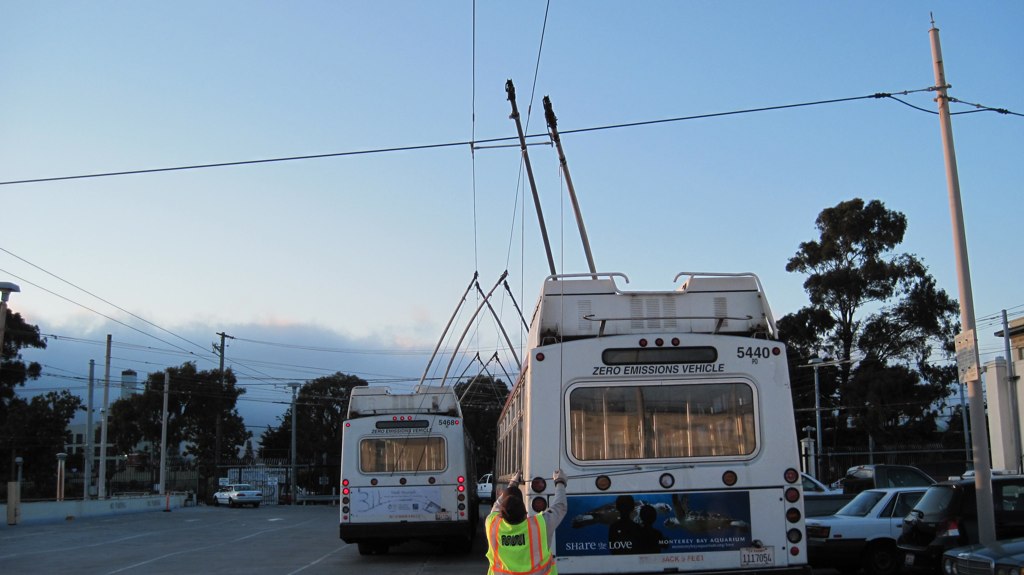
If I am coming up from behind, I have learned being of service not only means keeping my passengers informed, but I can pop the brake and help another operator who is blocked or out of service. But pulling poles is an opportunity to respect boundaries and to check-in with the other operator to find out if they need my help.
And I see this principle in many situations. If a senior appears to be having difficulty in getting up the steps, it is also important to ask them first if they need help. Sometimes, no help is desired, and by touching them without permission, bad feelings result. I want to be left alone, or I do not need any help because I am able, are two big reasons why seniors don’t desire assistance, and it is hard to know this simply by looking at their climb up the steps. Most times, though, if I see a heavy load, all my angst melts away when I offer to help. And so it is also true if another bus is blocking with the poles up on the wires and not moving, I must first ask, “Do they need my help?” The next question, which is usually my first question when I am in the swerve, is where the hell are they? If the operator has gone to the store, or gone the bathroom, then I can pull their poles and go around without having to drop mine. The time cuts on the 49, when severe, make for a tight terminal situation, and getting around can sometimes be a drag. If I arrive on my leaving time, and I desire another nice trip without overcrowding, I can zip by my leader and go. But my attitude really checks what kind of day I have when it comes to pulling poles.
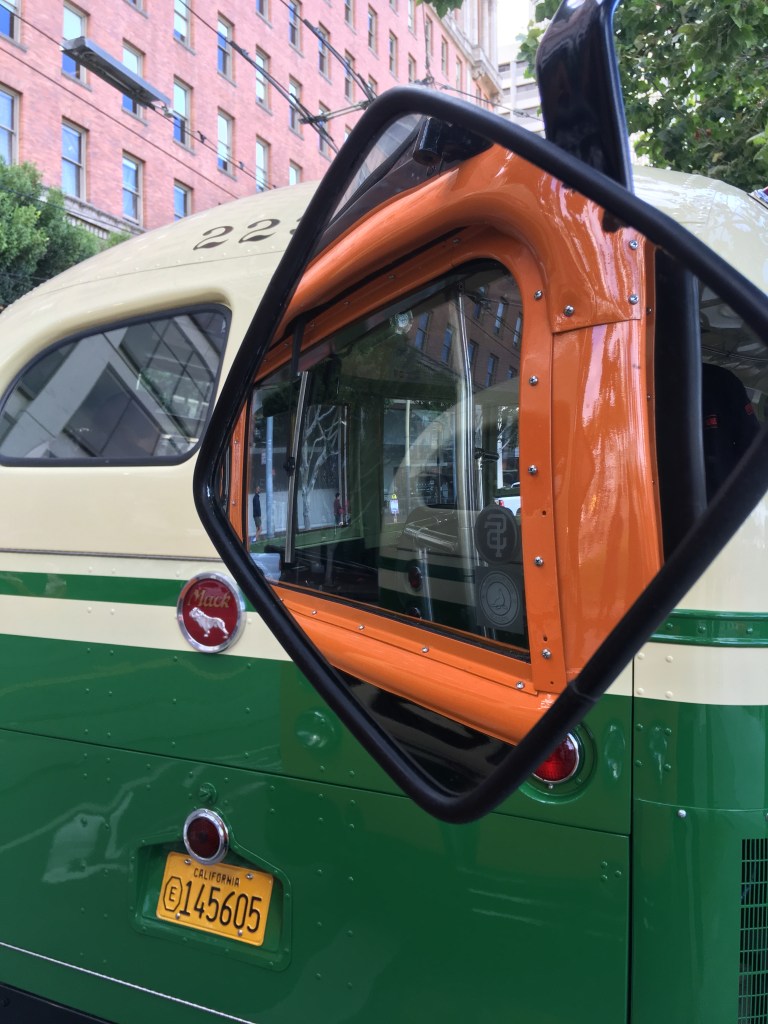
Some operators, using the rear view mirrors as directed, see me coming and drop their poles by using the poles down button, or coming to the rear of their coach and cradling them. Others expect to not be bothered, and if I want to avoid stink eye and a nasty vibe, it is up to me to get around, even if I don’t have a poles down button. If at a terminal with more than one track, such as North Point, I scan across the way to see if the operator is present in the coach. If not, I can stay on the left track and bypass without any hassle. This is the one saving grace at terminals with two sets of wires (the 22 Fillmore and 24 Divisadero at Third Street could use this extra set of wires) But throw in tourists in rental cars holding the famous freebee Fisherman’s Wharf map, and a backlog of 30 Stockton coaches which share the terminal, and all bets are off!
One of the biggest, nastiest paybacks is when the number one coach is waiting its time at the terminal when you are the follower and ready to pull-in. Add some rain or wind, and passengers who have been waiting twenty minutes for a bus, and the decision to wait it out and pull-in late becomes the better option. Oh well, so much for that meeting or movie or dinner after work. Even if no payback situation exists, there is nothing worse than seeing on the first day of a new sign-up, who your leader is, at your final pull-in terminal. This can either be icing on the cake (they pull their poles) or one more straw on the camel’s back. Of course, usually by the time you get to your last terminal, you already know what kind of a leader you have! Which is another way of saying, who is doing the work?
Getting to the respect of my coworkers was one of the hardest and longest lessons I needed to get at work. The traffic, the passengers, and the equipment were no longer a problem. Even the angry addict at 16th and Mission pulling poles to steal my transfers while I walked back to put up the poles, were no longer a deal. It was getting right with my coworkers who took the longest time to find my Zen. The only way this can happen is if I love myself.
 The Dao of Doug: A Bus Driver's Perspective