
The most challenging aspect of any operator of large equipment on the road is keeping aware of the “what if ” possibilities. “What if ” that bus in front of me, stopped in the zone, goes out of service? Did I leave enough space between my coach and the stopped coach to get around, if that bus breaks down or has a fight on board? A big no-no in the operation of a bus is to never back up. In life, of course, if we make a decision that appears to lead to an unforgiving situation, the challenge arises to decide to continue on ahead, or backtrack. The bigger the decision, the harder it is to surrender to the humility we need to go back. So too with larger vehicles, comes the fact that getting in to a jam is more difficult to escape once we become boxed-in.
And so the joy of driving a small zip car becomes clear in congested situations. The fluidity smaller cars have in traffic is almost a given. That being said, my most embarrassing moments come when my bus is stuck in an intersection or my tail is blocking the crosswalk after the signal has changed to green for the crosswalk and cross street. Usually, I scan the sidewalk ahead to see who is waiting, and based on previous stops on how the leading coach departs, I make the choice to pull in to the zone behind another coach with the probability that even if my tail blocks the corner by a bit, we can usually clear the zone space before the light changes.
The contradiction of my error becomes glaring and in the form of the horn from cross traffic which cannot turn right behind me when I have stopped right behind the coach in front, and we aren’t moving and the light changes, and to my horror, I see pedestrians leaving the crosswalk to walk behind my tail in to the intersection space needed by a turning car to pass behind me from a turn. And this resulting rear sideswipe contact is one of the most common to buses.
In a way, pedestrians become friends in that their walk space puts an added cushion on my rear. But when pedestrians don’t cross, usually because a car is aggressively pulling forward to turn, is when the danger zone becomes active. Not knowing the mood or state of the cross traffic when the light does change, is a blind spot that can and often does, lead to trouble. Even when a car decides to cross over the center line to pass me while I am stopped at a green, any collision they get in to is not on me. I see no merit in creating more paperwork.
And so too with life, if things are moving fast and we feel light and free, we rarely stop to think about any negative consequences arising from having to know a ‘what if.’ But if we are doubtful about our next move, and we feel heavy and distressed, I have come to believe not to decide is to decide: not to move ahead even if the light is green. I have a problem with understanding this.
Not to decide is to decide. What the hell does this mean? It has always struck me as being like a cop-out. And this is where being behind the wheel of a bus has helped me in my life in other decisions where I could not guess the outcome. Which is to wait until the way is clear. My codependence about what others’ think in the immediate, i.e. the car behind me honking to push me through the green, has pushed me to move ahead behind the other coach. But as like attracts like, my move forward comes with even more anger with the honk from the car trying to turn behind me after the light changes.
This paradox took me a long time to be able to integrate in all areas of my life. That when running late and running heavy, the impulse to move up, or to push the envelope and try to cut down on waiting time, very rarely pays off. My coworkers and trainers would mention this time and time again as a precursor to an accident, and only when I have seen this over a long period of time, did I finally get the message. Usually when I am in the lead, and another coach moves in too close to me, do I realize how uncomfortable I feel. I immediately have to forgive myself because I have done the same thing myself. Rather than get angry at my follower, I can kill a stale green and cross on the amber nearside at the next stop to indicate I don’t want him or her to follow me far side.
When I was a rookie, and a senior operator was coming up close behind, the best thing I could do would be to pull my poles and get out of their way. They usually smiled and moved on up ahead. The most frustrating thing about all of this is when they tailgate, but they don’t want to move out in front. I have to muster all the courage and serenity I have to not let them affect my driving and decision making. I did learn early on, that seeing the rear end of the bus in front of me is not a happy day. And being a free range chicken is much easier than having a train of trolleys in front, or worse, in front and in back.
This becomes the most challenging aspect of not “winning” the race–when there are too many buses bunched together. The master of this principle will immediately adjust her speed and time in the zone by leaving the door open and pausing before moving forward, keeping the one block spacing rule in mind. And this rule is the clearest for me to see. The one block spacing rule is the best rule for avoiding an avoidable accident.
I tend to be too much an all or nothing guy, with little head space for a steady, easy course. Pacing myself in all my comings and goings has been a lifelong challenge I did not relate to this rule.
By doing several small steps in a series of activities, such as writing this chapter now, then going to the store for groceries, and then having a stretch and a snack, creates a world I would not uncover once I get in to the hour-by-hour zone of being stuck doing one thing. Same is true with obsessing about something in my mind. I did not see how the idea of surrender was actually what I was doing by pacing myself in doing a term paper, studying for a test, or working out in the gym. My sleepless cramming for a test, a torn rotator or tennis elbow, pigging-out at a breakfast bar, were all the endgame chargeable “accidents” resulting from a pattern of not surrendering. But I can say, if I find myself having to back away from a coach dead in the water, I can immediately choose to take a point of gratitude in seeing where I went wrong to not make the same mistake again.
I can eat a snack before a large meal. I can stretch before I hit the weights, I can use flash cards or reread my class notes later in the same day to burn the information in rather than do nothing and then try to cram. So surrender can actually means pacing myself based on what others are also doing. It keeps resentment at bay.
No better a traffic example is on I-5 between S.F. and L.A. Or in inner city medium traffic during off peak hours when everyone is cruising at about the same speed and distance. Stress is low and everyone is content with making the same time. I also had to learn this lesson about how the CHP also handles traffic. If everyone is doing 70, and there are no obstacles such as weather or construction, they tend to let “free-range traffic’ to continue uninterrupted at pace. Like an idiot, when I was new to California from the midwest, cruising with everyone at 75, I did panic when I saw an oncoming cruiser, and brake abruptly to slow to 60. All I did was call attention to myself, and he immediately began braking to look for a safe crossover. Luckily, there was none, and only later at a big truck stop did I find the unwritten California traffic rule of live and let live, as long as no one is causing problems contrary to the flow, let it go. So I guess another form of surrendering is to blend in to what the flow or trend is telling you.
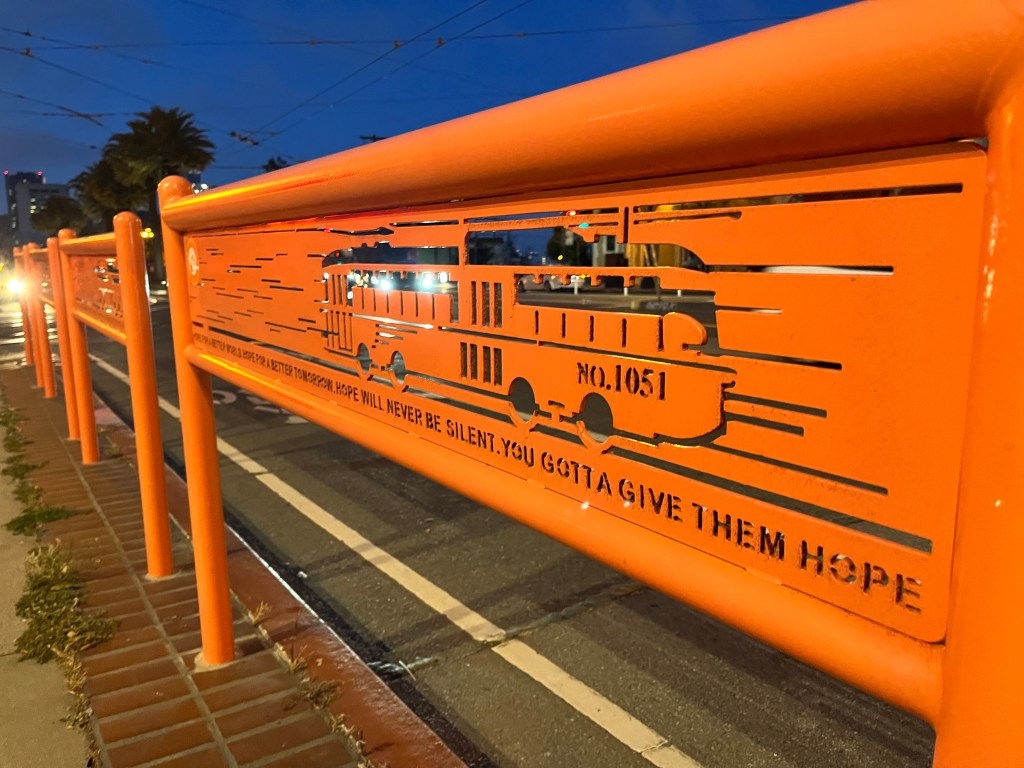
 The Dao of Doug: A Bus Driver's Perspective