Most of the time intending passengers are not standing where I want to place the front doors. Folks don’t seem to understand what it takes for a forty-foot or sixty-foot vehicle to come to the curb, and then have enough room to pull away leaving a four foot clearance from any object or vehicle parked nearby at the head of the zone.
If pressed for time, I can always do a flag stop. A flag stop is when I keep the bus parallel in the traffic lane and drop the kneeler to have folks step off of the curb and come to the door. Only problem is, if there are those waiting who have mobility problems, not coming to the curb is also a problem. Using the “body english” of the coach, I can control how long I spend in the zone, and where folks must migrate to get to the door.
If I am early, I can make people walk a distance on the sidewalk to come to my door, which may not be where the majority are standing. If I am late, I can flag the stop, and pull away faster because I have clear visibility to the rear in my mirrors because my bus is straight, and I can see far back to see approaching cars. Problem is, when I am late, I am usually heavy, and have standing room only. This is when flagging a stop and not coming to the curb may be a problem because usually seniors are present, and the kneeler may groan in trying to rise after I pick up because the aisle is full, and the bus is heavy. Use of the kneeler can damage the suspension and cause a fall on board.
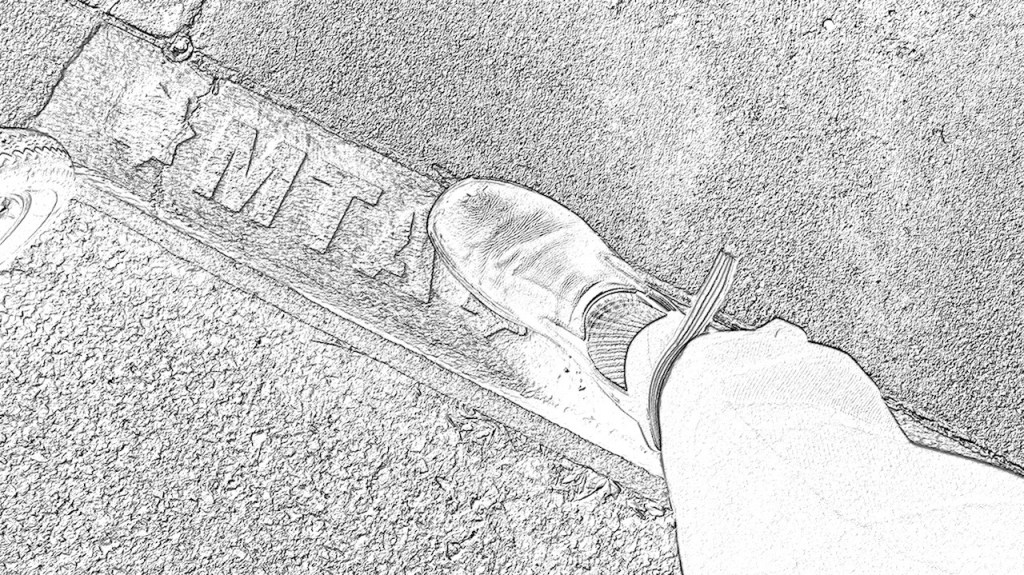
So a rule of thumb that some operators may not have experience to pick up on, and what most passengers seem to be amiss about, is the painted stencil on the red curb, usually between the two MTA stars, that says “bus stop.”
These stencils I have found, are accurately placed as the best place to put the front door. The stencils are roughly the distance between the two sets of doors. I don’t understand the coincidence of this, and why it works so well, but this is generally the case. I have had issues with where the various stencils are placed to mark our breakers and switches on the street, but the bus stop markers are highly accurate. So if you want to “be the man,” or the “woman” who gets to be the first on the bus, here is what you can do to increase the odds that the bus stops where you are.
When the bus is one block away, and say, gets a green light at the corner before the stop, slowly wave your arm from beside your leg to a point halfway up or perpendicular to your stance, back and forth, when the bus starts to move a block away. If you are standing mid-way from the top of the zone to the first stencil on the red curb, and there are no double parked cars at the head of the zone, or encroached upon the zone rectangle in the street, you are a “winner.”
The bus will stop right where you are standing and you can be the first to board, especially if you have your pass or card visible in your hand when the bus approaches. Kudos and good karma, you’ve got the Zen in San Francisco transit!
 The Dao of Doug: A Bus Driver's Perspective