
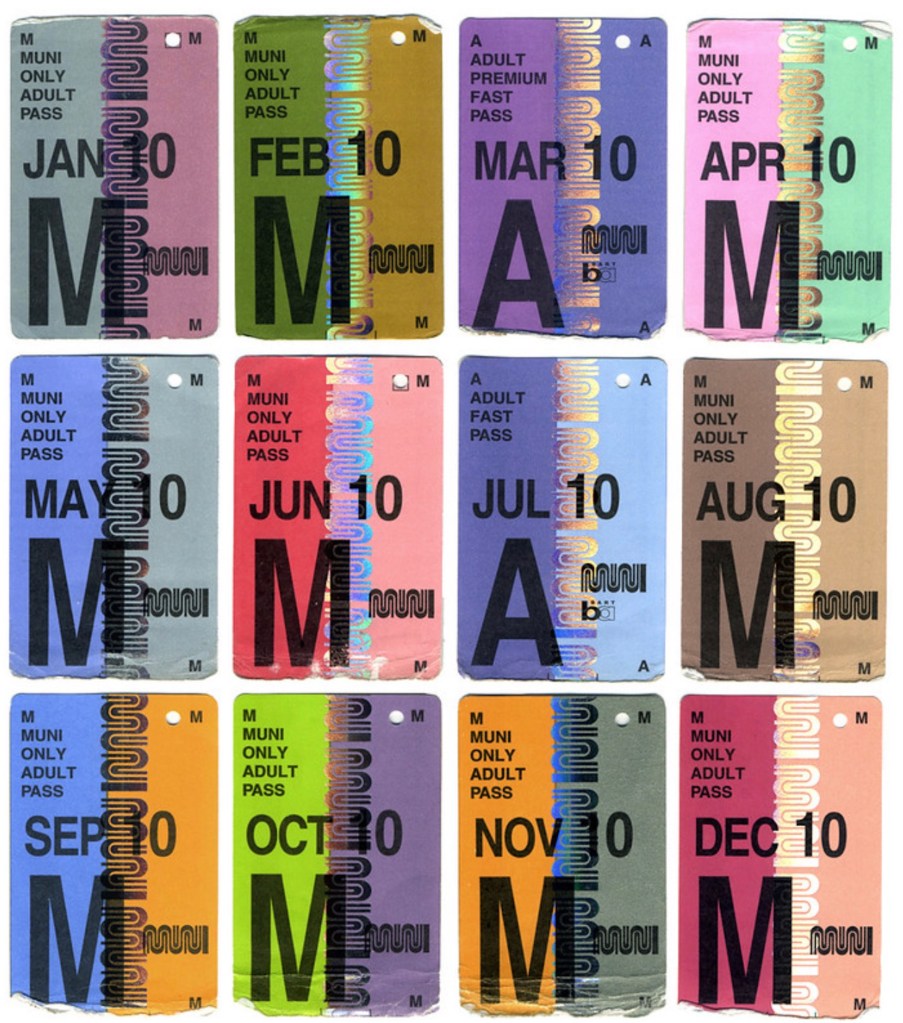
Sadly, this favored chapter in book 1 has become a nostalgic memory. Renew your fast pass today!
Surveys of time use show much time is spent in the bus zone loading passengers. Although this would seem to be a revenue loser as those who board in the rear would be evading the fare, my experience has been most riders are honest and pay their fare share by coming to the front door to get a receipt or transfer. Those who enter in the back because of wheelchair boarding or kneeler requests, do come to the front from the aisle to get a transfer, and pay their fare. By believing most people are honest and abide by the unofficial honor system of paying for their ride, I have reduced almost all problems and delays at the front door and fare box.
This surrender on my part has made my job a lot easier, and I always try to be of service if someone is a little short, but needs a ride. This took me several years of discovery, as I am somewhat of a perfectionist. My Mars in Aries has reared its ugly head with some fare disputes that got me in to trouble. And the idea the riders also can train operators by their feedback, even if it is unpleasant. Being rude or appearing nasty is a fast behavior modify if ever there was one. How riders react to my statement of what the fare is, over time, gives me an idea of how I am to handle myself, or set the tone of requesting the fare, without getting in to an argument.
The obvious dilemma one first realizes as a transit operator, is how oblivious passengers are in expecting us to see their fare in the first place. If I had one wish to click my heels to make come true, it would be for boarders to see how impossible it is for us to check their fare. If it were a problem with less than 10 percent of people riding, then it would seem like I am being picky or controlling, but over half of the people boarding do not show their fare in what I would call a thoughtful or honest way. Granted, as two columns of people board at major transfer points, they pass by quickly if I am lucky, but the way in which I am to look at their fast pass or transfer is ridiculous by any standard. By injecting humor in to the situation by stating there are two lines, fast track and exact change, and motioning to imaginary two lines at the front door helps interrupt the pattern of blocking that occurs from tagging in on the one side, and the fare box on the other.
So there should be no surprise why the majority of operators appear to not be looking at the fare when it is presented. Almost no one appears to be concerned we have a chance to actually look at their hand: I’d say less than one in ten boarders actually shows me the fare in a reasonable way. I’ve learned if I turn in my seat to face the door, and appear genuinely interested in looking at what’s in your hand, then odds do increase for proper fare presentation.
What the majority don’t seem to understand is that front door boarding is no reason for a reduction in fare evasion. People showing fare properly at the front door are such a small fraction of the total, that to us as operators, it makes no difference what door people enter. Hopefully with the newer cameras, if anyone is actually viewing images, they would see it virtually impossible to see most fares, even at the front door.
This brings us to the various styles of impossibility of “fare evasion” by those coming to the front door. Once again, what I have just said is contrary to the start of this Chapter when I said most people are honest, and abide by the unofficial honor system. There seems to be a paradox. And indeed there is. While I said most people are honest in paying the fare, I also said they are clueless about how useless their presentation is, for us to see. And bereft of knowing what they are showing, after countless times being berated by them for questioning their fare, taking my request personally such as an attack on their character, I have learned how to ask for the fare without too much backwash. So here are some of the major “food groups” of fare evasion. Remember, I am not saying these passengers don’t actually have a valid fare. What I am saying, is for the purpose of checking the fare, these maneuvers constitute fare evasion because we cannot determine if the fare has been paid.
The Wand
Like Merlin the magician, or something out of a Harry Potter movie, these people move their arm in such a wide swath it is a miracle anyone can see what the hell it is they are holding. We have many types of pass ID acceptable for fare, but it doesn’t matter, because we can’t see what the hell it is people are showing us anyway. This does not mean we should not make an effort to look at people’s hands when they board, and it definitely does not mean we should just rationalize in to not checking at all.
A hardworking driver was asked by a man why he wasn’t asking for the fare for those who boarded in the rear, and he replied that they do it all the time. He got written up for a passenger service request (PSR) because this is against the rule that we ask for the fare by stating what the adult fare is. He could have asked to see the fare of those boarding in the rear or by making the announcement to please come to the front if you need to pay your fare, but he didn’t.
These small nuances can come at any time at any place, and we have to be ready to do the right thing. If we get distracted by another question, or are in our mind about something else, these small rituals throw us off and we get mail. We get a letter for a review about our behavior when we can’t see why this is so.
If we talk to other drivers about this at the relief point or in the receivers office, we usually get the right answer. I would rarely ask for help or feedback when I was new, and this added years of distress that did not really need to be there. So when the wand goes by, we need to always be ready to do the correct action. Ask for the fare, even if the person whipping by us never stops. Most times, the wrong person usually stops to question us. “No, I wasn’t asking you. The fare is two dollars twenty five cents.” And that’s usually the end of it. Just as in calling out transfers and destinations, it matters not the right person hears us. Just that we were following the rule.
Our most honorable Mayor, Mr. Gavin Newsom, when riding on a cable car, made the observation that the conductor was not checking fares. What he may not have known, is we become accustomed to our regulars. We know who has their fast pass, and after the fourth of the month, it is not necessary to see the fast pass every day. Just because it is not apparent that we are checking every fare, does not mean we do or do not know who is paying.
The Jack-knife
In all fairness, there are those seniors, and those with mobility problems that may make coming up the stairs a balancing act. I have to be mindful of being of service, especially towards those with mobility problems that may not be visible, however, can we at least make an attempt, once in a blue moon, to at least show the operator that we have a current valid monthly pass? If the month is new, and we are a regular, isn’t it reasonable to show the operator at the beginning of the month that we have our new pass?
The jack-knife is accomplished like the wand except for an excessive up and down motion with the arm holding the pass. Made to look like the arm is a counterweight to the balancing act of climbing, there is no chance in hell our eyes can focus on a pass that is moving up and down at or near the speed of light. Just because you are holding the pass does not mean we have the ability to see it.
When I explain that this is the fourth of the month, and many old passes have expired, this usually helps. If a regular rider becomes offended that I am asking to see their fare, I respond by saying, “Yes, I know you are a regular pass holder, but I haven’t seen you with the new pass yet.” If the fourth day of the new month is after a holiday, I give grace for this. “Are you going to get your new one today?” Then things get better. “You need this transfer until you purchase your new pass, I don’t want you to get in trouble.” This heals all wounds, and prevents me from being perceived as a heel. The great reward at first impressions was when days turned in to weeks turned in to months, without anyone taking my fare checking personally. This took me over five years to be able to say this truthfully.
Toll Booth
Having been a Jersey boy, I pride myself on being quick to pay toll. If you have ever been headed to points south from NYC on the Garden State Parkway on a summer weekend, and you have successfully crossed the Raritan River Bridge crossing and toll booth, you know how paying the toll in the bucket in a timely fashion can contribute to delays of those behind you. Before the days of automatic billing, knowing how to do the toll booth was an art.
The one thing about Californian’s laid backness which some times drives my east coast roots up the wall, is the sense of cluelessness about how action or in this case inaction has a cannonball affect on others. I have never met a native New Yorker who was completely clueless at the fare box.
Granted, I may be able to teach them about the waterfall method as an enhancement of toll booth, but some Californians who have grown complacent and accustomed to not showing their fare, are the biggest offenders with the toll booth method of fare payment. Should they be asked to show their fare by the fare inspector, they become grudging payers. They may be seasoned riders, but it fast becomes obvious at the box they are unfamiliar with actually paying a cash fare.
This is where I have to get over myself. I need to remember everyone is doing the best they can, given what they know and what they have.
And my judgment of others as a silent arrogance remains with me today. Try as I might to maintain humility, I quickly fall back in to self centered superiority, thinking that I am the boss, and that I am in charge. And I find I lose my balance, and fall back in to a familiar pattern of not liking you if you don’t behave like I think you should.
The toll booth method involves dropping the coins over the slot in a dropping fashion, using the thumb or pointer finger as the feeder for the coin drop. Most people take the slow drip method instead of the fast pour because they are counting out their fare as they pay. This method is a bummer on morning peak inbounds if people haven’t counted out their change in advance. This really slows us down and is the best reason to eliminate the fare altogether.
Dump Truck
These folks have learned a single coin drop by drop is too slow, so they count their change ahead of time. This is a great first step to making the step-up flow. But dropping the whole wad at once plugs up the coin slot. And those who have perfected this style usually also know how to fish with their fingers to stir the pile and let the coins trickle past the slot. But I need to be willing to show them how to clear the slot. And if they aren’t willing to wait to see this, I need to surrender and clear the pile anyway.
What I resist persists. And so I need the humility to wait another day to find the right time to see if they will learn. After all, their rush to move back is my desire. I have to see my part in creating the dump truck. This patience to resist change upon them is something I have to constantly guard against in picking up folks who are slow to the door placement. And if I don’t allow them the grace to do their thing, trouble soon follows.
So I review my day and make sure I don’t resist what I fear is to be a constant unchanging dilemma upon my daily trips. And with tourists or first timers. If I am short and without patience, the sooner I can catch myself the better. And God, or the transit gods, do give me grace in making a mistake once or twice. But if I go unchecked, and don’t do a daily review, an incident will invariably occur whereby my being wrong comes back to bite. So, I need to be clear when a coin dropper has counted their fare, this as a first step in the right direction on my part.
And I do get rewarded when I see the dump truck method working: Especially with dimes. Dimes are the worst for jamming. If I create a patient and loving attitude when a jam occurs, the situation rarely repeats itself. The more I resist, the more frequent the jam. And the problem won’t go away until I surrender.
Tissue Deluxe
I was always seeing granny holding her fare in a wrap of tissue. And the tissue would breakup and fall in to the coin slot and lead to a coin bypass. Or there was some hair that fell into the coin slot along with the coins. Hopefully, I could dump the whole lot with my dump button and make the problem go away. But over time, if not caught right away, the fare box would stop counting coins, and the coins would build in the neck and cause a constant distraction.
It wasn’t until I asked why seniors would wrap their coins that I got the answer. Their hands were dry with age, and the coins would stick to their palm and not go in. They had learned to put the coins in a wrap so that they would not stick to their skin, and go in. They were only trying to be ready and be fast, but I didn’t see it this way. So whenever I see something happening over and over which is not to my liking, if I stop to ask, I get my answer and the distraction goes away. Finding the right time and place to get the answer doesn’t occur when I think it should. Only after I take a prayerful pause to be ready to accept I may not have the answer, does the answer soon come. And the sooner the answer comes, the closer to being mentally fit am I.
This gets me excited about my job again. If I take the role of a detective, and try to unravel a mystery, I am back in the right mindset to discover the answer. And the answer is not one of arrogance or hostility to make my life as a driver miserable, but because they are only trying to do the right thing after having problems paying the fare the regular way with their palm and fingers. Most operators are not so controlling as I am, so they haven’t had to worry about how someone pays the fare. But for me it was a big deal. I am not a good person if I ignore what I thought to be the most important deal for keeping my employer in the black by collecting as much fare as possible.
In reality, this tightrope this tightrope actually was reducing my job security and my paycheck as I was being perceived as a dick, or a mean driver. So the comment, all conflict arises from misplaced desire, really hit home here. I am not the gestapo or the police. I am not an inspector. I am simply required to state what the fare is and let it go. Passengers actions or reactions are not my responsibility. And once I got over this, my job at the fare box got easier.
Dollar Curl
I have always had a recurrent idea in a dream state regarding a life purpose here. And it revolves around a seemingly impossible task such as in Horton Hears a Who, whereby the elephant has to go through a field of flowers to find the one flower with the one speck containing Who-ville. The enemy drops the one single flower into a huge field of flowers off of a cliff. Amazingly, our hero begins the daunting task without a single hesitation.
In my design, it is like cleaning up a huge trashed-out area like a stadium after a game, or trying to change a mass behavior, engrained on such a large scale, so no one person would ever agree to start picking the first flower, the first piece of trash, the one request from another person because the immensity of the task at hand is huge. But that my goal or purpose in life, is to begin the impossible task, and to be successful in the task with someone coming by later to remark, “You’re done already? I can’t believe it!”
I have had some success in this area. Except for the dollar curl. Transit operation does seem to offer the ultimate challenge: To change a behavior that is creating some delay or headache, and to make it largely disappear. I would hope to borrow Dante’s wisdom: from the little spark may burst a mighty flame. Not the spark of a fare dispute creating brush fire of anger, but like that of a candle in a cathedral, spreading light to an entire congregation: Such that the problem is basically removed forever. Everyone understands how to put a worn bill in the meter. And having the knowledge I was there at the beginning. That one person can actually make a difference. That it isn’t about the impossibility of ever finishing, but about be willing to try. And see what happens. And so I trudge with the dollar curl.
Not all fare boxes are created equal. I found out from a co-worker in the revenue department that the slots on some of the bill meters are narrower. I would always take the effort to make a revenue appointment for my coach and see what I could learn. It seems few operators would ever consider calling central control to get a fare box fixed while in revenue service, but I did so anyway.
I learned something about what causes the fare box to fail: hair in the coin slot, tobacco and cotton and cotton from pockets that were mixed with the coins; and just the regular dust on dollars. But I also learned about what to look for that would set the ball in motion to begin to clog the fare box. And my problems of fare box failure went down.
I would get owl coaches assigned to me in the morning from another run, I would go through a period of days where I would get several coaches in a row that had bad fare boxes. But if I kept calling to get revenue to meet me at Ferry Plaza, or Cal train, or Howard and New Montgomery, I learned where the good times and places were to ask to meet. I never would have figured this out if I never called. And around 9 a.m. in an off peak direction, by the inbound terminal, where other coaches collected, was a good time and place.
So my journey about cause began. Then on to offer help when and where the problem started. When someone put a dollar or coin in to the box. If a dollar has a bent up corner, or if the edge is creased, the dollar will not go in on fare boxes with a narrow slot. So if I had a box like this, I knew it would be a problem. This would be a problem on about one in three coaches. And it became easier to look at their bill before they put it in the slot, rather than to watch them struggle and hold up the boarding cue. Saying to them to flip it over didn’t work because they would try the other side of the bill rather than a simple flip, and the other side had a crease up in the same direction. Using my hand as an example doesn’t work because they are focusing not on my hand but on the slot. Telling them to crease the bill in the middle lengthwise results in them folding it in half which acts as a dam in the machine, and increases chances for a jam. Stating that a bent up crease doesn’t work because they are in a hurry to get by as we have trained them to do, so showing them how to put it in is the fastest and best. Most don’t care, or seem interested in knowing this, but over time, I noticed fewer and fewer people having problems.
I started seeing more people with worn bills having them pre-folded to put in to the machine. I also learned from them that two bills together work, and that other operators had told them about how to crease the bill before putting it in the slot. So by using my hand in a curl, pointing my fingers down, stating that the dollar moves into the machine going down through the roller, I saw the light go off in their head, and declared it another victory of the day. Because even though I may never see that person again, I could take comfort knowing that on some other bus somewhere else, a driver was able to make the light, or close the door just a little sooner, because that one extra person was ready at the fare box.
The Question
These are the pros. They don’t have the fare, and usually don’t intend to pay, but by framing the greet by asking a question about where I go, they get me to tell them the correct answer, and they thank me passing without showing a fare. They have made me look good. Doing service. They get to pass by without a delay. And there isn’t any humiliating or hostile story about asking or needing a ride. And I have since gotten less offended at the those who do the drive by. That is, those who don’t look, talk, or indicate that they have a fare, but use the others paying their fare as a smoke screen to passing by without fare. But after realizing I am here to be of service in providing a ride, I became less angry at the drive by folks, because, in the end, they were saving me time in the zone. Do you need a transfer? is the best one liner to get their attention and see if they have some money to put in the box. Some times they only have a penny to put in. I’ll take it. Hey, it’s one penny more than Muni would have got. And the sense of self esteem that seems to manifest from this does seem to make for a friendlier coach and a friendlier ride. Better than those who ask the question are those who say. . .
“I Have It.”
 The Dao of Doug: A Bus Driver's Perspective