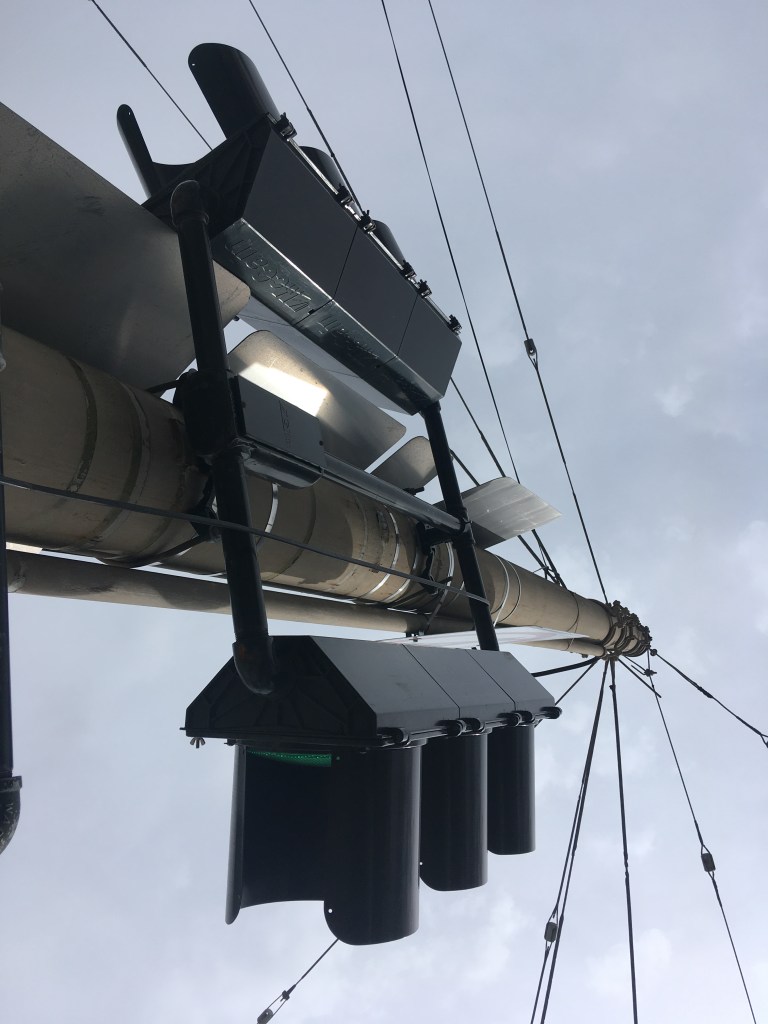
The Hampton Roads area by the Chesapeake Bay has a nice sign under its signals. The sign below an overhead signal is marked Leading Green, or Delayed Green. This signals to motorists who gets to turn first or last at a major intersection of four lanes or more, and with a four or six way cycle including left and right turn arrows. Adding the leading green sign can keep a simple two way cycle and preclude installation of a left or right turn arrow. The city of San Francisco has not upgraded its traffic signal flows or timetables with safety observers for years, maybe decades.
Note to traffic engineers and planners. The time worn tool for data is to station counters at intersections to monitor turn signals, lane changes and traffic storage over various hourly day-parts on weekdays, weekends, and holidays. This helps in detailing when changes in the signals should occur and gets the ball rolling to see when more cars are waiting at the end of a cycle for a green, than those in cross traffic on a stale green.
When seconds tick by with no cross traffic passing by a stale green, and a queue of cars sit standing waiting on a red, the timing of the green becomes noticeable. By counting signal changes myself while waiting at the red, I find that light cycles come in 10 second packs: 15 second greens, 25 second greens, 35 second greens, and 45 seconds. The first and last, the shortest and longest, are the rarest. Haight and Fillmore is a 15 second cycle, Van Ness and Market, the longest, at 45 seconds. In putting in a request for a cycle change, I understand that keeping these cycles is important due to the other signals at intersections near the affected change as timing may get thrown off by the flow.
Cyclists are the first to become aware that cars travel in packs. Transit operators and veteran truck drivers come to ‘know the lights’ and distinguish themselves from motorists by the way they drive. Even on the freeways, notice how pods of cars form on the road. It makes little sense from a safety point of view to try to speed or push through a knot of cars in the pack, or speed up to be at the rear of a pack. Being in a relatively empty stretch of cars is great! Less stress, and better odds of avoiding conflict.
Very few arterials in San Francisco have such timed lights such as Oak and Fell, Golden Gate and Turk. Now, ‘Green Wave’ streets such as Valencia are timed for bikes and not cars. Many a cabbie and out of towner are not too thrilled when auto lanes are removed for bikes, but these changes are mandated by Vision Zero, a plan to reduce pedestrian fatalities.
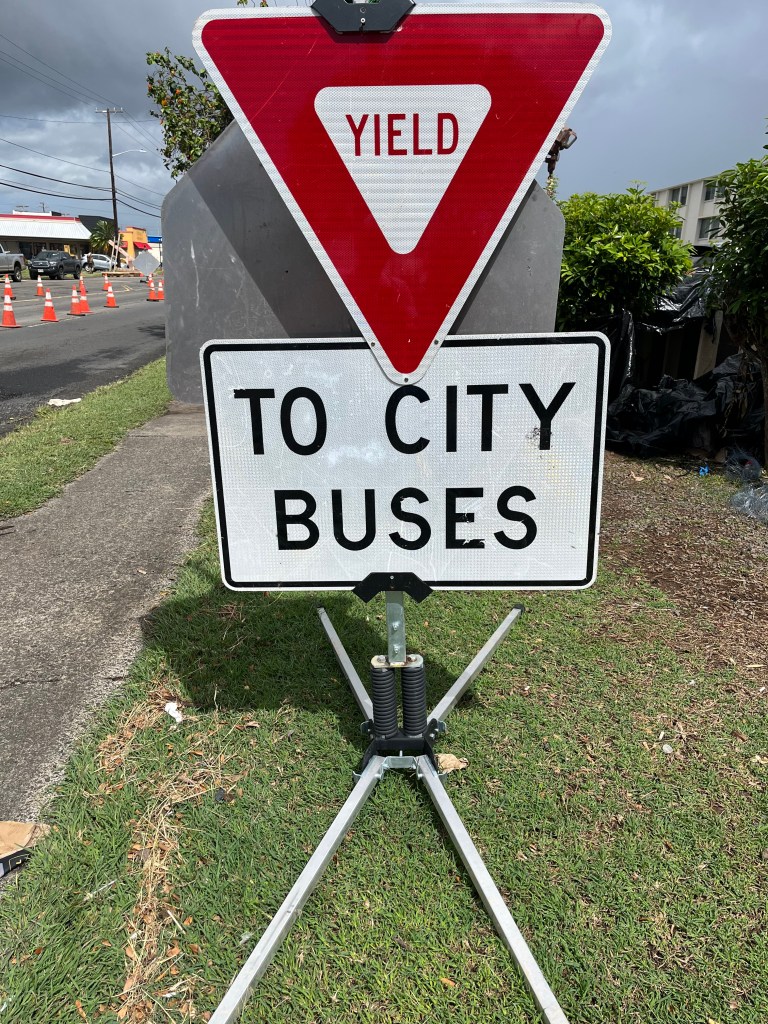
Indeed, making leading green changes at an intersection is not as simple as it may first appear. It isn’t just car or bus flow that need be considered. Pedestrians need to cross safely during a sequence, and when they cross is important. Giving the walk signal at the end of a stale green on a one way arterial may be extremely dangerous if motorists try to speed up and make the light before it goes red so they can ‘tailgate’ at the end of a pack of cars making steady greens on a timed light arterial like Gough.
Gough and Sacramento is one such intersection that requires special attention. Transit inbound needs to make a leading green left turn on Sacramento, but the far-side crosswalk on Gough to Lafayette Park abounds with moms and strollers and dogs on a leash. Dog walkers can be distracted by a mutt that charges like a Klondike dogsled team to get to the park!
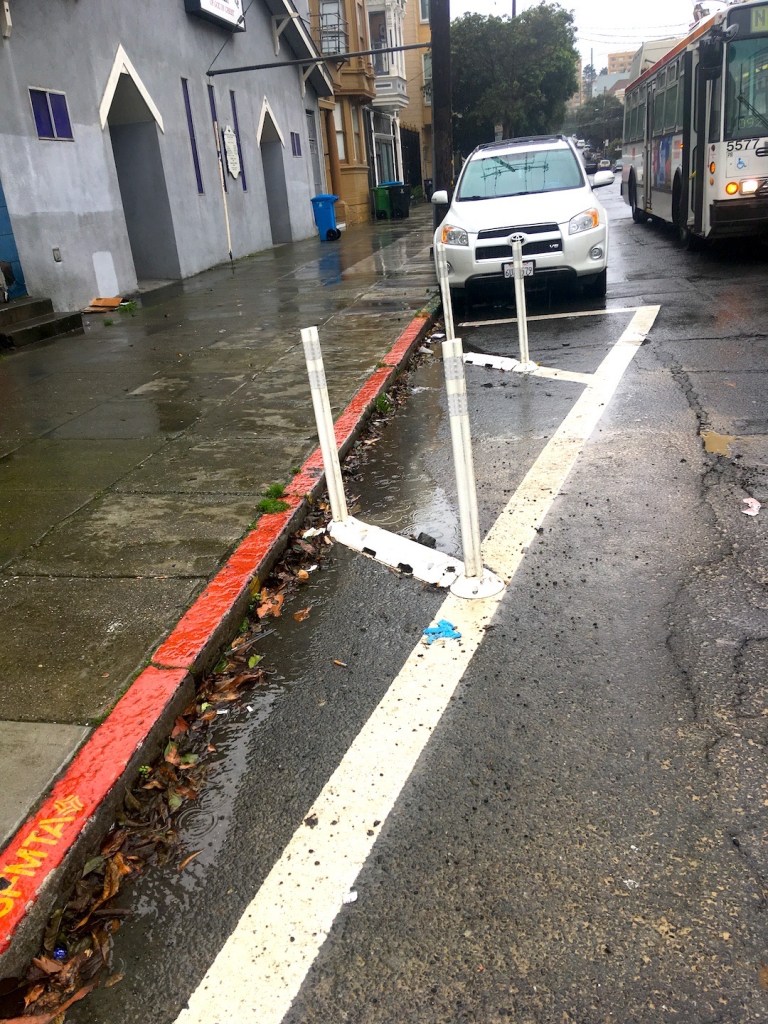
Putting in a bus bulb to shorten travel time to cross may be good in theory, but trolley turns don’t seem to be taken into account, such as at Fillmore and McAllister. Our wheels roll over the sidewalk when we make turns at the Webster Street turn back and pull-in loop. A new bus bulb is going in at Cortland and Bayshore right by a liquor store. Outbound 24’s will no longer be able to make a right on red when cars are stacked to make a left turn. We operators will have to fight traffic to move left to make a right turn. This Vision Zero change does not help us stay on time and adds to conflict. Transfer passengers now may run across Cortland from the 9, believing they are now ‘safe’ to cross. A Bus Driver’s perspective need be taken in to account when making these safety changes. A transit planner job beckons like low hanging fruit on the sf gov dot org website!
Leading greens are slowly being input around intersections in San Francisco. Most of our intersections have remained without left turn storage or arrows to make turns, but this is gradually improving. Losing the light and losing the Zen need not be a given with new traffic lights and pedestrian bulbs and medians!
 The Dao of Doug: A Bus Driver's Perspective