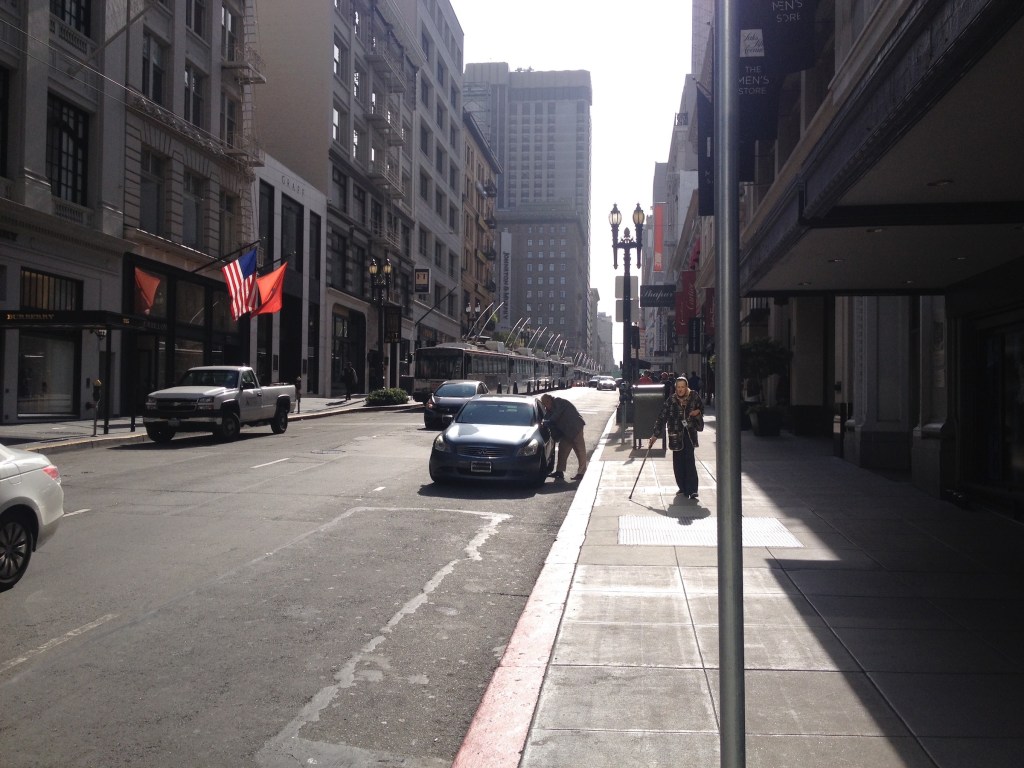
When a delay occurs on the line, and buses get bunched together, it is important to understand that how the bigger queues of people waiting at a stop can influence whether this delay get worse or better. Wise are the riders on the Geary, Mission, and California lines who know on a regular basis, that being first does not mean being best. Or most comfortable. These regular riders know to look to see how crowded a bus is inside before boarding, and also look down the street to see if another coach is coming less than two blocks away. This one act of looking in and behind a bus saves falls on board, fights on board, and squeeze play delay in the aisle and in looking for seats. The lead bus falls farther behind, as do those behind it.
The biggest help in keeping buses evenly spaced is receiving a switch from TMC central control. By turning back the second bus at a short line terminal, and asking the leader to complete a full trip, normal headway can be established quickly. The key is to allow bus number three to leave on time from the next terminal and give the leading coach a break. But the orders for even headway appears to be a forgotten art.
Roving street inspectors are to put the line back on time after a delay, but this can sometimes take two hours to correct. If you look at each trip being an hour, and a delay occurs in the middle of the line, it is reasonable to expect that the line should be back on time in 30 minutes.
Radio procedures are now being updated with the new software tied to our new radios being installed in our new equipment. We now have the ability to request a headway adjustment and ask for a reroute simply by our touchscreen.
I am a firm believer that technology holds many keys in helping smooth operations. Without these simple communication procedures, the delays of buses did lead to an abysmal on time rating of 60 percent. Knowing when and how to ask for this crucial information can pay dividends.
I recently reported damage to the overhead using the new radio system. I entered in the message of mechanical electrical on the radio touch screen as a marker to my emergency call request. I got called back immediately and described the problem. The best part was that operations sent me back a message saying ‘thank you.’ I felt satisfaction in being heard and recognized. This is a huge step in the right direction in communication between operations and the operator on the street.
Bus bunching occurs and continues if no open communication exists and leads to anger and delay between staff and the riding public. Losing Zen is easy to sort if no solution appears on the radio.
https://fineartamerica.com/featured/2010-muni-fast-passes-douglas-griggs.html?product=tote-bag
 The Dao of Doug: A Bus Driver's Perspective