How does a Muni bus driver pick his run? A lot depends on the equation, personality over paperwork!
A common phrase at the General sign-up or Barn sign-up is what line to work and when to work it. This is unofficially called, ‘Doing your homework.’ Not all runs are created equal, especially on the 1 California, less so, the 14 Mission. Indeed, when a close acquaintance would hear I was doing the California Line, they would murmur an ‘eww’ or ‘ahh’ and imply there was an honor to do the 1 Line as if the route number had anything to do with preference or notoriety. The only notoriety I found on the Number One Son, was a trip to the Superintendent’s office for either a consult or penalty! Penalties based upon my ‘rude’ behavior, or some other insult seen or unseen. Fortunately, the interior cameras came to my rescue on my last few encounters, save for a rookie coworker who had the audacity to write me up and call Central.
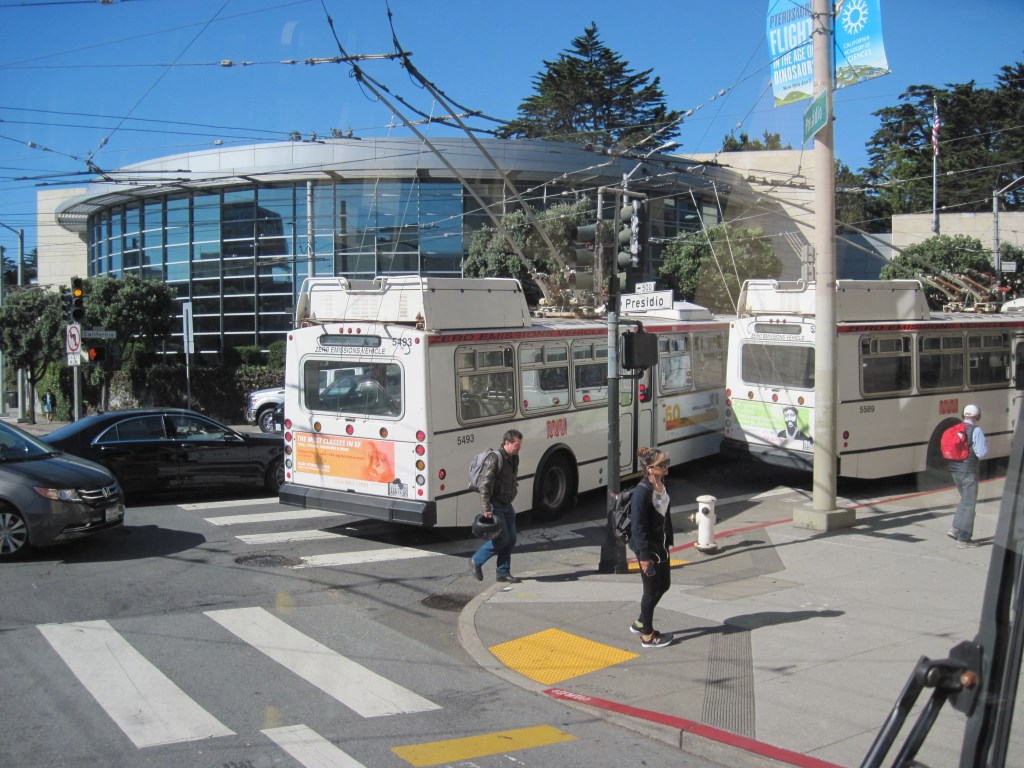
Not only are the intending passengers on Clay and Sacramento set high on the dial for entitlement, but they either don’t know how to ride a trolleybus, too lazy to follow trolleybus headway protocols, or just complain–as if their actions are going to have any effect on how we operators do our run.
The key in understanding the 1 Line is to simply get on any outbound coach and transfer at Presidio, Sixth Ave., and to not wait for the 33rd Avenue coach in the afternoons outbound at Polk and Van Ness. Instead, we must come to a stop, have them ask their questions about where we go, and then wait for the next coach, which usually passes them up. This is how we bus drivers can ‘teach’ unsavvy riders to board any coach, but it never works. They call in on us and we get written up, usually. Because of this, short line coaches were eliminated, as was the inbound terminal of Howard and Main. Riders could not fathom why these extra terminals were in place, and eventually management just cut them out of the schedule. Sadly, I can see why scheduling abandoned these extra turn backs, and the primary reason, in my opinion, was because of the lack of humility of both the operator and the rider.
I believe I was able to get through to about three riders on my run 84, over the length of one long signup, but I gave up my ‘guided discovery’ opportunity to enlighten an intender, as it just wasn’t worth the work. Especially, during peak inbound morning period, and outbound peak afternoon rush hour.
The spiritual life is not a theory, we have to live it. And working for Muni, the answer to this principle is to realize I know only a little, and that more will be revealed–hopefully not in the Superintendent’s office, or with time off without pay.
The other dilemma a city worker in the transportation department faces is the trespass and fighting that occur on the 14 Mission Line to Daly City. Unlike the orderly boarding and fare payments on the 1 Line, Da Mish is especially exciting and dramatic, and many bus driver’s choose this over the bucolic One Line, perhaps because time goes by faster! The truth be told, many operators prefer the 14 Line over a ‘boring’ line like the 1.
The key to staying out of trouble is to keep accident paperwork to a minimum. Towards my twilight years as an operator, Muni came up with a new rule such that five accident incidents filed within a short period of time would count as a single major accident, going on our permanent record, increasing the length of time penalty in assigned days of unpaid suspension! If you guys could hear some of the newer rules in effect, like PSR’s (passenger service requests) never being erased, or that unlike incidents count as a whole, and the shock of a quintupling of years of service to become a vested member, the wonder of morale surrounding an office hours appointment becomes apparent. Unlike politicians which get permanent benefits after short stints in office, and no break in automatic increases, spirituality is all that I have left to keep right and a good attitude and keep a good job.
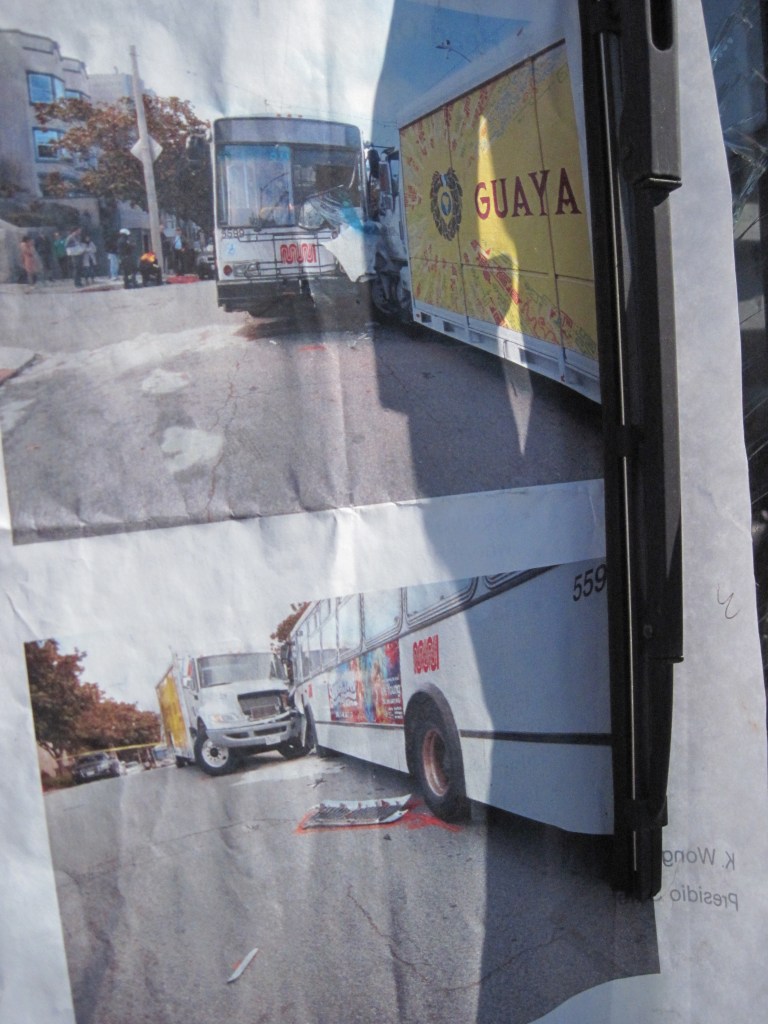
The problem with the Mission line, especially during peak inbound or outbound during ‘Crunch Time,’ or late at night outbound to Daly City, is in building experience in knowing when to let go and let God, and keep a report from the dispatcher, in the hopes that nothing comes of an argument or on a push comes to shove. Filing a miscellaneous short card is hopefully the path or Dao, to reducing accident reports, and good counsel from a seasoned Dispatcher or Union Rep., can go a long way to keeping anxiety away.
Several keys develop when seeing the patterns of fights and refusals to leave the coach. The first comes from coach in high school football: The best offense is a good defense.
Seeing where sleepers board is a key. This is my last trip, and I don’t want you to get stranded. Where are you getting off? Even if they can’t answer, which is not a good sign, rousing them and saying cheerfully, Here’s your stop! while at Evergreen at one stop before my last terminal, is the best way to hand out a free transfer as bait for being a good guy and a friend and not an enemy.
Keeping the senior area empty before the coach is full is also another key to avoiding, Say excuse me bitch! When I let someone going a long way that they will have to vacate the front area only after all seats are taken, the begrudgingly move back before the half-way point on the trip, so the odds of altercation get reduced. The best offense is to become like an insurance company: take out as many danger factors as possible, as soon as possible.
The second key here is to pop the brake, arise from the cockpit seat and face the audience (arena). Not only can the action help stretch the legs and provide release, these times come in handy if there’s no recovery time left at the end of the line.
The hard part of this is to get out of the mind shell that develops in the cockpit over the nine or ten hour straight through of a twilight or an owl. A break and a brake, to get out of the thoughts in my head and connect with my riders can be the saving grace to reduce paperwork on the drama. Plus the added benefit is that by communicating the correct word, any witness to a later hearing, or to the camera tape on file, will show I tried to do the right thing. But only from within the cockpit! Leaving the area can also open up another line for an epic fail.
In the end, the best measure is to sit back and watch the show!
 The Dao of Doug: A Bus Driver's Perspective